Education and Teaching
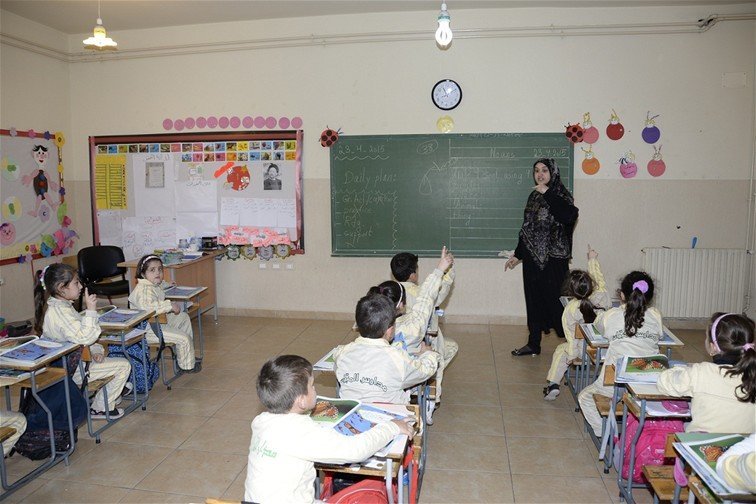
- Al-Mabarat schools are committed to continuously developing their educational curricula by keeping up with the latest theories, educational trends, and research. They study and select what aligns with their vision, mission, and the core values of their institutions, applying a pilot approach before institutionalizing the curriculum after necessary adjustments.
- Al-Mabarat schools evaluate the projects and educational programs implemented in their institutions and provide improvement recommendations. They select the books, materials, and resources required for educational programs and conduct periodic curriculum reviews in coordination with the educational supervision to propose changes or adjustments aimed at curriculum development.
- Al-Mabarat schools provide opportunities for graduate students and other educational entities to conduct studies or field research within their educational institutions, enabling the use of these research results for development and improvement.
تكنولوجيا التعليم
Curricula and Modern Techniques
Al-Mabarat schools follow advanced educational curricula and use modern scientific teaching methods and technologies, such as information technology, which has become an integral part of the learning and teaching process.
Teacher Performance Development
Al-Mabarat places special emphasis on developing teacher performance, providing them with the skills needed to keep up with modern teaching methods, and enabling them to effectively use the latest tools that support auditory, visual, sensory, and kinesthetic learning styles.
Continuous Training Plan
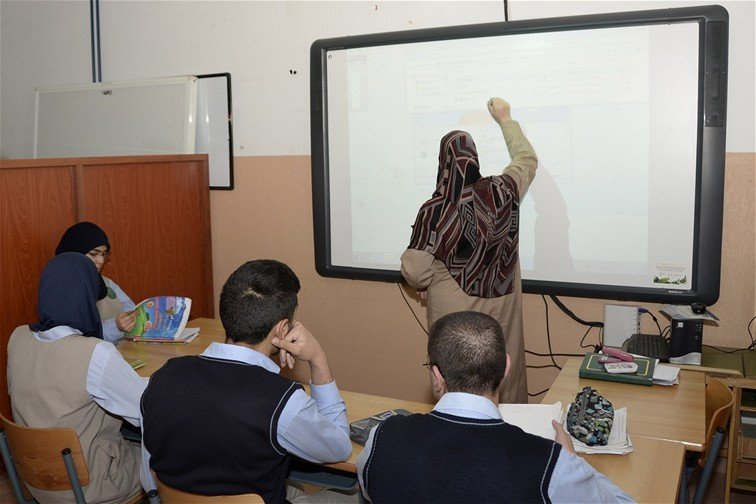
The schools implement a structured training and qualification plan that includes: the introductory level, the skills level, and the advanced skills level. All schools are also equipped with interactive whiteboards to facilitate the use of educational technology during the learning process.

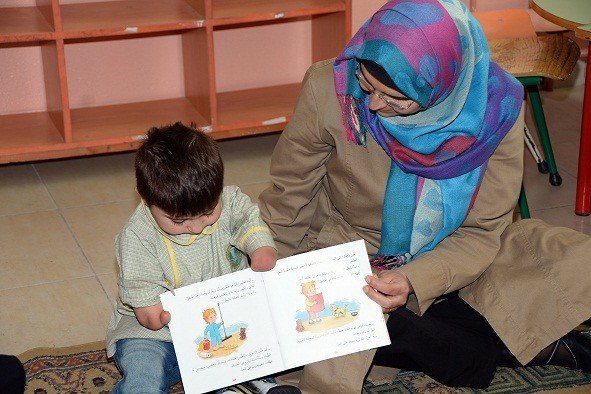
Al-Mabarat schools began implementing an inclusive education program for students with special needs in 1995 at Al-Kawthar High School, and the initiative later expanded to other Al-Mabarat schools and vocational institutes.
Learning Difficulties
Dyslexia and Dysgraphia
Language Disorders
Attention Deficit Hyperactivity Disorder (ADHD)
Autism Spectrum Disorder (ASD)
Down Syndrome
Cerebral Palsy
Admission and Registration Procedures
Individualized Education Program (IEP)
Providing Therapeutic Services:
Speech Therapy
Sensory/Motor Therapy
Physical therapy
Psychotherapy
School Health and Guidance Services
Continuous Assessment and Measurement of Inclusion Quality Indicators
The general education teacher and the special education teacher work together.
Responsibilities: Lesson planning, providing guidance, academic achievement monitoring, assessment, and classroom management.
Curriculum Analysis and Identification of Non-Academic Needs (such as self-confidence and social interaction)
It aims to teach students how to manage their lives independently.
It aims to develop decision-making skills, self-planning, independence, and belief in personal abilities.
Raising awareness among parents about the child's condition and health needs.
Education on early detection of learning difficulties.
Adopting healthy attitudes: avoiding denial, rejection, blame, or lowering expectations.
Introducing them to the characteristics of psychological, social, physical, and intellectual difficulties.
Programs for gifted individuals:
Since its establishment, the association has aimed to stimulate the minds of its members and foster creative aspects. Therefore, Al-Mabarat schools have worked on developing specialized programs for gifted individuals by utilizing programs from modern literature.
In this regard, Al-Mabarat schools provide a classroom environment for this group based on two types of programs:
1. Acceleration; which involves the student's rapid progression through a rich and intensive academic content.
2. Enrichment; which involves creating a broad knowledge culture across various subjects horizontally, and enhancing educational experiences that go beyond the goals of the curriculum in a single subject vertically, in a way that leads to creativity and excellence.
Programs for expatriates:
Al-Mabarat schools undertake a valuable experience to assist expatriate students returning to their homeland from abroad, with the aim of integrating the returning student into their class, ensuring they are on par with their peers without any differences. This also helps them feel reassurance and confidence by acquiring their mother tongue, which serves as their means of communication with others. In this context, the expatriate class categorizes students' levels to prepare the necessary program for them and organize information and skills according to various levels.
Guidance and Counseling
Al-Mabarat schools aim to graduate learners who enjoy good health and possess a balanced personality intellectually, religiously, ethically, and psychologically. A personality that is aware of its surroundings and capable of applying what it has learned in practices, positively influencing those around them. Therefore, the Educational Guidance Department was established to achieve this goal through its diverse programs that reach all stakeholders within the educational institution:

Programs directed at parents:
It includes educational lectures that address the psychological, social, and educational needs of the family and child, and are prepared in collaboration with specialists in the fields of education, teaching, and educational psychology.
The Mentoring Teacher Program
It is an educational program that supports teachers by providing them with ideas to raise their awareness of the needs of different age groups and how to interact with them, as well as the latest educational developments that address the psychological and behavioral aspects of students.
Programs directed at students:
These include the Mentoring Teacher Program, along with regular meetings between the guidance department and students, discussion circles with students in the classroom, the adoption of a nutritional program (school milk and meals), and a social service program aimed at promoting the concept of volunteering. The program also helps students discover their abilities, recognize social problems, and propose appropriate solutions.
The Career Guidance and Counseling Program
This program supports students starting from the ninth grade up to the third year of secondary school, as well as vocational baccalaureate students in technical institutes, to help them identify their abilities and interests and become familiar with various university and vocational specializations.
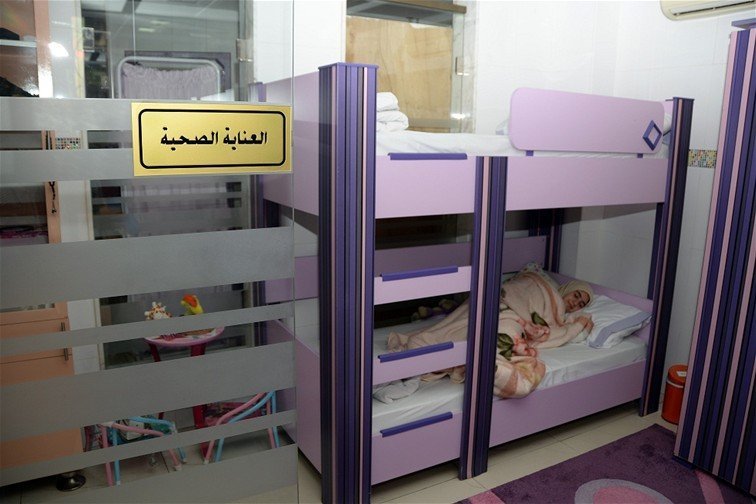
School Health:
Al-Mabarat schools care about the health of their students at various educational stages. They established the School Health Department to provide therapeutic and preventive services to students, teachers, educators, and staff members through medical examinations conducted by specialized doctors (general health, dentistry, ophthalmology, vision correction, and ENT) within the clinic. The department also organizes seminars, lectures, and preventive activities to equip the target group with correct health information and skills to prevent and alleviate diseases and epidemics.
The Health Department takes care of the school environment by regularly spraying pesticides, conducting periodic water tests, cleaning water tanks, and continuously monitoring the cleanliness of restrooms and all sections of the institution. Additionally, it follows up on and monitors occupational health and safety equipment, such as providing fire extinguishers and emergency signs on each floor, as well as training and raising awareness about health and safety procedures and evacuation processes for all staff and students. It is worth mentioning that the schools are contracted with an insurance company to cover any emergencies that may occur during school hours.
Activities:
Al-Mabarat schools prioritize activities due to their importance in discovering students' talents, helping them release their energies, and developing their various skills. Therefore, they have established activity programs in every school to encourage students to participate in commemorating occasions, holding special celebrations, and joint events with other schools. Students also engage in cultural competitions at the level of Al-Mabarat schools or across Lebanon, preparing the school magazine and textbooks, organizing exhibitions, cultural seminars, literary festivals, and educational and scientific radio programs. Additionally, this department is also active in organizing recreational and scientific trips.
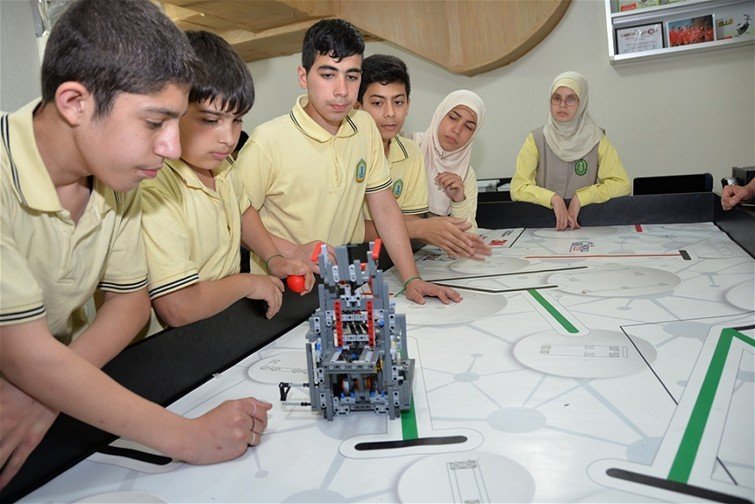

Al-Mabarat schools work on enhancing their students' participation in scientific, artistic, literary, and sports competitions, as well as other national and international contests, in order to constantly align theory with practice to ensure the success of the educational process.
It also places great importance on clubs due to their essential role in developing life skills and connecting students to their reality, as well as offering many purposeful recreational activities. Some of the most prominent clubs include: the Sports Club (gymnastics, karate, football, basketball, table tennis), the Arts Club (music, arts, theater), the Quran Recitation and Islamic Culture Club, the Reading Club, the Media Club, the Environmental Club, the Social Service Club, and the Summer Club.