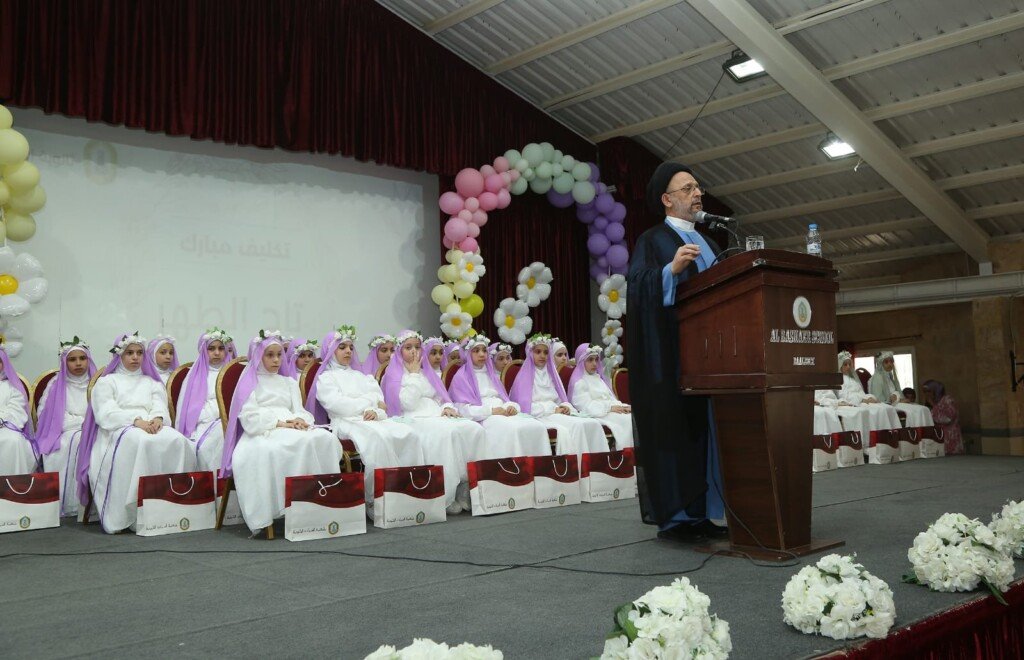
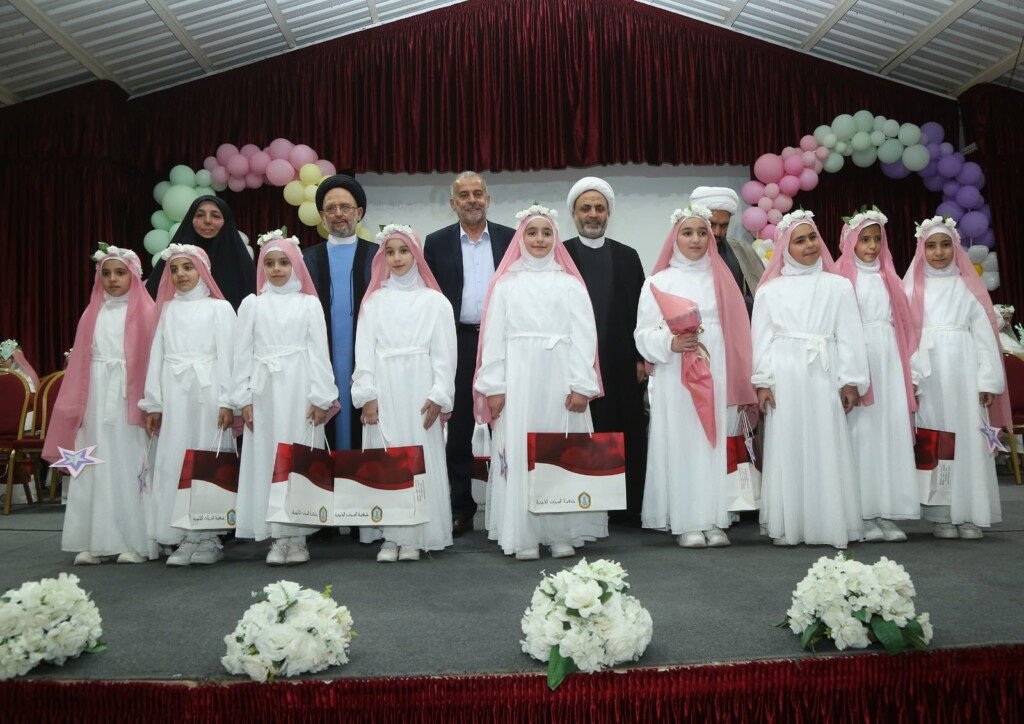
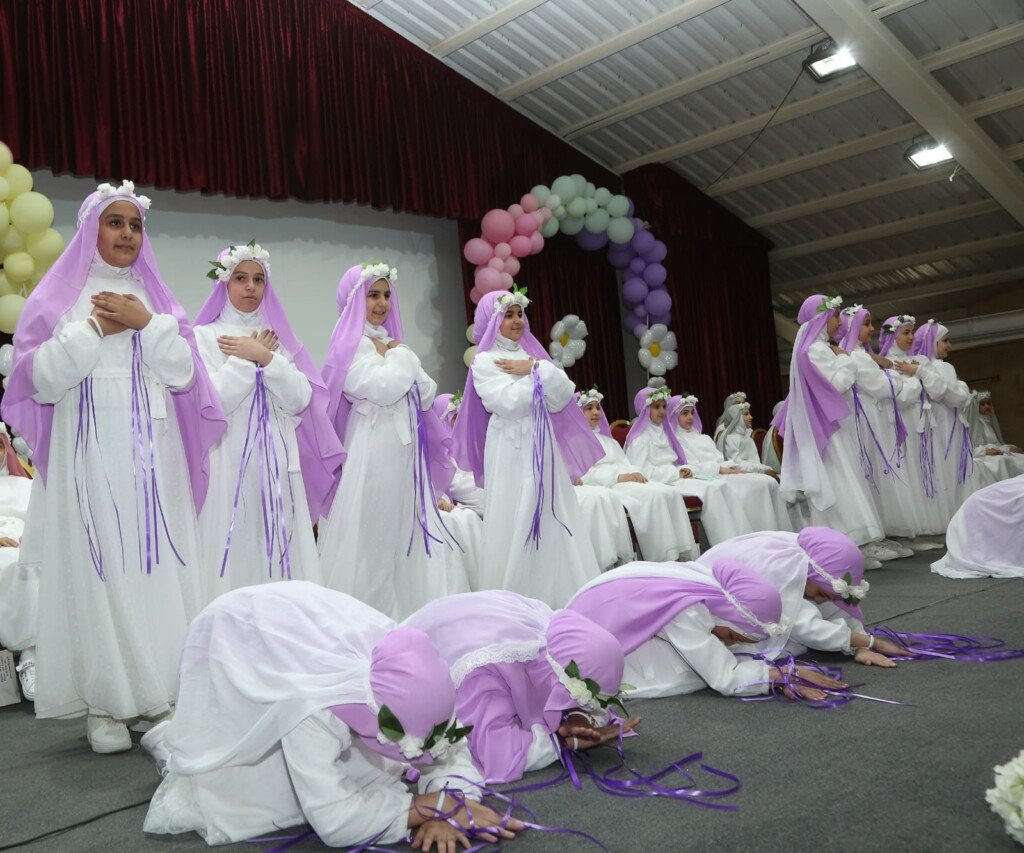
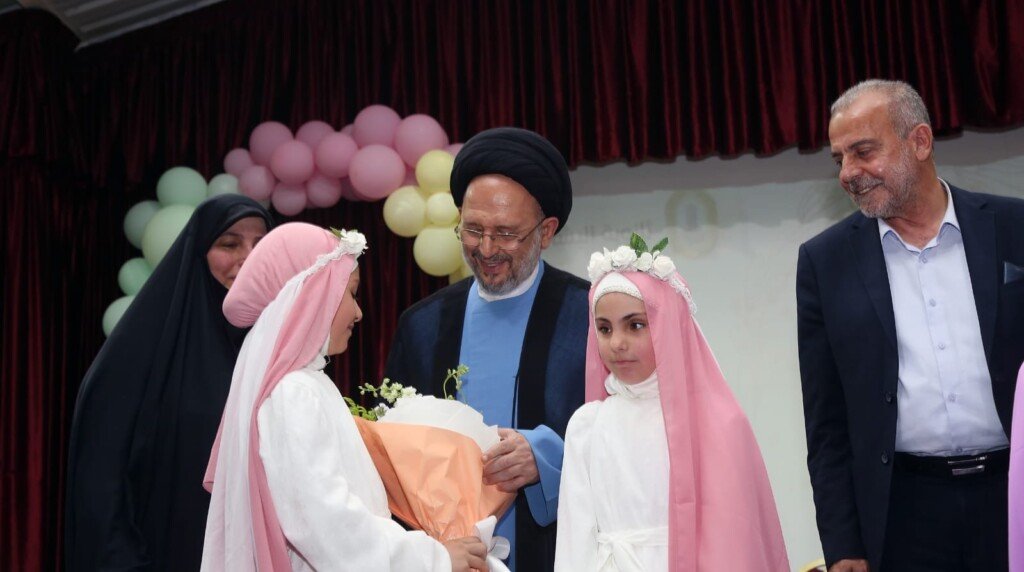
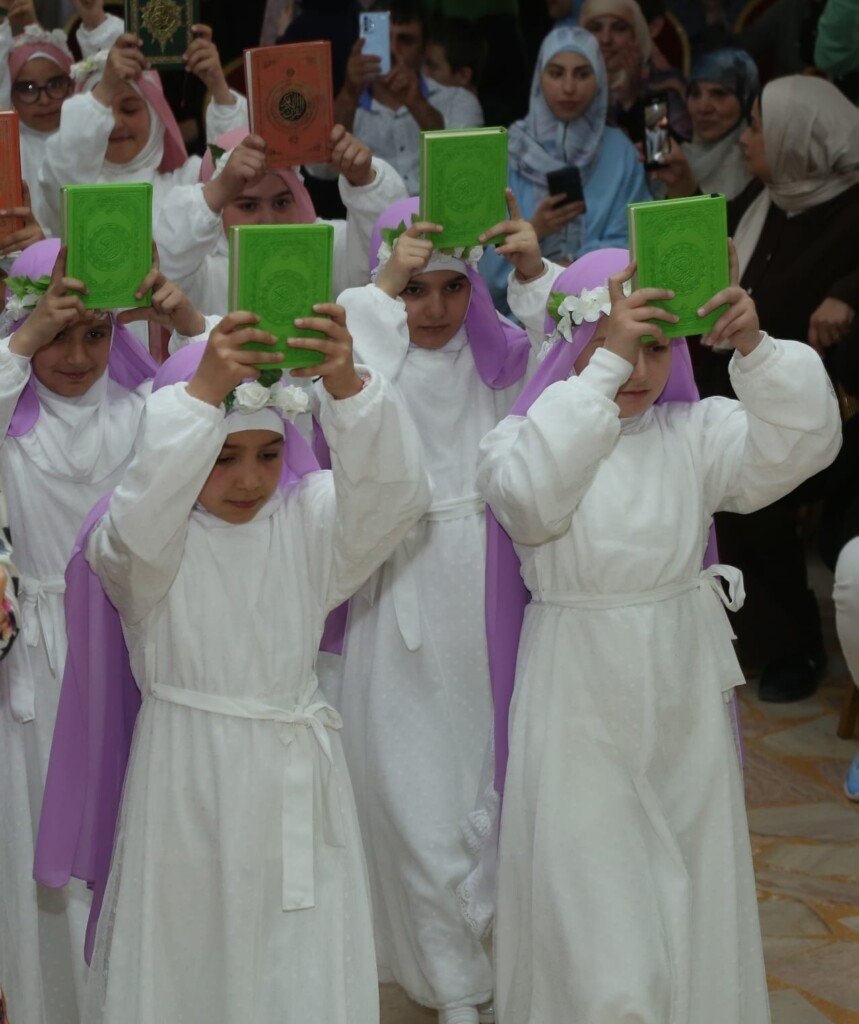
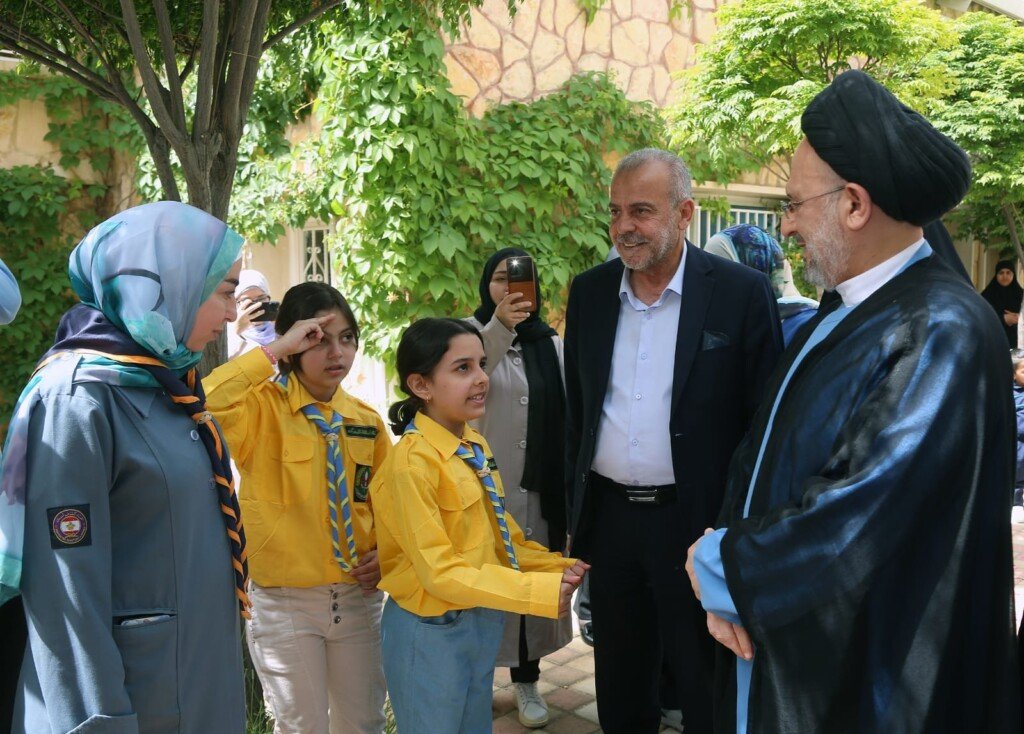
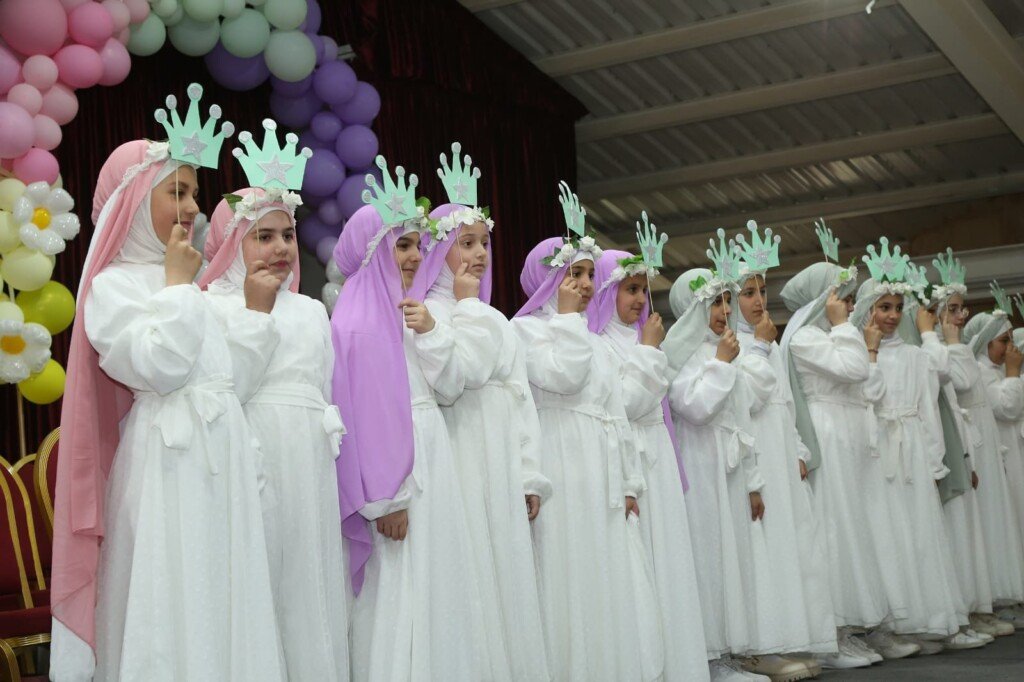
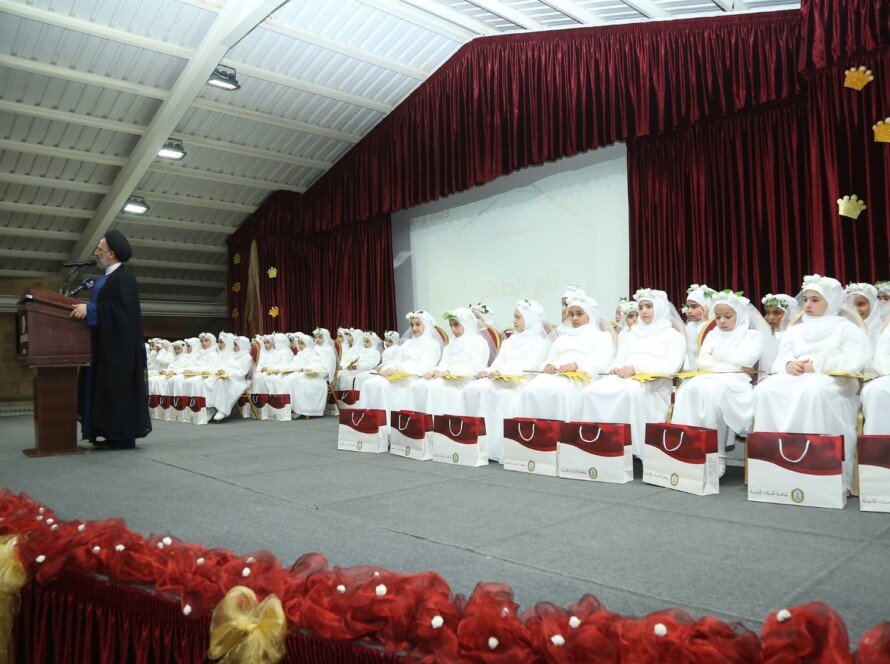
Al-Basha'er Secondary School in Baalbek honored its girls who had reached the age of religious maturity at a large ceremony held in the school's function hall, under the patronage of the scholar Sayyed Ali Fadlallah and attended by the director supervising Al-Mabarrat schools in the Central Bekaa and director of the Al-Hawra (PBUH) Charity Haj Ibrahim Al-Saeed, the director of the Doha Al-Mabarrat Educational and Care Complex His Eminence Sheikh Fouad Khreiss, the school's director Hajjeh Iatidal Al-Jamal, and the families of the girls coming of age.
The ceremony opened with verses from the Holy Quran, then the Lebanese national anthem. The school's girls then presented a bouquet of anthems inspired by the occasion, after which the scholar Fadlallah delivered a speech in which he began by expressing his pleasure and joy at this gathering, filled with purity, love and faith, through which we look toward building a mission-driven generation that will be a byword for a dignified life and a model of a bright future in which ethical, human and faith-based values prevail and which is governed by justice and freedom.
His Eminence added: With this open mindset, built on the foundations of faith and piety, we build a united and cohesive society able to face all the challenges and storms that seek to harm this homeland and to break the pride of its people, their firm will and their steadfastness in the face of the Zionist enemy.
His Eminence continued: We do not want this gathering to be about the hijab as a piece of cloth we place on the head; rather we want it to be a byword for a girl's humanity and freedom, which preserves her dignity and safeguards her chastity - for God wants nothing for His servants but every good. He noted that the hijab is an outward sign of a girl's humanity and an expression of a sense of responsibility, first toward herself and second toward society, which we want to look at her not on the basis of her femininity but on the basis of her humanity.
He stressed the importance of the place of reason in religion, emphasizing that our commitment must be built on the foundations of intellectual conviction and on the mind, which we want to move in a wide space and in places of dialogue, openness and meeting, far from closed-mindedness, bigotry and withdrawal - stressing that we should not act out of impulse, instinct or narrow factionalism.
His Eminence called for raising these generations on faith, on love of the homeland, on defending it and on making sacrifices for it, expressing surprise at how some accuse Islamic schools of being unpatriotic: we raise our students to be open to all the components of this homeland, we live its concerns and its causes, and we stress the need to weigh a word before uttering it, so that we may utter the better word - the one that unites and does not divide, that moves the mind and not the instinct, and that elevates a person ethically, spiritually and intellectually. For by it we can preserve this society, unite it and strengthen its national unity.
His Eminence went on: Our problem in this homeland is that we always look toward the points of disagreement and difference instead of highlighting and focusing on what unites us. This homeland can only be built through dialogue and through making concessions for the sake of its people; let us hold dialogue where we differ instead of erecting barricades and barriers. He called for not waiting on outside initiatives from here and there in order to complete the presidential election.
His Eminence pointed out that we stand with every wronged person in this world, and from this standpoint we can only be with Gaza and its people, who confront this enemy and face the war of extermination and the massacres it wages against them, and who make dear sacrifices to liberate their land. He sent every greeting to the resisters defending South Lebanon and this homeland's sovereignty and supporting the people of Gaza, who make immense sacrifices so that this homeland may remain free and proud.