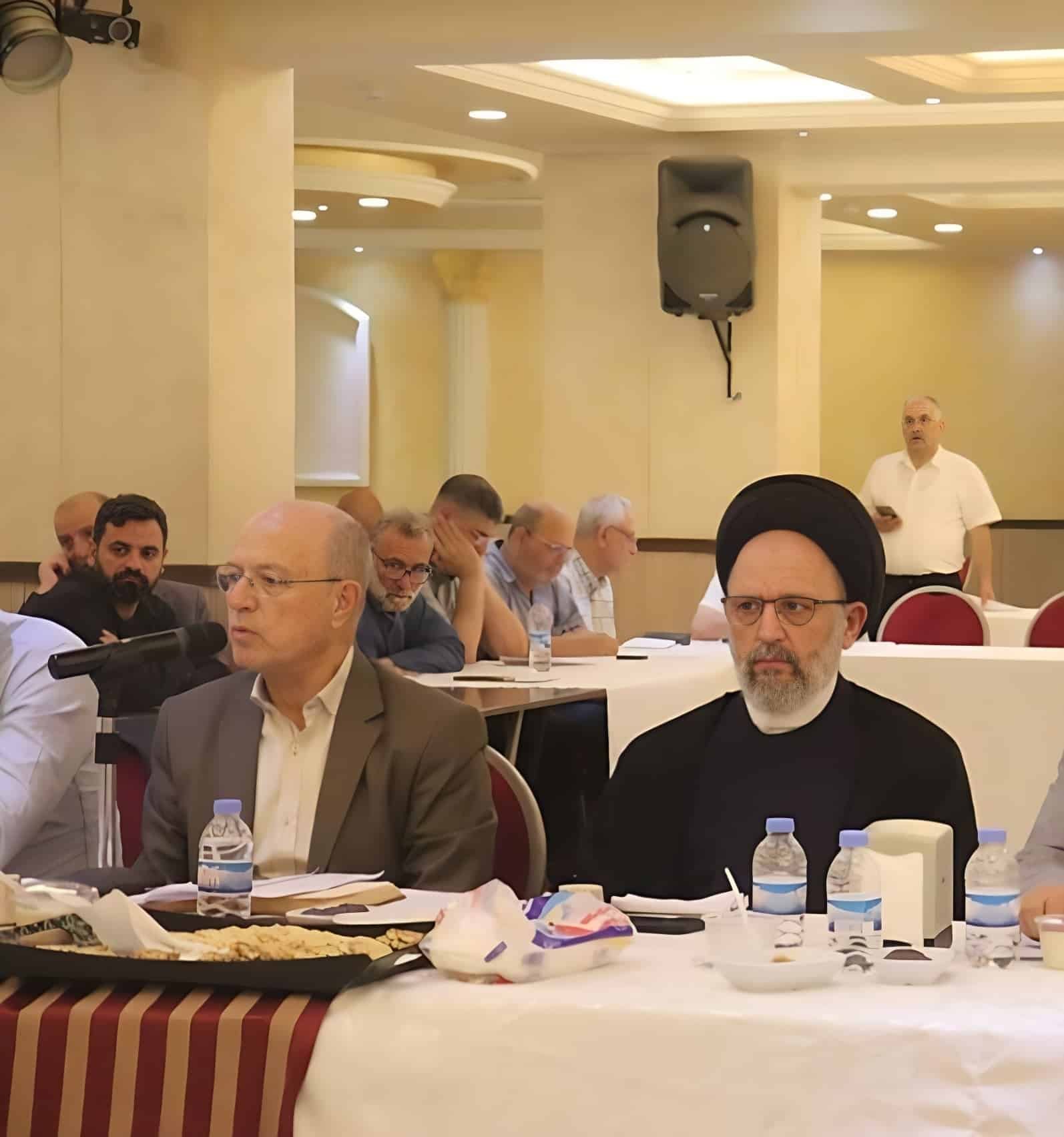
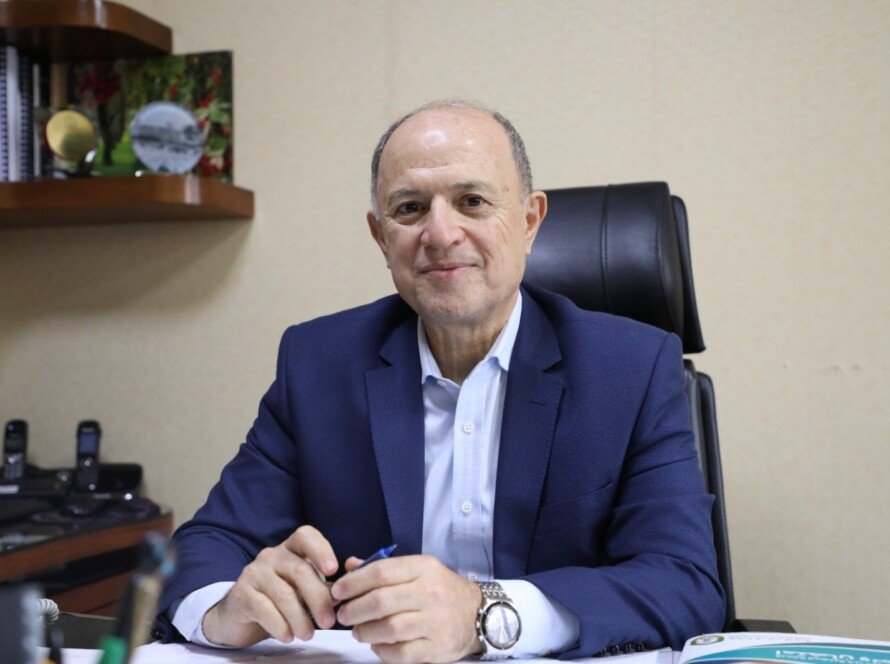
The Director General of Al-Mabarrat Charitable Association, Dr. Sayyed Mohammad Baqer Fadlallah, delivered a speech at the Central Educational Directors' Council held at Lady Khadija Al-Kubra Charity. Its main points were as follows:
The most beautiful meetings are those that are larger than an appointment in a work calendar or a set of items on an agenda, because they come to renew what correspondence cannot create, what reports cannot convey, and what figures cannot summarize. In face-to-face meetings the mission regains its clarity, expertise converges, visions come closer together, and each of us discovers our place in a wider picture whose beauty is complete only when all its parts come together. Our meeting today has this quality. It is a meeting that follows a full year's journey, in which each of us worked hard in their place, carried their responsibility with sincerity, and contributed to sustaining Al-Mabarrat's educational institutions, which were built with minds and with hearts, and with long years of loyalty to the idea and of confidence that education remains the deepest investment in shaping the future. Before reviewing this year's milestones, we stand in reverence before the souls of the martyrs who gave their lives defending the nation, humanity and dignity. We ask God Almighty to envelop them in His vast mercy, to grant healing to the wounded, patience and solace to their families, and to protect our country from all harm. The war left its mark on every home, and our institutions were not spared this pain, because we at Al-Mabarrat are part of the fabric of this society; we share its pain, carry with it the responsibility of steadfastness, and believe that education remains a work that safeguards the human being and protects their future.
Consultation as an institutional culture: Dear colleagues, perhaps the finest thing these meetings offer, bringing together leading educational staff from Al-Mabarrat schools and the Directorate of Education, is that they restore to us the warmth of the partnership that unites us and make every individual experience part of an institutional body of knowledge; every success at one Al-Mabarrat school becomes an extension of everyone's success, and every challenge facing one institution becomes an opportunity from which all can learn, so that experience accumulates and institutional work grows more firmly rooted and more capable of carrying on its mission. From here, consultation gains its true value, as an authentic pillar of educational leadership and an institutional culture through which we build our decisions, develop our performance, and strengthen our partnership. Consultation expresses a deep belief that a diversity of expertise enriches a decision, that mutual listening broadens perspectives, and that shared responsibility produces a success that is more firmly rooted and more sustainable. The more this culture takes hold in our institutions, the greater our ability to learn, develop and face challenges in the spirit of a single team.
A school year between leadership and crisis management: This school year passed to two different rhythms. The first began at the start of September, when we met at the annual Al-Mabarrat conference under the title “Balancing Leadership in Education with Crisis Management”. The days were filled with the vitality of beginnings, and our institutions set out with a clear vision, well-studied plans, and great confidence in continuing the journey of leadership and excellence, until the conference title, in light of the events that followed, seemed to have foreseen what awaited us and prepared our institutional awareness to deal with an exceptional period and all the challenges it carried.
Then the war came, changing the features of the scene, reordering priorities, and casting its weight over every detail of life, as families scattered across the expanses of displacement. Some of our institutions became humanitarian centers for the displaced, particularly for Al-Mabarrat families. The educational process moved into the space of distance learning, beginning an exceptional stage that tested the readiness and flexibility of our systems just as it tested the human capacity to carry on and the institution's ability to fulfill its mission. At the General Administration we were fully aware of this scene in all its details. We followed our institutions' circumstances day by day, and understood the scale of the burdens the administrations bore and the redoubled effort teachers, coordinators and supervisors made in preparation, follow-up and assessment, and the long working hours this experience consumed. We also followed the suffering of pupils and parents, and the daily challenges imposed by displacement, anxiety and instability. At the same time, the Directorate and educational supervision tracked the results of the periodic assessments carried out by the administrations, the indicators of goal attainment and the level of commitment to the educational plans, so that the quality of teaching would remain present despite all the exceptional conditions of the period. Nor were we, as educational leaders, deaf to the comments voiced by some parents, teachers and pupils, when they questioned, objected, and at times complained under the weight of fatigue and the pressure of those days about the scale of demands, or felt that the school was moving to a rhythm different from the one life had imposed on them. Together we listened to these voices with much understanding and respect, because they came from an environment weighed down by loss and anxiety. At the same time, as educational families across all our institutions, we kept in mind the trust we carry toward our children, believing that safeguarding their right to learn is a responsibility no less important than any other, and that education at such junctures is a bridge that preserves generations' right to a future. Out of this awareness, and with this balance between caring for people and safeguarding the mission, Al-Mabarrat continued its journey and maintained the continuity of the educational process, affirming that leading institutions know how to bring together their values and their duties and carry both forward however harsh the circumstances.
How did we succeed in getting through? What was achieved this year was not the product of a moment, but the fruit of institutional experience accumulated through successive milestones: from the coronavirus pandemic, to the economic and financial crisis, to the war of 2024, and on to the most recent war. At each juncture Al-Mabarrat assessed its steps and developed and broadened its readiness, until dealing with change became part of its institutional culture. All of this rested on staff who believe in their mission, on aware administrations that led well, on teachers who carried their responsibility with sincerity, on parents who believed in partnership, on pupils who continued their journey with determination, and on an educational vision drawn from a mission-driven religious thought that made the human being the focus of attention and education a priority: a religious thought that believed in the human being and asked them to work “because they are human, not because people are watching them, for the value lies in giving, not in the spotlight”.
Decentralization… a philosophy of leadership and trust: Among the foundations that have proven their worth in our journey, and that will be needed even more in the coming stages, is adopting decentralization as an institutional choice in management. This choice sprang from a clear philosophy based on trusting people, building leaders, and believing that the quality of a decision is tied to how close it is to the reality it addresses. In this conception, authority is responsibility, trust is a mandate, and leadership is a conscious practice grounded in competence, experience and sound judgment. The director who is present in the field is closest to events, most able to read their details, understand their circumstances and assess their needs, because they live daily with pupils, teachers and parents, and interact with their environment in all its particularities and changes. Accordingly, many executive decisions become more precise and effective when they stem from this direct awareness, because the reality we read in reports is read by the director through daily lived experience, accumulated expertise, and the ability to judge the right moment and the right measure. Decentralization at Al-Mabarrat rests on unity of mission, unity of goals and unity of policies, with flexibility in the means and mechanisms of implementation and in choosing the alternatives that each institution's circumstances and each school community's particularity require. The relationship between the central administration and the school administrations is one of complementarity and partnership, with roles clearly and harmoniously distributed. The central administration sets the broad directions, defines policies, tracks performance indicators and provides support, while the director in their post has ample space to take the decision that the educational interest requires in light of the actual circumstances they experience, and in line with Al-Mabarrat's overall vision. The past years, with their successive crises, have confirmed the soundness of this choice. Experience has shown that speed of response and the ability to contain change require a decision close to the field, and also require a single point of reference that brings the institutions together, preserves the unity of the project and ensures that efforts are aligned. With this balance between trust and coordination, and between initiative and institutional discipline, every director becomes a true leader in their post and a full partner in making Al-Mabarrat schools and their mission a success.
Dear colleagues, awareness in crisis management is not limited to good organization; it extends also to reading events well and dealing with them rationally and responsibly. Al-Mabarrat has been and will remain an authentic part of its society, engaging with its issues, carrying its concerns, and living its pains and hopes, while at the same time being careful to remain an educational point of reference that people can trust in its positions and choices. From here, composure in taking a stance, balance in judgment, and distance from impulsiveness all represent an educational and ethical responsibility that preserves the institution's credibility, strengthens its public's trust in it, and makes its voice stem from its vision and mission, in harmony with its surroundings and expressing them consciously, without being a mere echo of events or of others.
Preparing for the coming school year: As much as this experience gave us confidence in our ability to get through, it also placed on us a greater responsibility toward the coming school year. Every crisis leaves new questions behind it, imposes new priorities, and calls for readiness matching the scale of the challenges we expect. Foremost among our priorities, therefore, is educational recovery, addressing learning loss, and consolidating the gains pupils have achieved, so that each of them starts from a solid academic and educational footing. This requires well-studied support programs during the summer holiday that respond to learners' needs, take account of the differences among them, and give them real opportunities to make up what they missed and complete what they need before the new school year begins. Alongside the academic dimension, there is a need for greater attention to the psychological and emotional side, something we saw very clearly during the distance-learning phase, for which everyone who worked and strove to provide psychological and emotional support deserves thanks. Our children, our teachers and their families are still living through stressful experiences that leave their mark on the psyche before they leave it on academic attainment. The school environment we aspire to is therefore one that restores reassurance, strengthens belonging, gives the learner a sense of safety and helps them regain their balance, so that they return to their desks more ready to learn and more confident in themselves and in their school. At the same time, the institutions continue preparing for the coming school year by reading enrollment indicators, communicating with parents, and anticipating the changes the coming period may bring. We all understand that many families are still in a state of watchful waiting, and that their decisions are tied to how the general situation unfolds, which calls on us to prepare multiple working pathways that allow our institutions to respond well to every possibility and move quickly from one path to another as circumstances dictate, while the vision remains constant, the goals clear and the mission present in all conditions. Our hope remains great that our schools will regain their natural presence, that we will meet our pupils in their classrooms, and that we will keep together every member of the Al-Mabarrat family: administrations, teachers, staff and parents who believed in its mission and found in it a home for education and a partner in shaping their children's future. We ask God to lift this distress from the institutions of the South, that the occupation may end, and that the institutions may return to their vitality, especially in Bint Jbeil and Khiam, affirming our commitment to reopening them as soon as the occupation ends, God willing.
The philosophy of the new curricula… and the duty to keep pace: Among the most prominent files requiring early and serious preparation is the new national curricula approved by the state, which represent a pivotal milestone in the course of education in Lebanon. Dealing with this shift begins with understanding the philosophy of the new curricula, grasping their intellectual and educational foundations, and recognizing the transformation they seek in shaping the learner, in the teacher's roles, and in the nature of learning, assessment methods and the school environment as a whole. Our responsibility requires us to be among the first institutions to move toward understanding this philosophy, keeping pace with it and preparing for it, and to lead in building an institutional culture that absorbs this shift and translates it well into authentic educational practices that align with our vision, enrich our experience and add to our educational record. This places training as a priority, because it is the true gateway to success in any development process, and it is what we will begin centrally this month. The teacher needs to master the tools of the new curricula, command their skills and understand their premises, and the director needs to lead this shift within their school and build teams capable of learning, experimenting, evaluating and continuously improving. Curricula achieve their goals when they become a work culture, educational convictions and daily practices reflected in the classroom, in the learner's character and in the whole life of the school. We are confident that Al-Mabarrat, with the educational experience, human competencies and institutional spirit it possesses, is able to offer an advanced model in understanding these curricula and applying them well, to take the initiative in authoring materials based on the books it has issued, and for Al-Mabarrat schools to remain, as they have always been, among the foremost institutions that keep pace with educational transformations consciously, contribute to their success, and give them their human and mission-driven dimension.
The annual Al-Mabarrat conference… the transformative path toward the mission-driven human being: As part of this preparation, the next annual Al-Mabarrat conference will be held under the title: “The Transformative Path of Education… Toward a Mission-Driven Human Being”. This title expresses a new stage in Al-Mabarrat's journey, built on years of experience, practice and review, and grounded in the conviction that real transformation in education begins with building the human being, from which all other elements of the educational process branch out.
Before concluding, we must stress the importance of fortifying our institutions with leadership awareness and of not being drawn into what distracts us from our educational reality and our children's academic excellence. I do not mean that we should live apart from the volatile security and political reality surrounding us; rather, herein lies our essential role as institutional leaders: not to be swept along, not to follow passing waves, and not to be led by impulses. Our true role is to fortify our institutions and their teams with full awareness, to hold to the essential compass, and to deal with events responsibly, rationally and steadfastly, so that we always remain the aware, firmly rooted and safe body to which parents turn and in whose considered and conscious choices they find reassurance. As the founding religious authority (may God be pleased with him) said: “to raise an aware and productive Islamic generation, far from all rancor, hatred and fanaticism, whether sectarian, denominational, partisan or otherwise”.
The awareness of Al-Hussein (PBUH)… and the continuity of Al-Mabarrat's mission: Dear colleagues, every experience we pass through leaves its mark on us, and every ordeal gives us a new opportunity for self-review and renewed resolve. In these days, as we live the breezes of Ashura, we evoke the school of Imam Al-Hussein (PBUH), with all it represents of an awareness that discerns the truth in times of confusion and a steadfastness that safeguards one's stance in times of upheaval. These are the meanings our educational mission needs today more than ever, so that we remain faithful to our values and to our people, at ease in our choices and firm in our mission, however circumstances change and challenges follow one another. This is the meaning the founding religious authority (may God be pleased with him) carried in the Al-Mabarrat project when he made education a project for building the human being, saw in shaping awareness the authentic gateway to every reform, and saw in the mission-driven human being the true wealth by which the nation is safeguarded and the mission continues. From this legacy we draw our responsibility, and to it we return whenever questions multiply and challenges grow more complex.
In closing our meeting, I renew my sincere thanks and appreciation to you for the efforts made throughout this year, for the spirit of responsibility that prevailed in our institutions, and for the sincerity that preserved the balance and continuity of this journey. I ask God Almighty to make this holiday an opportunity for rest, for renewing energy and for family reunion, and to grant us a meeting soon at the start of a new school year that we carry forward with renewed hope, a deeper vision and a determination that continues to bear Al-Mabarrat's mission in sincerity to God Almighty, to humanity, and to the path the founding religious authority (may God be pleased with him) laid out for building the human being, paved with faith and righteous deeds: “Whoever does righteousness, whether male or female, while being a believer, We will surely cause them to live a good life, and We will surely give them their reward according to the best of what they used to do.”