The Director General of Al-Mabarrat:“The crises intensify and we grow stronger in immunity in undergoing the experience”
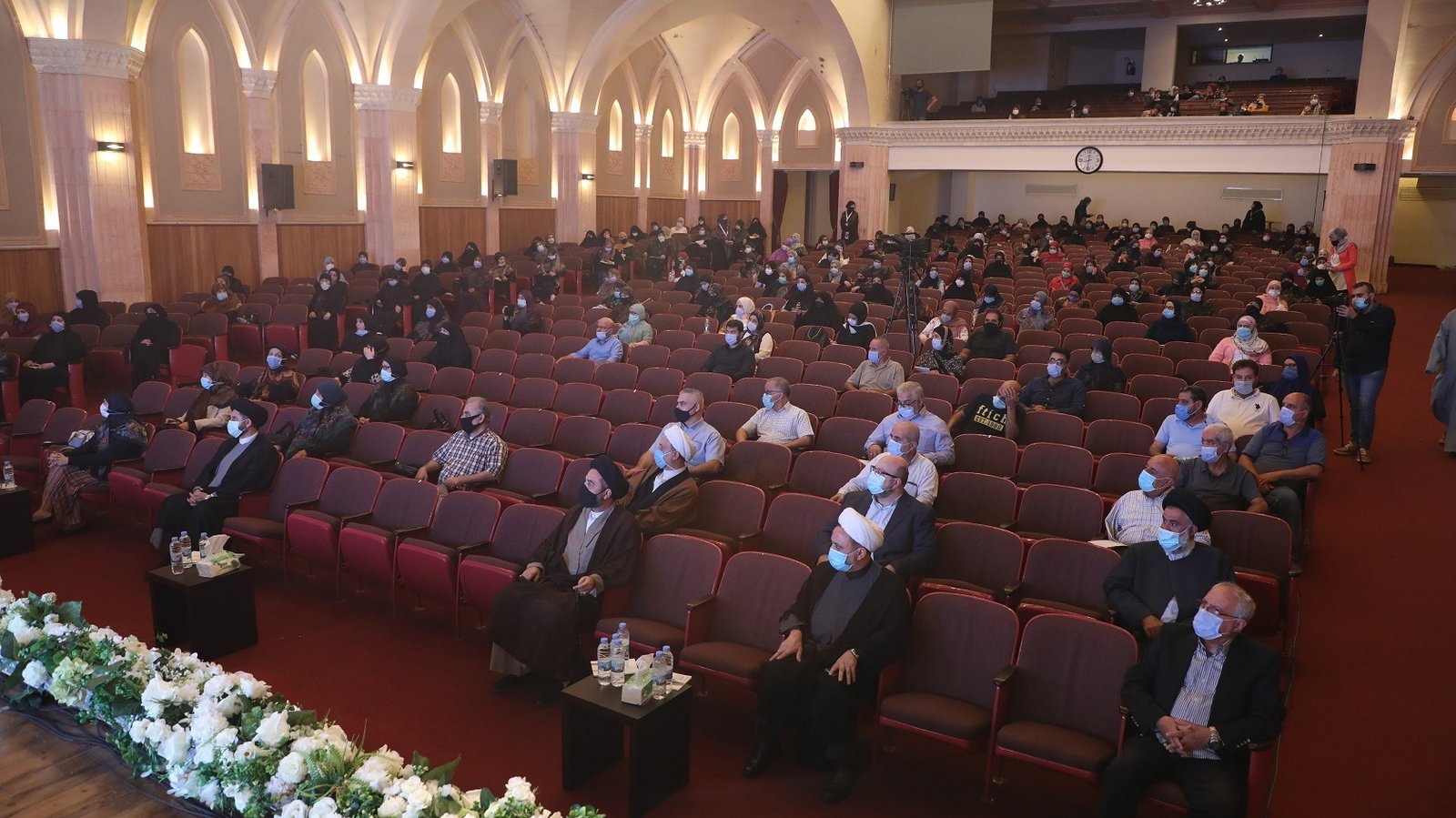
Al-Mabarrat Charitable Association held its twenty-ninth educational conference under the title “The Sustainability of Care and Teaching Amid the Crises”, with a symbolic participation of those working in its various institutions in Lebanon, in the Lady Al-Zahraa hall in Haret Hreik.
At the outset, a Quranic recitation by the international reciter Fatima Younes, followed by the Lebanese national anthem, then a historical presentation entitled “Drawing Strength from the Heart of the Crises”, then a filmed anthem entitled “The Edifices of Al-Mabarrat”.
The Director General of Al-Mabarrat
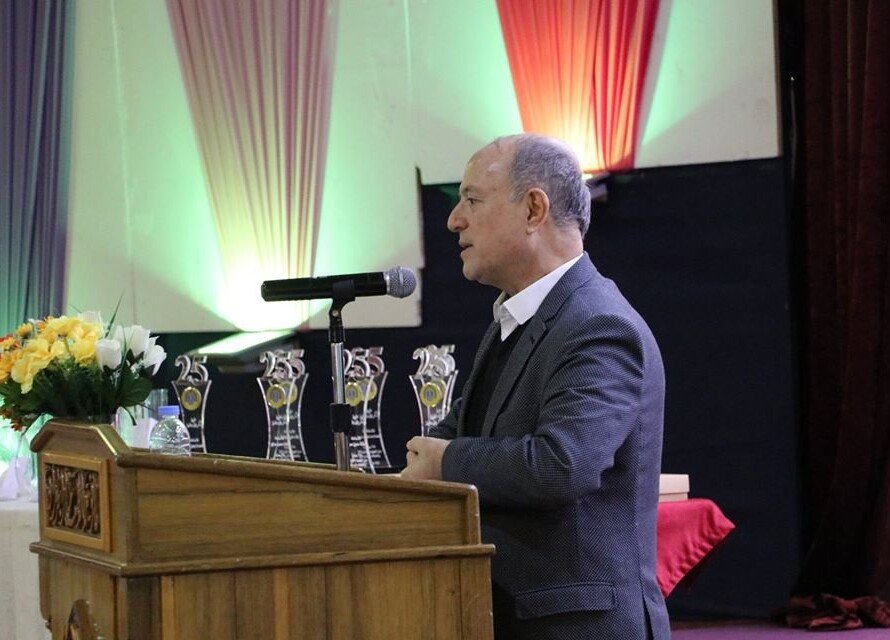
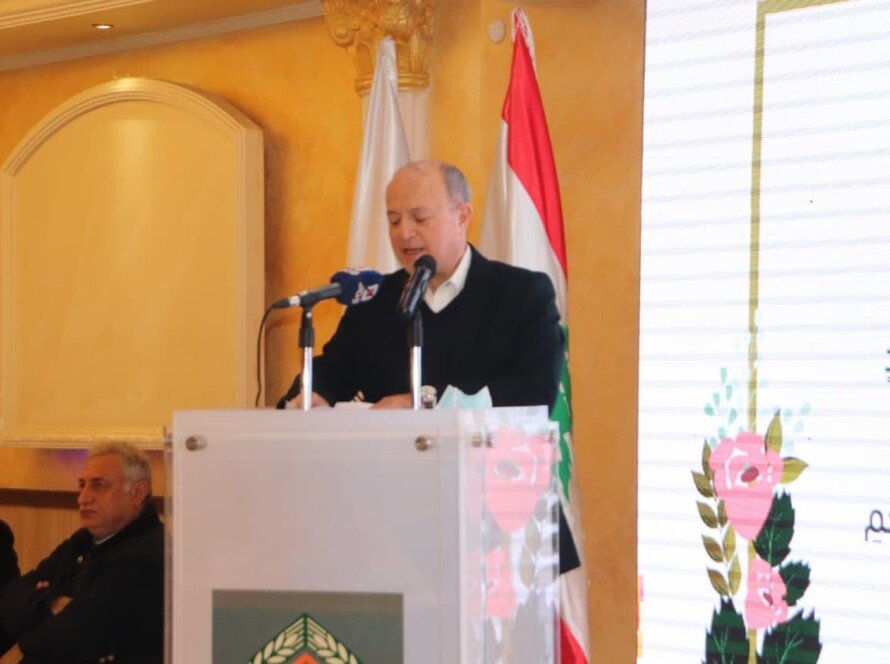
The Director General of Al-Mabarrat Charitable Association Dr. Mohammad Baqer Fadlallah then delivered a speech in which he said: “Al-Mabarrat has proved its effectiveness and efficacy in facing challenges since its emergence 43 years ago”, pointing out that “Al-Mabarrat Association, as the crises intensify, stands before the new challenges to undergo the experience through the faith of the members of its family, their efforts, their patience and their bearing of the toil”.
He added: “The crises follow and intensify, and the institutions' immunity grows - an immunity deriving from the immunity and mission-driven spirit of their leaders, their staff and those working in them, an immunity founded in practice on will, determination and insistence on work, and on positive thinking through accumulating previous experiences, learning, training, continuous evaluation, the spirit of faith and beautiful patience.”
He spoke of the experience of distance learning, saying: “The new crisis came and with it the experience of remote learning and care, which we consider a new turning point towards distinction, where - as in all our previous experiences - we should benefit from and invest the knowledge, expertise and skills acquired and the materials and aids produced in order to develop teaching and care practices.”
He added: “We broke the barrier of apprehension in some people about using technology in teaching, or about the smart interactive applications that stir the pupil's motivation to learn on the one hand and allow individual learning to be strengthened on the other.”
He noted that “Al-Mabarrat's teaching institutions engaged with the crisis by not confining their programmes to the curricula of the teaching subjects; rather they placed at the core of their programmes the development of intellectual and social skills and the building of self-esteem, through to deep learning skills and social-emotional learning”.
He said: “This accumulation of experience and store of skills was manifested in the rapid response during the health crisis caused by the coronavirus pandemic, where Al-Mabarrat's schools and institutes turned the crisis into an opportunity: first by launching their own platform for distance learning; second by preparing interactive teaching materials, which exceeded six thousand teaching videos, in addition to the supporting materials and carrying out the assessment of attainments remotely; and third by securing channels of communication between educators and pupils and then between educators, supervisors and the teaching administration, which helped ensure the continuation of learning.”
On the care of orphans during this crisis, Fadlallah explained “that the care institutions accompanied them in distance learning and delivered the lessons on CDs to those without internet. They also provided them with many electronic devices, mobile phones and DVD players in their distant locations, from the highlands of Hermel to the furthest South, and followed up their living, social and health situations. They also helped those among them who had graduated and completed the secondary stage in the process of enrolling at universities for the coming year, as well as making financial contributions to their university fees.”
On the continuity of training and development for the staff, Fadlallah said: “Al-Mabarrat was and remains firmly convinced that investing in the development and professional growth of all those working in it, at every administrative and technical level, remains a priority for realizing Al-Mabarrat's mission with distinction”, affirming “the continuation of this strategic policy despite all the difficult economic circumstances and the new crises, through new, innovative methods that reduce the material cost and improve the results and the impact on practice - where use can be made of employing smart applications in remote training and of strengthening individual training built on daily interaction between trainer and trainee”.
He spoke of the programmes of the university belonging to Al-Mabarrat, saying: “Proceeding from the harsh circumstances the Lebanese suffer today, and out of the commitment of the University of Sciences and Arts in Lebanon (USAL) to the mission of Al-Mabarrat's institutions in supporting and backing the most deprived groups in Lebanon, it launched the “Tumouh” programme - a programme of academic scholarships for students of limited means, most of which reach up to 100%.”
He added: “The circumstances of the pandemic and the sudden engagement in distance learning formed an important opportunity for the university's researchers and academics to begin field studies on the effectiveness and quality of this experience and on its challenges and risks; in addition to another scholarly study on the effectiveness of distance learning compared with in-person (direct) learning and its effect on students' motivation and their academic attainment. The results of this study will help in adopting and developing more effective strategies for distance learning in times of crisis.”
Regarding the situation of Al-Mabarrat's schools in the new academic year, Dr. Fadlallah explained: “Al-Mabarrat's schools have drawn up a plan comprising four paths that take into account the possibilities for resuming learning. The first path is attendance at the institutions with the application of preventive health measures and social distancing. The second adopts the virtual classes to be delivered directly through three central centres, for the learning of the group that will not be able to attend their classes. The third path is blended learning, where teaching is divided between attendance in the actual classroom and distance learning in the virtual classroom, on a rotating basis among the pupils. The fourth path is the teaching platform, which was developed during the summer holiday.”
He concluded by saying: “It is Al-Mabarrat's policy to deepen the spirit of partnership with the families, and Al-Mabarrat has worked to ease the burdens on families in this deteriorating economic situation. In addition, the schools will leave the choice to the families between buying the textbook, whose cost has been subsidized at a suitable price, along with organizing the exchange of books among the pupils, or renting the book at a symbolic price. The orphans' bookshop belonging to Al-Mabarrat has worked on offering part of its revenues to secure the necessary books in support of the schools in the coming year.”
Discussion panel
After that the organizers presented filmed interventions by Dr. Vivian Khamis on “essential pillars in building resilience in the young”, Dr. Adnan Al-Amine on “Corona and distance learning: assessing the experience and how we can build on it”, and Dr. Rima Karami, who addressed the subject of “the institution's readiness to meet crises and the priorities of the current year”.
This was followed by a discussion panel moderated by the conference coordinator Ayat Nour Eddine, in which the deputy director general for education and teaching at Al-Mabarrat Rana Ismail took part, along with the director of Al-Hadi Institution for Hearing and Visual Impairment and Language and Communication Disorders Ismail Al-Zein, the director of the Doha care and educational complex Sheikh Fouad Khreis, and the general religious supervisor Sayyed Jaafar Fadlallah.
It should be noted that the conference featured more than forty workshops and panels, among which those working at Al-Mabarrat were distributed - teachers, care supervisors, administrators and academics from Al-Mabarrat's various care and teaching institutions.