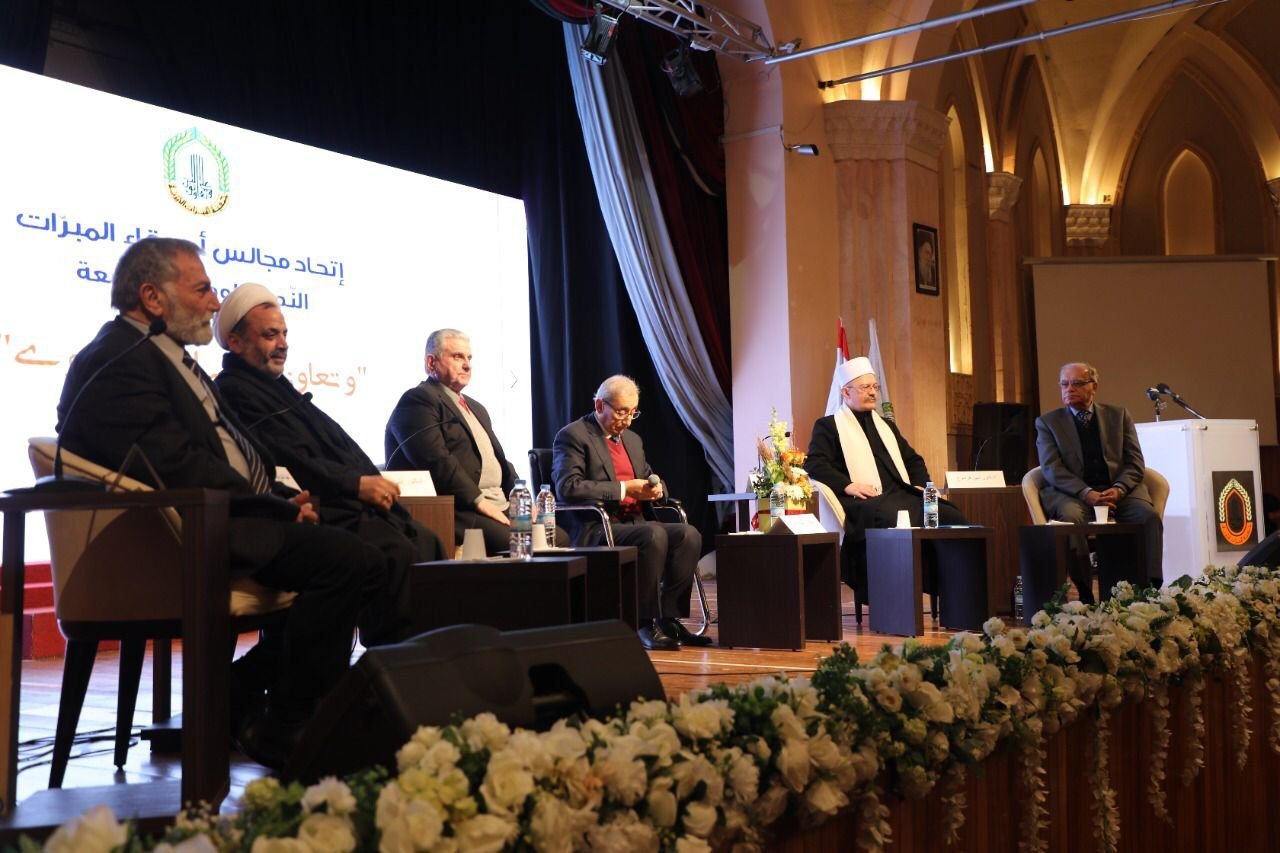
The union of the boards of friends of Al-Mabarrat Charitable Association organized an inclusive national panel under the title “Cooperate in Righteousness and Piety”, in the presence of representatives of religious, educational and social associations and institutions, in the Al-Zahraa hall at the Al-Imamain Al-Hasanain (a.s.) complex in Haret Hreik.
The panel's proceedings focused on the means of bringing together the forces of good, the growth of positive stances, and the complementarity of constructive efforts by educational and cultural institutions of a religious character, in order to strengthen the fields of good and national unity in Lebanon.
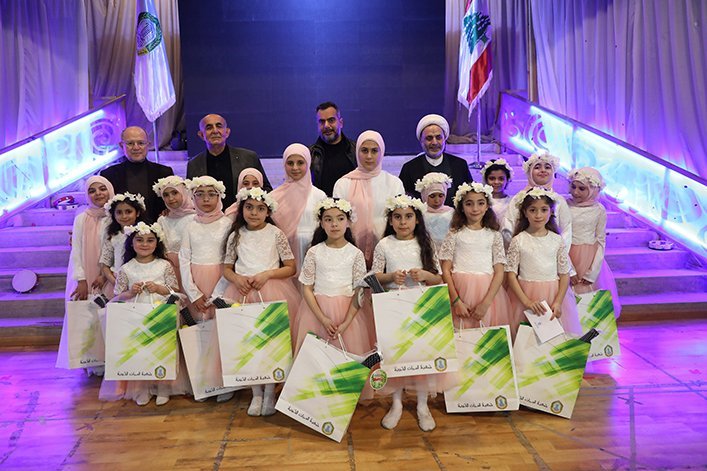
The panel opened with anthems inspired by the annunciation to Lady Maryam of her giving birth to Jesus Christ, peace be upon him, presented by Al-Mabarrat's artistic troupe.
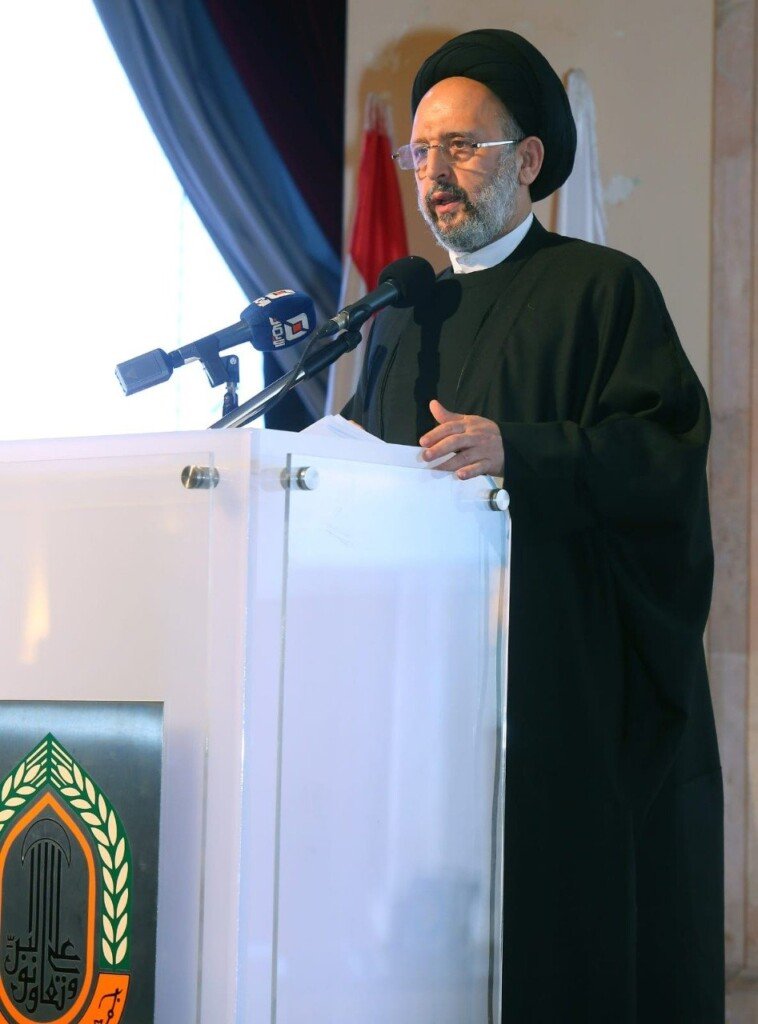
The scholar Fadlallah
The panel was opened with a speech by the president of Al-Mabarrat Charitable Association Allama Sayyed Ali Fadlallah, in which he affirmed “the importance of cooperation in this national circumstance, on which the Lebanese are agreed as to the necessity of cooperating among themselves”, noting “the union of Al-Mabarrat's boards, which has not hesitated to exert efforts in growing the seeds of truth and good in this country that they want to turn into a patch of begging, after they plundered its people's money and turned them into fragments fighting one another, in order to protect unjust authorities, corrupt politicians and greedy merchants - so that we can hardly see a glimmer of hope to raise this ugliness that has disfigured the image of this homeland, which was among the most beautiful of homelands”.
He added: “Our country will not be saved by inflaming fanaticisms as is happening, but by a contest of programmes and plans competing to offer everything that revives the homeland and saves millions of people from misery and famine, and restores to the homeland its unity, its stability and its prosperity, so that it may have a state of citizenship - a state in which a person lives in dignity, freedom and safety; a new state on the ruins of this state which many politicians have made a state of quota-sharing, a state of dividing up deals and contracts, a state of multiple heads, a state of corruption and corrupting that begrudges its people their rights and whose actions produce nothing but the drying up of the springs of good in life.”
Allama Fadlallah held that “our responsibility today is to build the state of the human being - the honoured human being, the giving human being, the human being of justice, of values, of work, the work of goodness and beneficence”, calling for “cooperation to establish a human bond held together by the ties of love, mercy and faith, open to every person and every needy social group regardless of their beliefs, their affiliations and their identity, because goodness has no identity”.
Friends of Al-Mabarrat
The panel was chaired by the president of the union of the boards of friends of Al-Mabarrat Dr. Wajih Fanous, who set out that the aim of this meeting was to offer an effort to bring the homeland to a practical and national distinction between what is religious and what is a sectarian political exploitation of religion in our educational and social life, pointing out that there is no religious spirit that does not call for positive, constructive encounter among people whatever the differences in their religious conceptions, and no denominational or sectarian tendency that is not the object of an odious political exploitation to sow discord and scatter disagreements among the people of one homeland.
Representatives of the associations
The panel featured interventions by a number of representatives of religious, educational and social associations and institutions in Lebanon, in which they set out their institutions' and associations' experiences in strengthening the fields of national encounter.
It began with the speech of the Al-Maqased Charitable Association, delivered by Dr. Amin Farchoukh, in which he focused on the importance of encounter and cooperation, pointing to “the Beirut declaration on religious freedoms launched by Al-Maqased in June 2015 and the concepts and values it contains”, holding that the panel comprises “attempts that together we may call lit torches - the road is long and the darkness weighs here and there, but it is important that we keep the torches lit, in the hope that they may light even small spaces, which we hope will widen”.
After him spoke the representative of the Al-Ishraq institutions Dr. Sheikh Wajdi Al-Jardi, who affirmed in his speech the importance of “cooperation, through which an individual senses their responsibility towards the other, and by which the nation likewise attains its purposes and its goals and becomes a well-built structure, coherent in form and in meaning”. He concluded his words by asking: “To what extent can we reconcile our fellow citizens as long as each of us calls for a homeland cut to their own measure, ignoring that religion is for God and the homeland is for all?”
Then came the speech of the Orient Club for the Dialogue of Civilizations, delivered by Mr. Elie Serghani, who spoke of “the gravity of the conditions Lebanon is passing through as a result of the multiple crises we live through, and the necessity of cooperation in order to ease their repercussions”. Serghani praised the experience of Al-Mabarrat, which “imposed itself as a model and a school in humanitarian work based on cooperation”.
The speech of Al-Mabarrat Charitable Association was delivered by Sheikh Fouad Khreis, who set out Al-Mabarrat's experience and the means of cooperation between it and similar associations. Khreis pointed out that “the association, from its beginning and through the mind of its founder the Marja Allama Sayyed Mohammad Hussein Fadlallah, lived the concern for unity, extending the hand of good to all; its basic culture is a culture of practical and spiritual openness to all, rejecting fanaticism and calling for dialogue and respect for the other opinion”.
The closing speech was delivered by the adviser to the Lebanese presidency for Islamic-Christian dialogue affairs Mr. Naji Khoury, who spoke of “an existential crisis Lebanon is passing through”, holding that “our sectarian system in its current practice has failed, and we must find an alternative after it bequeathed to us the ugliest images in the relations among the Lebanese over the last two years”. He said: “We must move to internal peace, to building and to love. Lebanon deserves a modern system, uncorrupt officials, and a people that believes in it and in its message.”
It is noted that the panel was held within the framework of the educational, social and national activities of the union of the boards of friends of Al-Mabarrat for the 2021-2022 cultural season.