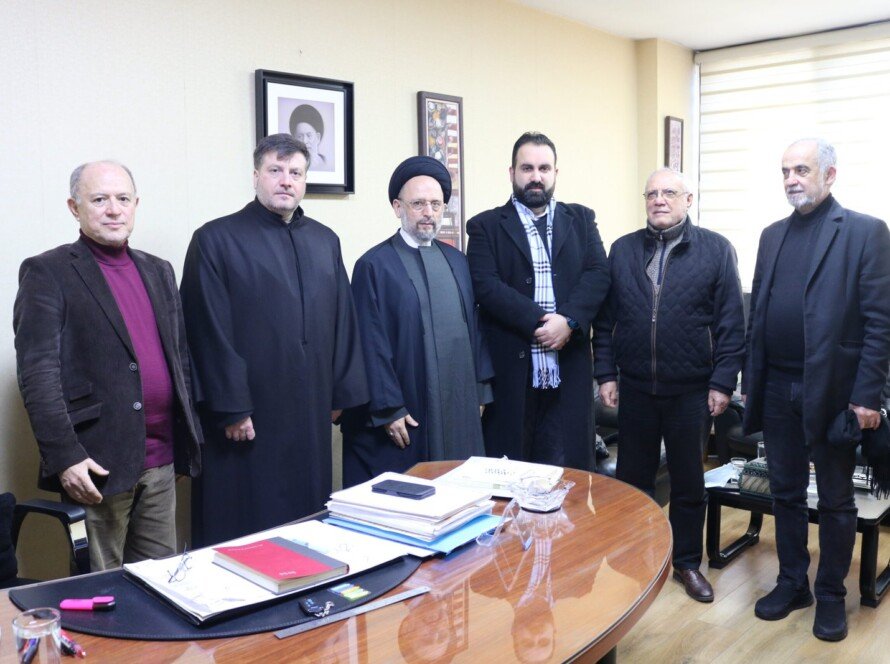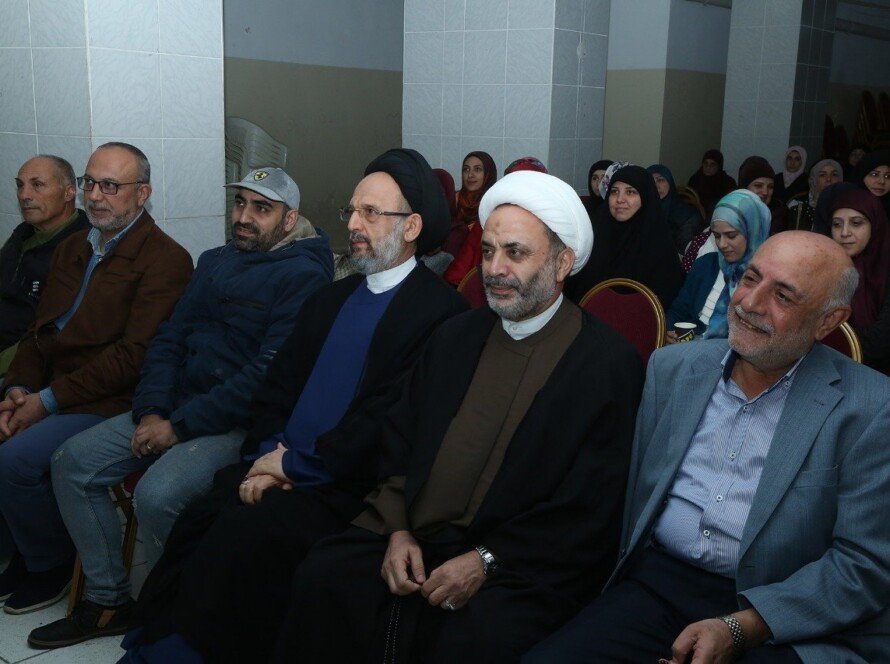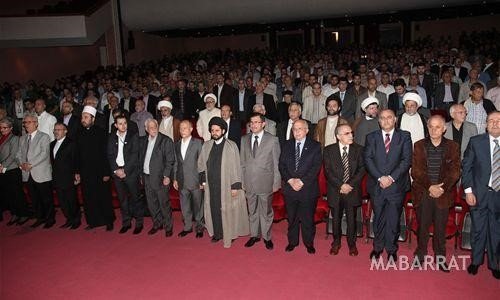
During Al-Mabarrat Week, Al-Mabarrat Charitable Association launched the results of the self-evaluation study measuring the effect of the administrative development programme on Al-Mabarrat's teaching and care institutions, and the strategic development plan for the second decade, at a large ceremony at the UNESCO Palace attended by political and social figures, representatives of various educational institutions and a gathering of Al-Mabarrat's people.
Before the seminar the organizers distributed the guide to the study's executive summary, which summed up in its first pages what the administrative and educational development programme had led to in its tenth year: achieving a qualitative change at the level of administrative and leadership practices, accomplishing capacity-building for more than 150 persons of the association's basic staff, and likewise spreading the culture of development and renewal and a shared administrative language in the association's institutions and departments. Alongside that, it established a culture of reflection, evaluation, review, correction of course and improvement of the experience.
The opening was verses from the Holy Quran, then the Lebanese national anthem, then a speech by the president of Al-Mabarrat Charitable Association Allama Sayyed Ali Fadlallah, delivered on his behalf by Allama Sayyed Jaafar Fadlallah, in which he said: Our aim was and will remain to contribute to forming a society that exercises its responsibilities with self-directed freedom and with spiritual joy, so as to close the gaps here and meet the needs there, in a persistent and continuous endeavour to ease the repercussions of the tragedies of orphanhood, poverty, disability, ignorance, rancour, division and fanaticism. We have undertaken this reforming process, in thought and in deed, without making these tragedies rich material for heaping accusations on this or that negligent government, or on this deficient Arab or religious mind, or on what are called backward social structures, or on the weight of history and its burdens - as many of us do, when they substitute for work the casting of blame on all of that, as though by that they had done their part and performed their duty, in the hope that this may be an acquittal for them before God, people and history.
He pointed to the concept of development at Al-Mabarrat, saying: When we speak about development, we touch the horizon of the future; for development is a necessity, so that we do not become part of the past and freeze within its limits - and in stagnation there is death, while development is life and progress. Development begins with the human being before it begins with anything else. To work on developing the human being is to work on renewing the mind, the heart and the spirit; to live the message-driven concern; to be keen that the conscience should remain sound so as to sense society's pains, so that we do not turn into beings cold in human terms; to be keen that our perceptive apparatus should remain sensitive, so as to know reality's needs and to seek out solutions; to be keen that our souls should continue to live hope, reassurance and true reliance on God, so as to build a bright future - a future we make through scientific planning, after reactivity and spontaneity have exhausted us.
He affirmed that we want Al-Mabarrat, as we want all the social institutions, to produce for our societies a new human being in thought, practice and aspirations, and in bearing responsibility and managing the self, so that we may be worthy in carrying out our educational, teaching, social, human, spiritual and moral roles in the service of the human being, in reducing the areas of weakness and in developing the arenas of strength. That is a noble task and a great responsibility - so shall we be equal to this task and this responsibility?
Al-Amin
After a song by the Al-Mabarrat arts troupe entitled And Al-Mabarrat Remains, the president of the Lebanese Association for Educational Sciences Ali Al-Amin gave an intervention in which he said: Al-Mabarrat's features have rarely been brought together in one educational institution in Lebanon and the Arab world. First, the social mobilization, that is the sum of the social force driven to support the association and to work at achieving its aims. Second, the equation of institutional commitment and openness to continuous modernization - in this equation, using modernization in order to achieve the aims and not making the aims serve modernization. Third, taking in those in need, the orphans and the poor, preventing them from falling into social injustice, and raising them towards quality of education and quality of life, side by side with the rest of its learners, bringing them to prestigious vocational institutes and secondary schools.
Director General of Al-Mabarrat
The director general of Al-Mabarrat Charitable Association Dr Mohammad Baqir Fadlallah delivered a speech in which he thanked those who had contributed to the administrative development programme. He said: The secret of Al-Mabarrat's success is that it drew from the wellspring of Sayyed Mohammad Hussein Fadlallah in its message-driven, educational, teaching, cultural and humanitarian journey. On the fourth anniversary of his bodily departure we today look forward to Al-Mabarrat's future with a second ten-year development plan, drawing inspiration from his thought, his will and his testaments - not so as to preserve the gains and the accomplishments, but so that development, growth and creativity may be our means of attaining the great aims.
He added: There is another secret among the secrets of Al-Mabarrat's success, namely its winning of the trust of the people and of society, since it worked to meet many of society's needs and brought in with it the good people, who have never been miserly in helping to establish and build institutions of goodness; and likewise it filled the children's hearts with love, compassion and tenderness.
He said: In this spirit dozens of Al-Mabarrat's institutions arose, which have focused in their accomplishments on the quality of the work and are still developing their services and their programmes, until it has become one of the largest associations in Lebanon in the scale of its institutions spread from Beirut to the Bekaa, the south and the Mountain - in addition to developing the association's structural framework in all its administrative details.