The media department at the University of Sciences and Arts in Lebanon devoted three consecutive days to discussing the graduation projects of the media students for 2018 in the three media specializations: electronic media, radio and television, and public relations, in the presence of the administrators and lecturers of the media department and the students' families.
On the occasion the head of the university's media department Mr. Farouk Rizk noted that the students had presented pioneering and advanced media projects expressing their readiness for the labour market, since the final project is considered an expression of the sum of the knowledge and skills media students have acquired in all their courses, and is marked by its practical, procedural character resting on scholarly fundamentals and principles and on the principles of social responsibility.
He added: “The graduation project is the graduate's gateway to the labour market: before an institution or an employer looks at a graduate's personal qualities, it first looks at their graduation project, for the kind and the strength of the project is what determines the graduate's technical and programming level.”
He held that “the university helps students to make their submitted projects real-life projects, through which the students can shed light on the problems surrounding them and on the different alternative solutions to them”.
The public relations projects were discussed before a panel composed of the lecturers Farouk Rizk, Jihad Mallah and Lana Abdullah, where the public relations students presented their projects, which comprised marketing projects, media campaigns and new creative ideas on the following subjects:
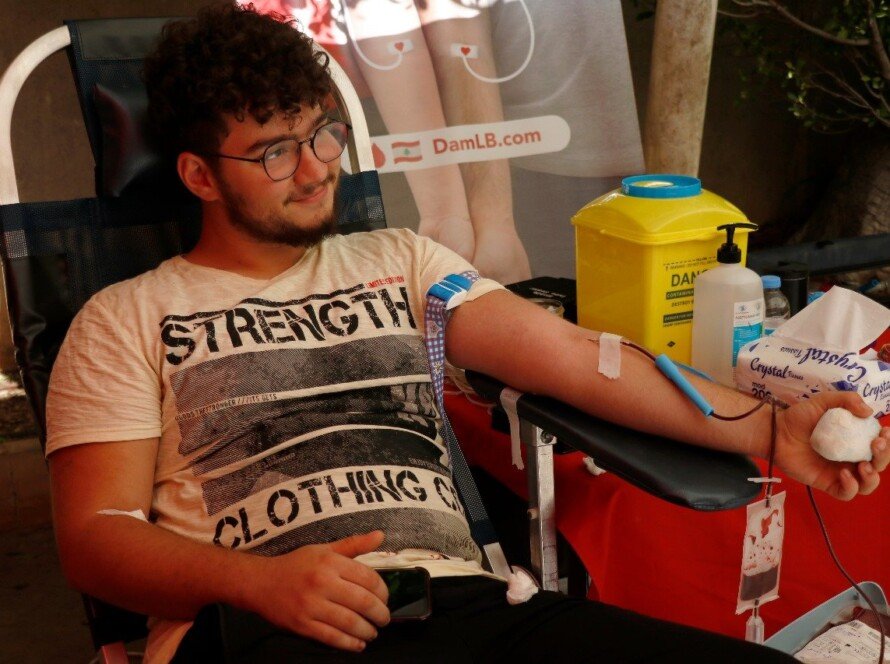
A media campaign for the Aquafina company, “Drink More Water”, presented by student Douha Hamadi, aiming to introduce the importance of drinking a sufficient quantity of water and to remind people to drink water; an awareness campaign on religious tourism in Lebanon presented by student Zeinab Raad, aiming to introduce this kind of tourism and to encourage it amid the economic problems the homeland suffers; a campaign introducing a women's sports club presented by student Hawraa Al-Miqdad; an awareness campaign about organ donation presented by student Malak Nour Eddine, aiming to spread a culture of organ donation in society and to correct the prevailing idea that donating organs after death is forbidden; and an awareness campaign about breastfeeding presented by student Malak Ayash, aiming to urge women towards the importance of breastfeeding and its application in the maternity department of any hospital. The students adopted strategies and tactics resting on scholarly fundamentals in their projects.
After that the radio and television projects were discussed before a panel composed of the lecturers Mohammad Al-Dayqa, Randala Jabbour and Ali Al-Hajj Youssef, where the radio and television students presented summaries of documentary films as follows:
A documentary entitled “A Cured History” presented by student Hossam Taha, in which he addressed village life in the past in Hermel and the changes that came upon the conditions of life; a documentary entitled “The Melody of the Rebab” presented by student Malak Hamadi, in which she addressed the history and conditions of the Roma in Lebanon, shedding light on their social life and the problems they face; a documentary entitled “The War of Normalization” presented by student Maryam Shamseddine, in which she addressed electronic normalization in the war with the Zionist entity; a documentary entitled “A Speck of Dust” presented by student Farah Atwi, in which she addressed the change in the relationship between people and cinema in Lebanon; a documentary entitled “And When the Soul Speaks” presented by student Nour Hamadi, in which she addressed the martyr's presence among their family after their martyrdom; a documentary entitled “A Turban and Strings” presented by student Asmahan Safi Eddine, in which she discussed the relationship of a religious scholar with music from the jurisprudential standpoint; and a documentary entitled “Better Than a Thousand Months” presented by student Marlene Shuhail, in which she addressed the eating habits in the blessed month of Ramadan that lead to excess and waste among some segments of the Lebanese people, addressing the religious position on these behaviours. The projects were the object of the panel's appreciation and admiration.
In closing came the discussion of the electronic media projects before a panel composed of the lecturers Reda Moussa, Farah Baalbaki and Ali Ahmad, where the electronic media students presented their projects, the most notable being: a project to develop the digital media of Bahman Hospital in Haret Hreik presented by student Douaa Ibrahim; and a project to develop the digital media of Al-Hadi Institution for Hearing and Visual Impairment and Language and Communication Disorders presented by student Alaa Blaibel. The projects included an analysis of the electronic media system at the two institutions and the proposal of an integrated development plan along with practical models suited to the different social network services..