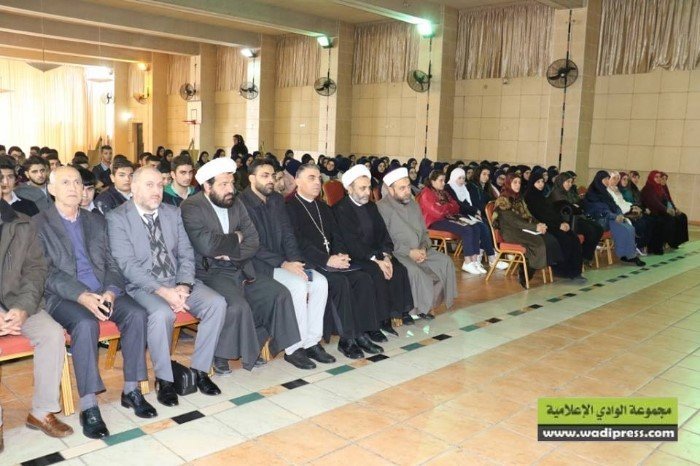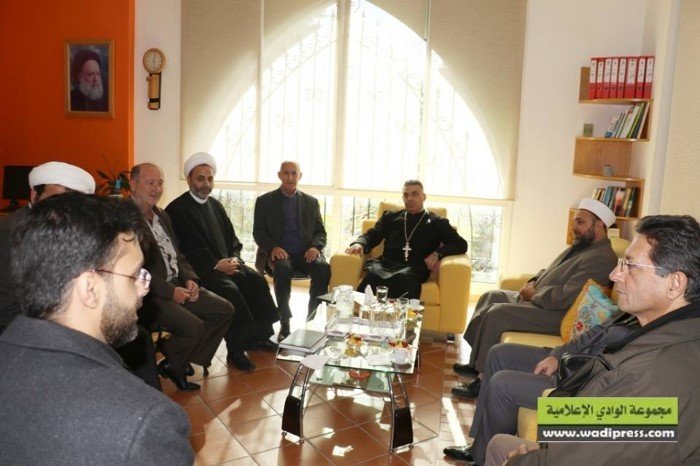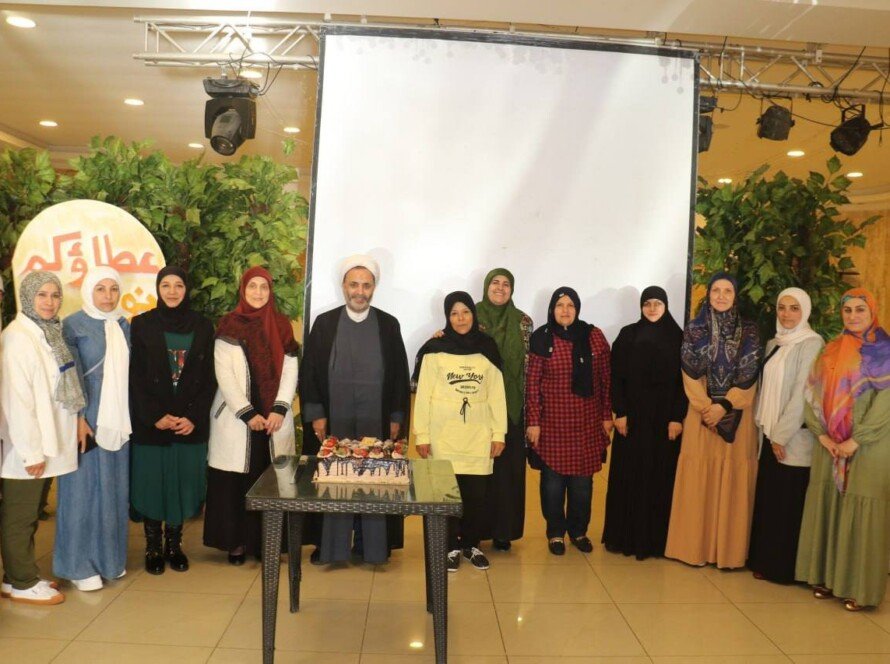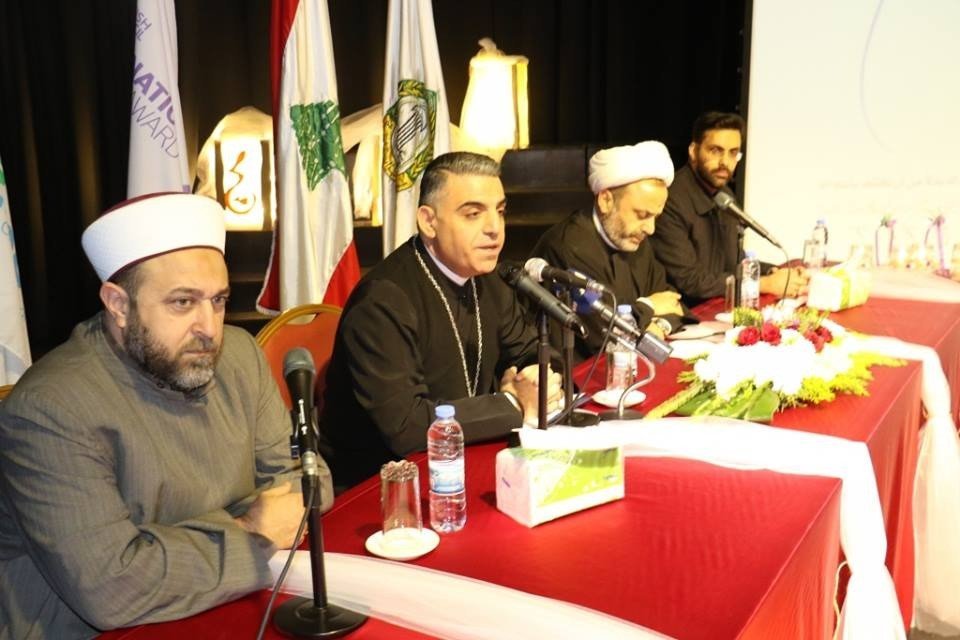
“Al-Rahma” High School in Kfarjoz, belonging to Al-Mabarrat Charitable Association, organized a panel entitled “Between the Mawlid and the Nativity: Radiant Stations and Civilizational Values Drawn Upon”, attended by Islamic and Christian religious figures, the directors of neighbouring schools and educational, municipal and social figures.
The panel featured speeches by the judge at the Saida court Sheikh Hussein Hably; the head of the episcopal diwan of the Greek Catholic diocese of Saida and head of the “Lycée Saint Nicolas” school Monsignor Jihad Francis; and the director of the religious supervision department at “Al-Mabarrat” Association Sheikh Fouad Khreis.
Francis
After clear verses and the national anthem, a speech by the school's religious supervisor Sheikh Hussein Qaaiq, then Francis pointed out that “the prophets are God's word among people and His creation in society”, and said: “At the birth of the prophets we must pause before them, because their birth is not only a religious occasion but a model for how we deal with one another. They are the example for us: they were not rigid or arrogant but humble. When we remember the birth of the prophets we must take as our model those we celebrate.”
He added: “God does not love the walls that keep increasing everywhere; we see that the Quran did not refer to non-Muslims with the word 'others' but called them the People of the Book - and among family there are no walls.”
Hably
For his part Hably noted that “the Messenger of God was sent as a mercy to the worlds and not to a sect of Muslims”, and said: “In reality there is ignorance of the other with whom we live, and the violence that occurs does not represent religion; rather it is the deviants in every community who have distorted the true face of the messages. Generalization is impermissible because it is a dangerous matter.”
He turned to the thought pursued by Sayyed Mohammad Hussein Fadlallah in his call to dialogue.
Khreis
Khreis said: “That the Mawlid and the Nativity should draw near in time is a historical matter, but more important is the closeness and the nearness the messengers and prophets represent, for there is no difference between them. How could Muhammad differ with Jesus, who said I came to fulfil the greater law, while the noble Messenger says I was sent only to perfect noble character?”
He added: “Dialogue is important with those we meet with and those we differ with, proceeding from the thought of His Eminence Sayyed Fadlallah, who said: I believe in a truth, namely that I love those I meet with so as to cooperate with them in righteousness and piety, and I love those I differ with so as to cooperate with them in dialogue in order to understand the truth.”
Interventions and certificates
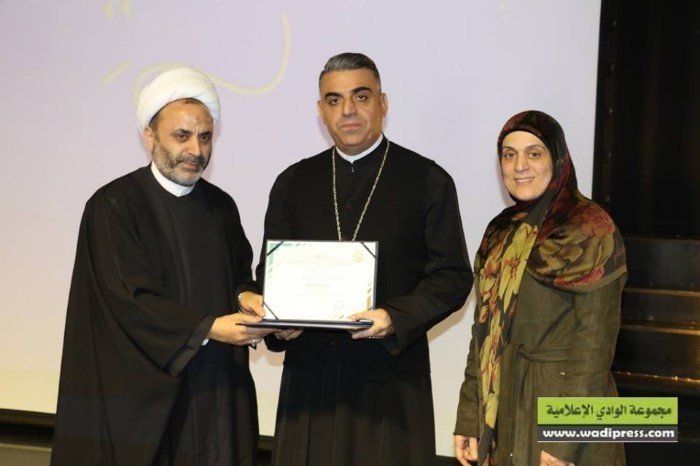
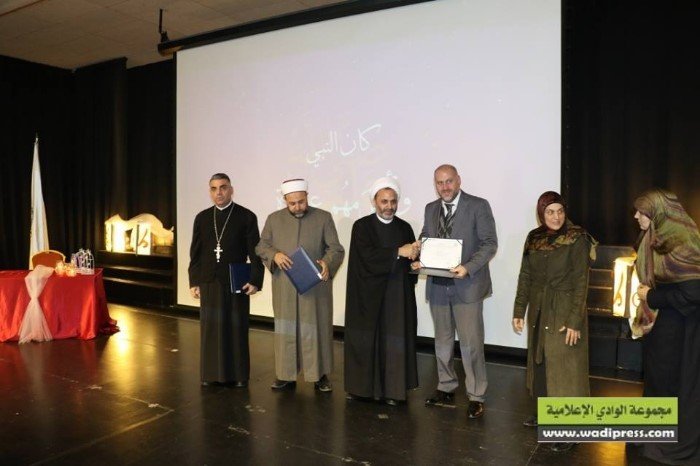
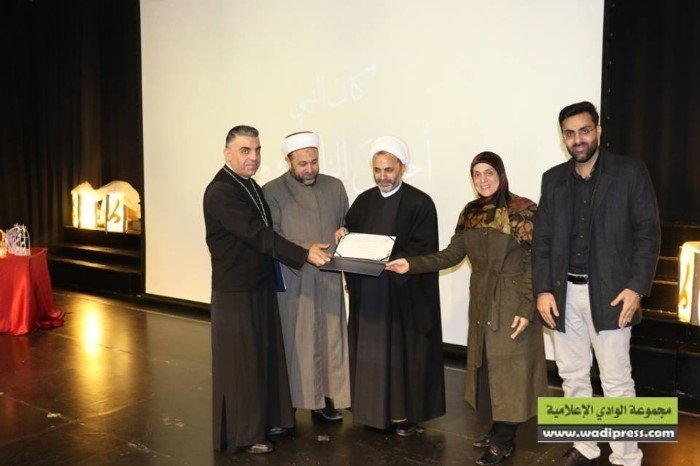
In closing the speakers answered the pupils' questions and interventions, then certificates were distributed to the participants.
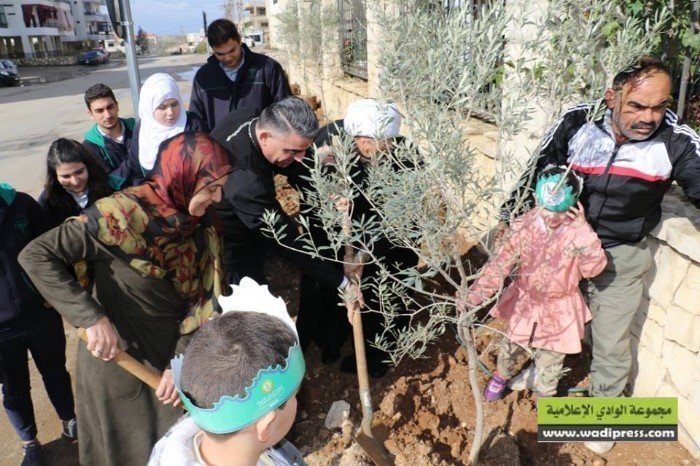
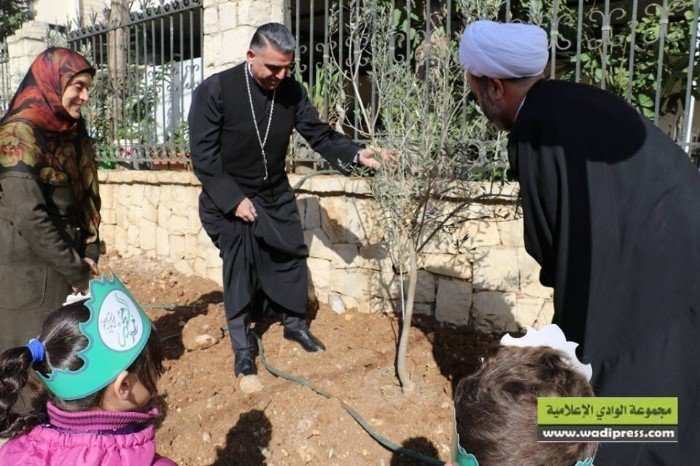
The speakers had planted a number of olive trees at the school's entrance as a symbol of gathering on goodness for the sake of the human being and of life.