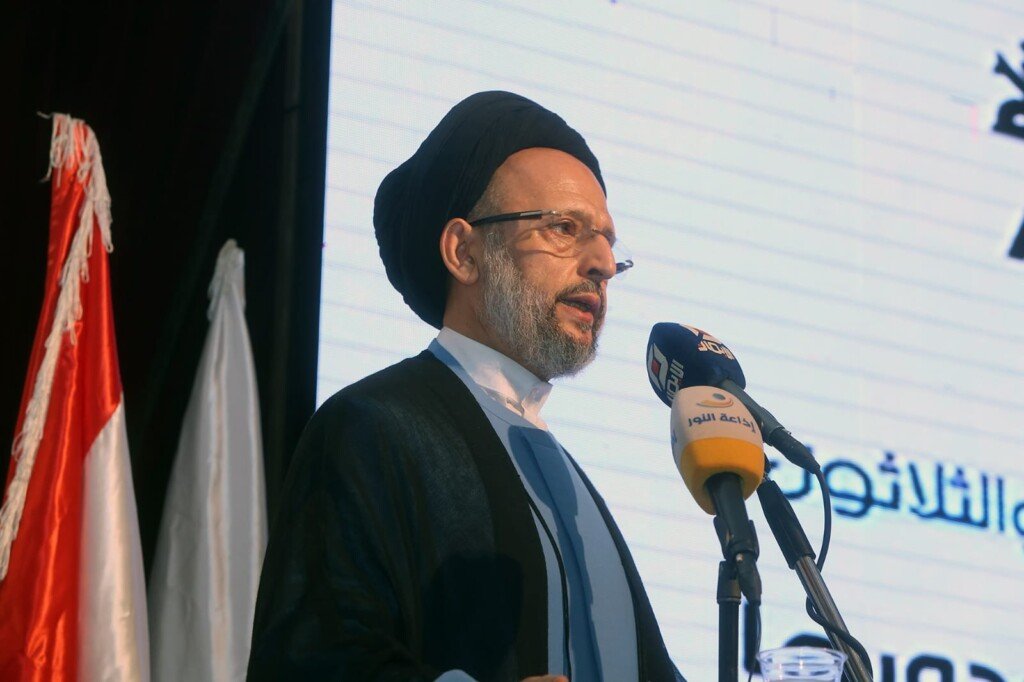
The president of Al-Mabarrat Charitable Association Allama Sayyed Ali Fadlallah held that: “All the collapses taking place in the country, sadly, stir nothing in the officials towards treating this reality, above all preventing the spread of ignorance, which is the harshest thing the country can come to.” He said: “We renew our demand that the state, which is responsible for its citizens, not take a position of indifference and not shirk carrying out its responsibilities in easing the burdens on citizens and supporting the educational institutions so that they may perform the role required of them towards it, in order to prevent their collapse.”
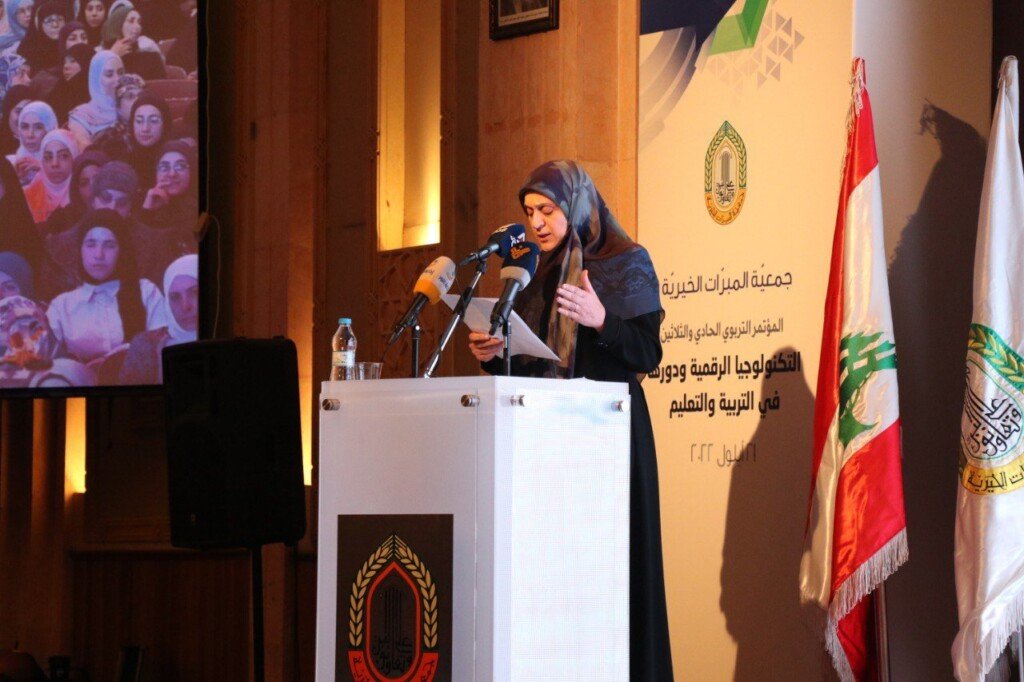
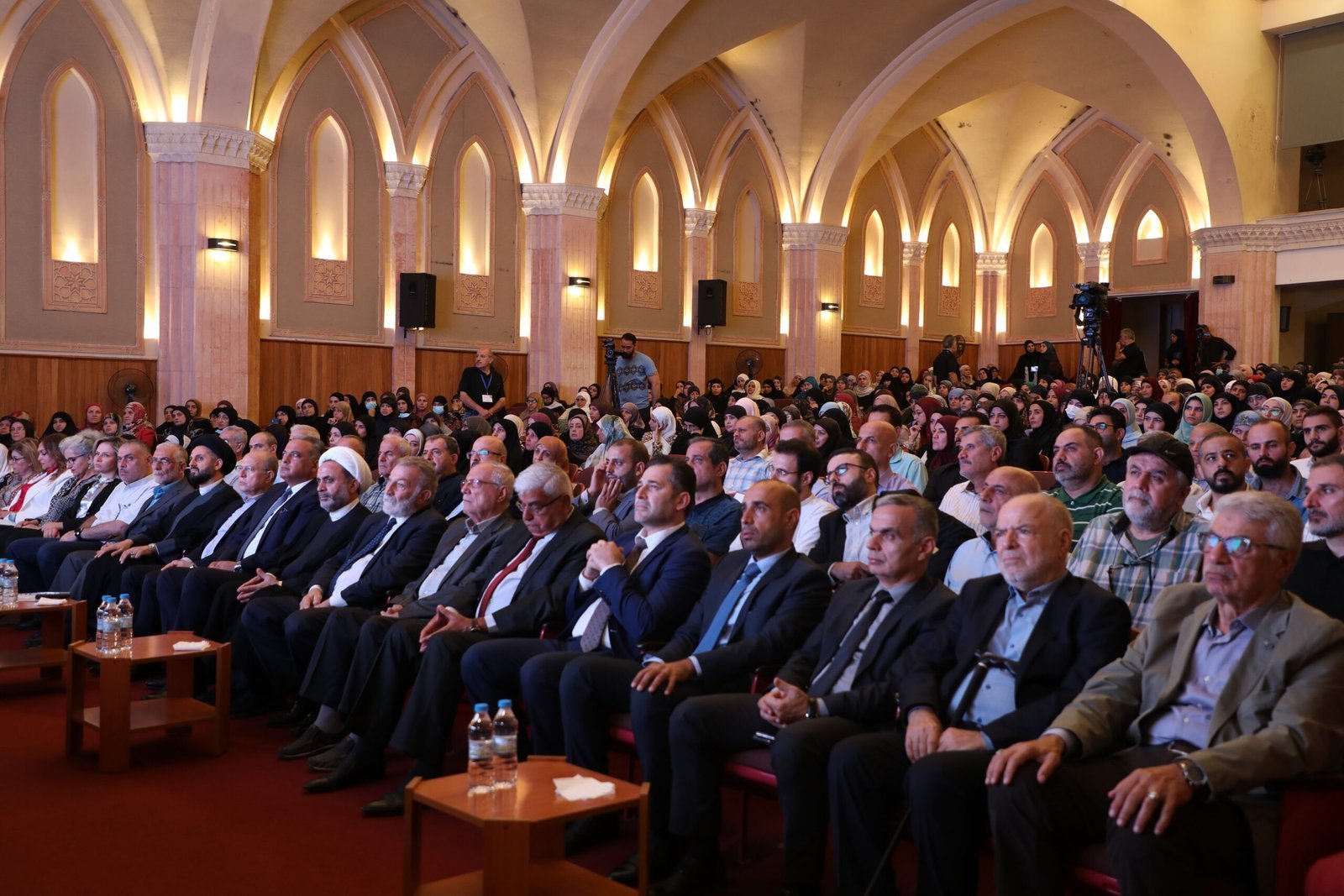
Allama Fadlallah's words came during the thirty-first educational conference of Al-Mabarrat Charitable Association, under the title “Digital Technology and Its Role in Education and Teaching: Opportunities and Challenges”, held in the Al-Zahraa hall at the Al-Imamain Al-Hasanain complex in Haret Hreik, under the patronage of the Minister of Culture Judge Mohammad Wissam Al-Mortada, and in the presence of the Director General of Al-Mabarrat Charitable Association Dr. Mohammad Baqer Fadlallah, the adviser to the president of the republic for Islamic-Christian dialogue Mr. Naji Khoury, the adviser to the Minister of Education Mrs. Ramza Jaber Saad, the president of the Educational Centre for Research and Development Professor Hiyam Ishaq, the head of the founding body of the syndicate of educational technology in Lebanon Dr. Rabih Baalbaki, the professor of educational administration and policy at the American University Dr. Rima Karami, the head of the education department at Balamand University Dr. Ghania Zgheib, the director general of the Religious Education Association Mr. Mohammad Samaha, the secretary general of the Catholic Schools Father Youssef Nasr, the head of the Ghobeiry municipality Mr. Maan Al-Khalil, the head of the Burj Al-Barajneh municipality Mr. Atef Mansour, and educational, social, cultural, municipal and media figures.
Minister Al-Mortada
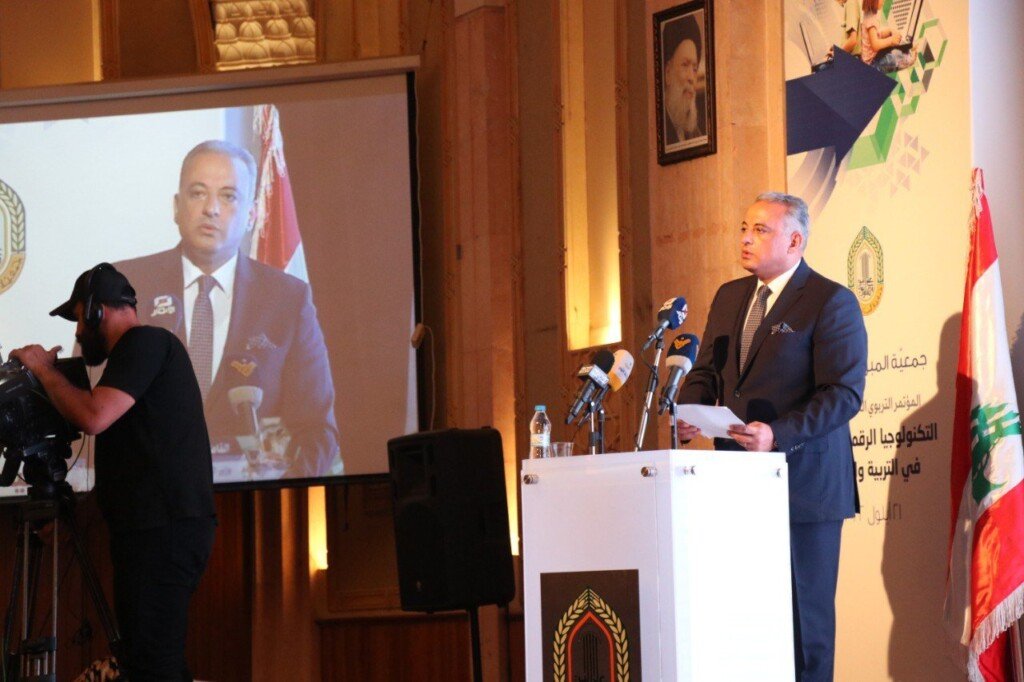
After the conference's proceedings were presented by the director of Al-Rahma High School Soulaf Hashem, the ceremony's patron, the Minister of Culture in the caretaker government Judge Mohammad Wissam Al-Mortada, delivered a speech in which he said that “the Lebanon of tomorrow has no way to survive the impact of the successive crises raining down on it economically and politically except by giving great attention to spreading awareness - of which Al-Mabarrat Charitable Association is one tributary and one of its fortresses, and a source of pride for every Lebanese, indeed for every noble Arab and every free person who seeks to serve the human being and raise them up, far from all the divisive sectarian, political and ethnic banners.”
He said: “The most dangerous war the Israeli enemy wages against us is the cultural war. This usurping entity feels - and its feeling is well placed - that the most dangerous thing in Lebanon is the state of diversity together with unity; it is the reality of faith, openness and values; it is the idea of the homeland as a message to all humanity. Yes, dear ones, this is the most dangerous thing in Lebanon for Israel, because this is what makes it the opposite of its racism, its injustice, its exclusionism and its open and hidden hostility to everything human. For all this it strives and schemes to sow division among us and to make us despair of our homeland and of what it holds in its depths of values, faith, diversity and unity - but its striving will be frustrated, God willing.”
Among what Al-Mortada's speech contained: “From this place fragrant with knowledge, sanctity and mysticism… from the garden of thought whose shade spreads over the tomb of the renewing scholar who was the lofty addition to us, here in Lebanon and in the Arab and Islamic world, and who still overflows with giving in embodiment of the words of Imam Ali, peace be upon him: “Scholars remain as long as time remains: their persons are absent, their likenesses are present in hearts.””
He added: “From a place that was and remains a destination for the people of knowledge, piety and worship, who come to it as a mosque of awareness, a beacon of good, and a place for Friday and daily and voluntary prayers - “in a scene from the scenes of Al-Aqsa”, as the newspapers wrote at the first Friday prayer held in it… from beside a library that embodies the Lebanon of culture, knowledge and openness, whose shelves' fragrance fills the expanses of the Islamic Cultural Centre; and from the pulpit which His Eminence the Marja used to ascend to answer every question with his immortal motto: “There is no trivial question and no embarrassing question; truth is the daughter of dialogue”.”
He continued: “From all the things of this place, whose beacon, spirit and mind was the master of the word, it pleases me to address you in his familiar language: “Dear ones”… and to be one of those who belong to the horizons of your conference, which represents one of the spaces of good at the level of education and teaching, a station of intellectual awareness at the level of culture, and a model in the scientific vision of the Lebanon of tomorrow - which has no way to survive the impact of the successive crises raining down on it economically and politically except by giving great attention to spreading awareness, of which Al-Mabarrat Charitable Association is one tributary and one of its fortresses, and a source of pride for every Lebanese, indeed for every noble Arab and every free person who seeks to serve the human being and raise them up, far from all the divisive sectarian, political and ethnic banners.”
He went on: “I allow myself to point to a phrase the late Marja Sayyed Fadlallah often repeated, when he used to say: “If you do not work to fill the void… someone will come who fills this void for their own account and not for yours.” Your association and your schools did well to be in the vanguard of those who acted on the inspiration of this aware wisdom, so they dealt with digital technology not on the basis of consumption but for the sake of absorption as a prelude to creativity - through the teaching curricula and training in the mechanisms of communication, in order to offer the best to the generations. For we do not want to be in the world of digital and scientific illiteracy while the universe hastens its step of development; nor do we want superstition, ignorance and extremism to storm the positions of dignity among us that we built with our effort and our struggle, in which we passed stages of steadfastness and distances of awareness - we guard against backwardness devouring them or cultural illiteracy seizing them.”
He said: “Technologies have become more intelligent, and devices have developed to read human intentions; they roam our lives with complete freedom and liberty too, to the point that we have come to be captives of their prisons, moving only according to what those digital things dictate to us, indeed running our lives according to what they produce for us.”
He added: “Digital education in the virtual world parallels social education in the real world. Every society has its customs and its values, and since the coming society is the society of knowledge and digital things, it has values, habits and traditions that we must keep pace with, taking from them what accords with the reality of our nations, our countries and our people - whom the late Sayyed Fadlallah sought to make in the most complete mission-driven, cognitive, civilizational and technical way, for it is he who said: “The greatest of industries is the making of the human being”.”
Director General of Al-Mabarrat
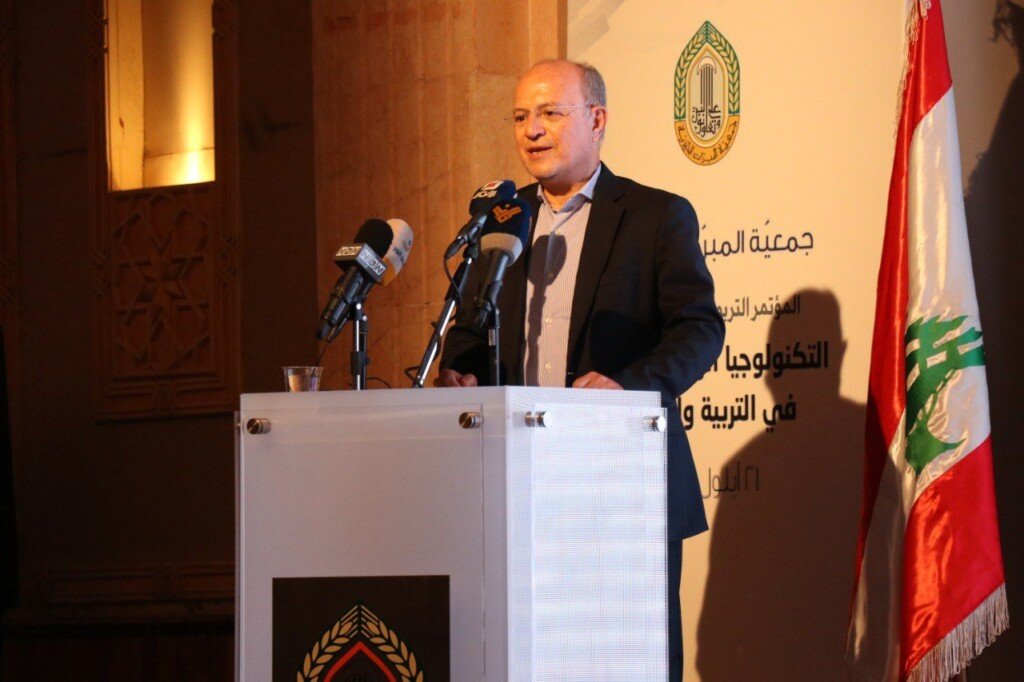
The Director General of Al-Mabarrat affirmed in his speech “that we at Al-Mabarrat Charitable Association took upon ourselves to be the first in the field of knowledge and digital technology.. We issued a recommendation in this field as long ago as 1999, when we launched it as a call for serious attention to erasing technological illiteracy and to learning and teaching computer operation for the administrations and all those working in the institutions”.
He spoke of the draft orientations document issued by the Educational Centre for Research and Development concerning the development of the educational curricula, saying: “We must keep pace with developments in building the curricula and rethink the expected outcomes amid the accelerating changes in values and thought - and how these curricula will be reconsidered, whether in terms of quality and quantity and their development in a way suited to the development of digital technology, so that the coming generations may keep pace with what contemporaneity and modernity hold. And we must affirm a curriculum that builds the system of values formed over thousands of years, whose presence in this East we affirm: a blend of moral and spiritual values, in affirming which the religions had a decisive role, and civic values that are the outcome of human experiences aimed at improving a person's life in our diverse society.”
He added: “Studies indicate that the process of learning inside the brains of today's pupils differs, because of digitization, from its counterpart in previous generations. Accordingly the inputs and tools of the teaching process must change in response, and it is therefore necessary to study the research in this regard in order to determine the needs of today's pupils and the necessary changes at the level of the curricula and others.. And we must attend to the digital skills required of the graduate, for it is unacceptable that our students graduate to universities without having mastered all the digital skills required by the software they will use at university.”
He stressed “the necessity of verifying the compensation of learning loss for Al-Mabarrat's pupils and of detecting any learning loss among new pupils, especially the loss of reading, writing and mathematics skills, and of involving families in closing their children's learning gaps through special programmes and strengthening their own knowledge in this regard”.
He said: “As educational institutions we need to strengthen the value of responsibility in this generation, in addition to activating the spaces of the arts, sport, literature, interaction with nature and human communication, and intensifying the activities that fill free time. Likewise we - the directors, teachers, supervisors and educators, who belong to a generation prior to digitization - need to meet this generation halfway so as to understand its language and grasp the kind of influences that have overturned many of the scales of education and teaching, and what method should be worked on so that through it the system of values may be a reference framework by which the generation governs its practices.”
He pointed to the teaching situation of people with special needs, saying: “Despite the economic and educational situation and the exorbitant cost of teaching and caring for people with needs and special needs - whether at Al-Hadi Institution with its multiple disabilities, the partially sighted, the hearing-impaired and those with autism, or in educational inclusion for the other learning difficulties in Al-Mabarrat's schools - this group, patient with their social and economic circumstances and patient with what has befallen them, is a test for us as a large society across the whole homeland. Continuing to care for them is a test of society's culture and awareness and of its liberation from its selfishness; and digitization and modern technologies should be a facilitation of their lives, and our concern with the developments of technology should not take us away from the human responsibility and from the need of those with difficulties for the hand that carries them across towards reassurance about the future.”
He continued: “In the midst of these difficult circumstances we strive with all the means at our disposal to steer the ship of Al-Mabarrat and to keep it cohesive and safe, and for these to remain welcoming institutions however the circumstances turn.. and to provide job security. We note that the salaries of those working in Al-Mabarrat's schools will exceed the total of the fees even if these are paid in full in most schools - this apart from the operating expenses including energy sources.. And with all this great burden the association will continue to feel its responsibilities towards its society, driven by its mission to face reality with reliance on God, with a strong will and with trust in the people of goodness who supply the journey with a continuous effort to secure the teaching sponsorship to help those whom the days have tripped up so that they could not complete paying their fees after they had been supporters of orphans and the poor… We will also continue the teaching and daily-life care of thousands of orphans in schools and universities through the orphan sponsorships.. And all of this will be accompanied by support for Al-Mabarrat's productive institutions even if their revenues have fallen during the crises.”
The president of Al-Mabarrat Association
The scholar Fadlallah
The president of Al-Mabarrat Charitable Association Allama Sayyed Ali Fadlallah held that “developing the means of teaching and using technology is the best expression of the extent of Al-Mabarrat's determination, amid these difficult circumstances, to keep pace with scientific and technical development”. He said: “The repercussions of the circumstances have not stopped at the Lebanese being unable to secure their livelihood, their medicine and their treatment; they have reached the teaching and care institutions, which anticipate the requirements - whether at the level of securing teaching supplies or the teachers' needs - reaching the inability of the majority of contributing families of students to secure the costs of their children's education.”
He added: “All of this is happening, sadly, without the officials stirring to treat this situation and to prevent the spread of ignorance, which is the harshest thing the country can come to.. In the light of that we renew our demand that the state, which is responsible for its citizens, not take a position of indifference and not shirk carrying out its responsibilities in easing the burdens on citizens and supporting the institutions so that they may perform the role required of them towards it, in order to prevent their collapse.”
Fadlallah pointed out that Al-Mabarrat has been keen to offer the best, “and we see it as our religious, national and human responsibility to offer the best that can be offered at the lowest possible cost to our dear families, whether at the level of the fees or of the student support fund, which has given before and, God willing, will continue to give much to ease the burden on our society”.
Fadlallah recalled “the late Rana Ismail, who was a basic pillar of Al-Mabarrat and one of its essential supports”, then addressed a word of thanks to the teaching staff in Al-Mabarrat's educational and care institutions, saying: “If others struggle and sacrifice themselves to protect their homeland from those who assault it, so that it may be a free and independent homeland, then you sacrifice in your night and your day and exert effort and hardship so that we may have the homeland in whose fields knowledge flourishes.”
The conference closed with a scholarly panel entitled: “The Educational Institution in the Age of Digitization - Vision and Strategies”, in which the dean of the Faculty of Arts and Sciences at USAL Dr. Ahmad Fadlallah spoke, along with the head of the education department at Balamand University Dr. Ghania Zgheib, and the founder and chairman of the Talal Abu-Ghazaleh Global group Dr. Talal Abu-Ghazaleh via a recorded intervention. The interventions addressed the subject of building a digital transformation strategy in the educational institution, as well as planning for cyber security within it.
The panel was moderated by the conference secretary at Al-Mabarrat Ayat Nour Eddine, who said: “Today we close the conference's proceedings, which included more than sixty workshops in which academics took part, to whom we extend abundant thanks: Dr. Fadia Hoteit of the Lebanese University, Dr. Huda Beteih of the American University of Beirut, Dr. Rabih Baalbaki the head of the syndicate of educational technology in Lebanon, and Ms. Joumana Ammar of the Medical Centre at the American University of Beirut. The workshops were delivered by training experts from Al-Mabarrat's institutions, distributed as follows:
- Workshops for the teachers and supervisors of the kindergarten stage and the first cycle, entitled:
“The Early Childhood Stage in the Age of Digitization: Visions and Possibilities”
- Workshops for the teachers and supervisors of the second cycle, entitled:
“The Foundation-Stage Learner: From Consumer to Aware Producer in the Digital World”
- Workshops for the teachers and supervisors of the third cycle and the secondary stage, entitled:
“The Features of the Graduate in the Age of Digitization: Faculties and Skills”.