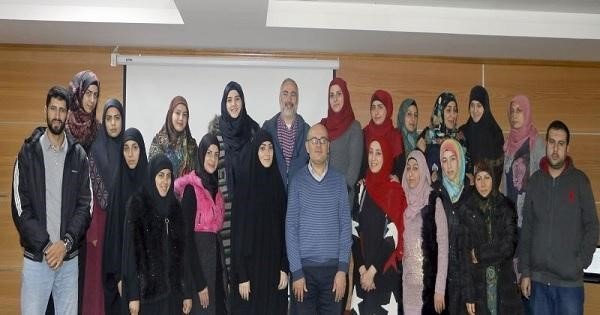
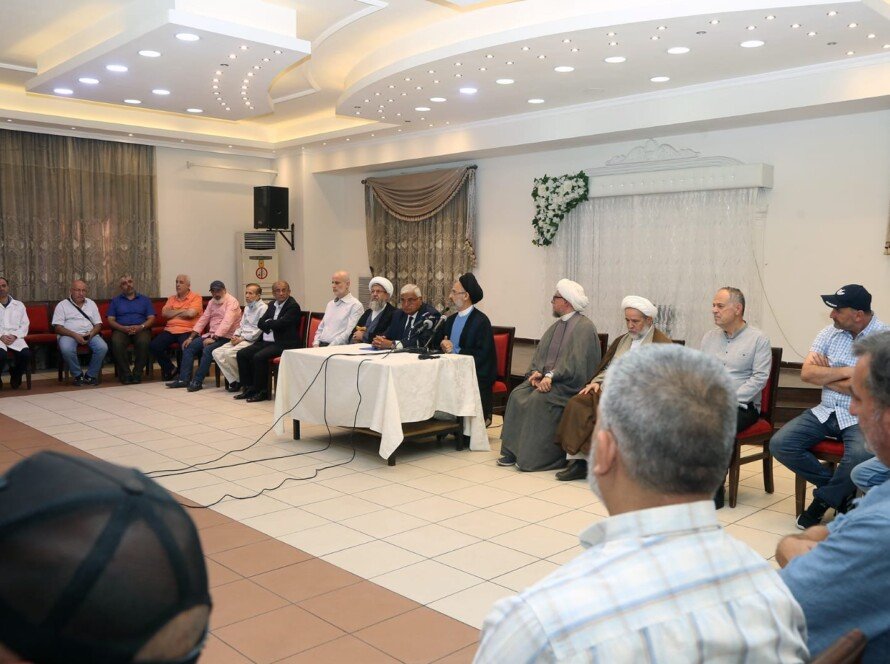
Al-Mabarrat Charitable Association organized an annual training day entitled: “Towards the Best Care”, in which the care supervisors at its care institutions took part, at Al-Sayyeda Khadija Mabarrat for the care of orphans and difficult social cases, and Dar Al-Sadek for education and teaching on the airport road.
This training day included workshops on building trust between the care supervisor and the children, how to manage the children's behaviour, developing the children's motivation to learn, in addition to an explanation of the educational and care programmes adopted in the association's institutions.
The opening of the training was a speech by the president of Al-Mabarrat Association His Eminence Allama Sayyed Ali Fadlallah, in which he spoke about care work, holding that it is: “one of the best experiences a person passes through, because in this work a person takes on more than one personality: the personality of the father, the personality of the mother, the personality of the judge, the personality of the ruler, the personality of the official, and the personality of the one who directs the features of the future”. He held that: “preparation for this work should not stop, and enquiry about everything new should likewise not stop, and the work must always be renewed”.
He pointed out that “care work needs scrutiny, follow-up and creativity”, saying: “The generations coming to us must be known by us, discovered by us, understood by us, and after that we look for solutions to their problems.” He addressed the care supervisors, saying: “You must look with the eye of love upon these children and improve the image of the future before them”, noting that “whoever comes to care work with the mentality of a job is a failure from his first day”, and calling for “the care supervisors to be the best of people in character, knowledge and understanding of their societies”.
Sayyed Fadlallah stressed the necessity: “that we should cooperate and exchange expertise so as to offer the best to the children”, affirming “the importance of securing the requirements of care supervision in terms of safety and mercy”.
He said: “We aspire to an output from the care institutions who is able, through his religious awareness, to practise thinking, criticism, dialogue and openness to renewal and religious diversity, far from excess, superstition, ingratitude and fanaticism.”
He added: “We believe in an open thought and we do not want to be fanatics. We are keen to open our hearts to all people, and the heading of these institutions is openness. As you know, we have diversity at the denominational and political level; we are people of knowledge who believe in what we believe in but are not closed - this is the thought of His Eminence the Sayyed.”
On the negative treatment of the work of care institutions in the media, Sayyed Fadlallah said: “There are those who present a negative image of the institutions. We must look closely at some of what is related, because some of these institutions may be doing things that need to be addressed, and among the media people who speak with this logic there may be some whose aim is reform. But on the other hand there are those who want the care institutions to be afraid of this media atmosphere.”
He added: “These institutions are a need for people, and we say welcome to all people: full care, half care, or family care. The care institutions work seriously; they proceed from studied educational work and from their accumulated expertise, educational and care-related, and they offer what is good and what is new in all fields, as well as offering the various activities. This work needs marketing, because many people do not know what is going on, and when they visit us they are surprised by what we do; they say: we have seen important accomplishments, a beautiful life and distinguished activities.”
Sayyed Fadlallah explained that “there may be a deficiency in our media, while another media succeeds in recording the weak points of some care institutions and magnifies them; therefore we insist through our work that our care institutions remain in the interest of this generation and its future”.
He concluded: “What we affirm is that in order to be Muslims we must be fair to all people”, hoping “that there will be contributions in the social movement from Islamists and religious people, at a time when we find some who steal and manipulate in the name of religiosity”.
Skip to content
Skip to footer