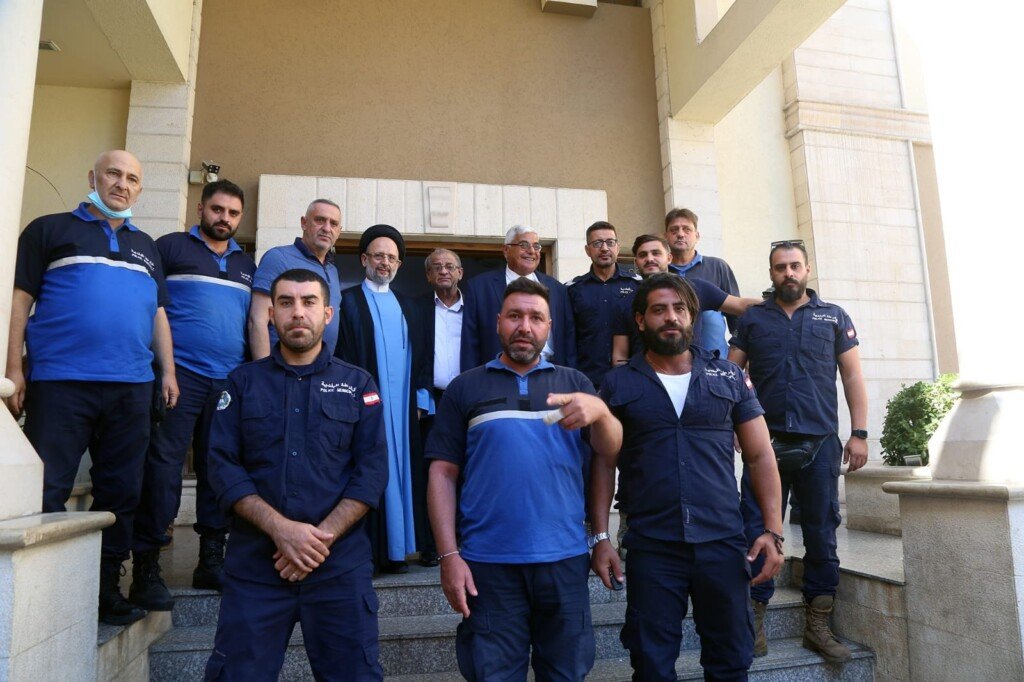
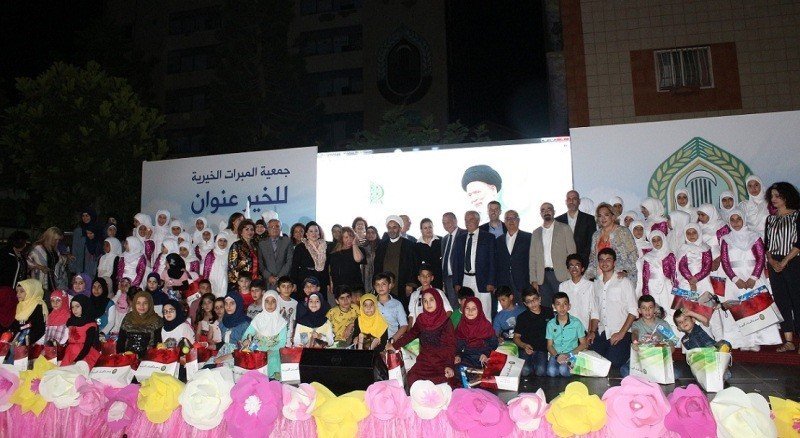
Allama Sayyed Ali Fadlallah visited the headquarters of the Burj Al-Barajneh municipality, where he was received by the head of the municipality, the lawyer Atef Mansour, a number of its members, the president of the union of the suburb's municipalities Dr. Mohammad Dergham, and the area's mukhtars and figures. He then toured the municipality's departments to learn about the work it does, after which everyone proceeded to the primary health care centre to see the health services it provides, and then set off to the vehicle works department. After that they went to the Al-Rouais centre for health and social care, where they were briefed on the health, therapeutic and vocational training services it offers. The tour closed with a meeting in the Al-Mawadda hall with the area's religious, cultural, health, educational and social figures and its mukhtars, in addition to representatives of municipal work in the Amal Movement and Hezbollah…
The ceremony opened with a speech by the head of the Burj Al-Barajneh municipality, the lawyer Atef Mansour, in which he began by welcoming Allama Fadlallah, holding that he is a dear and precious guest who came on the wings of love, openness and communication, and describing the visit as a historic one. He spoke of the Marja Fadlallah (may God be pleased with him), saying that his memory will remain in our hearts and his thought in our minds, and that at his hands the seeds of our creed were formed and brought forth good works, love and brotherhood - praising the role played by his educational, cultural and social institutions, with which we cooperate in more than one field.
Then came Allama Fadlallah's speech, in which he thanked them for this invitation, this generous hosting and the warm reception, praising this area, dear to all our hearts, which has offered sacrifices and martyrs for the dignity and honour of this homeland. He commended the work the municipality does in the service of this society through its social and health offerings and its efforts to meet people's needs and solve their problems as far as possible, despite the state's failure and its absence from carrying out its responsibilities in these circumstances full of enormous challenges. He held that it is a religious, moral and human duty to work on joining efforts and strengthening the means of cooperation between civil, social and health associations and the municipalities in order to stand alongside our society and support it so that we may be able to overcome this difficult stage, pointing out that in this country we have grown used to pulling out our own thorns with our own hands.
His Eminence noted this town, which does not care only for its own people but has embraced everyone who came to it - Lebanese, Palestinians and Syrians - and offered them care and attention, far from any sectarian, political or denominational considerations…
He held that there are those who wager on our weakness and our fall before these challenges and the pressures exerted in order to impose their conditions on us or to push us to beg at the doors of this state or that.
His Eminence hoped that the officials in this country would wake from their slumber and begin to think about the depths to which they have brought people, while they are absorbed in the game of competing over quotas and disputing over a minister here and a minister there, at a time when the country is on the brink of hunger, death, violence, destruction and successive collapses.
His Eminence concluded by asking: Is it not time for these people to think of people's interests and of the homeland's fate, so that they may hasten their steps in forming a government that paves the way for an agreement to avoid reaching a vacuum in the presidency - a vacuum that may be long and with which people's crises may be prolonged, if the voice of wisdom and reason that people have long awaited is not raised…