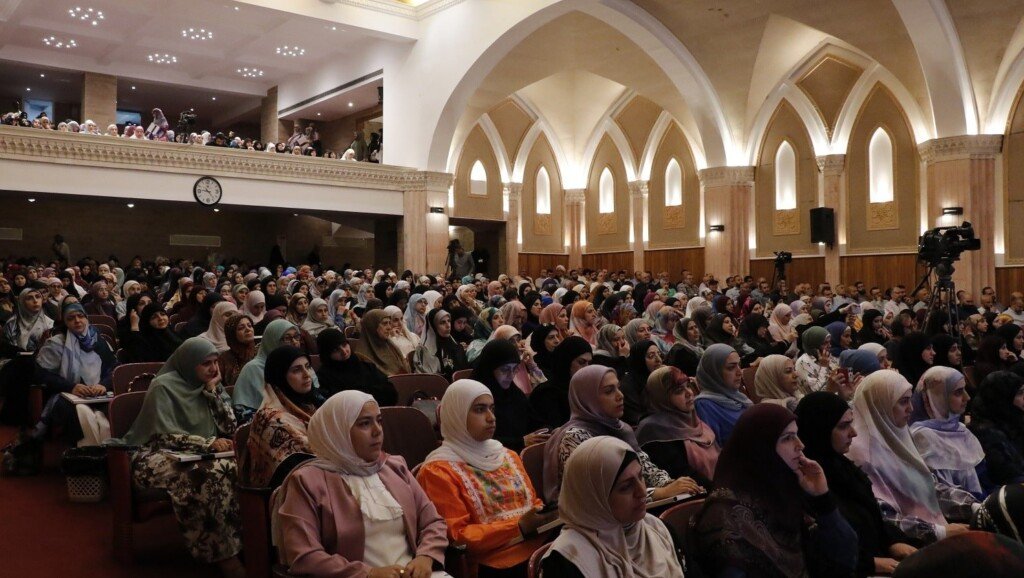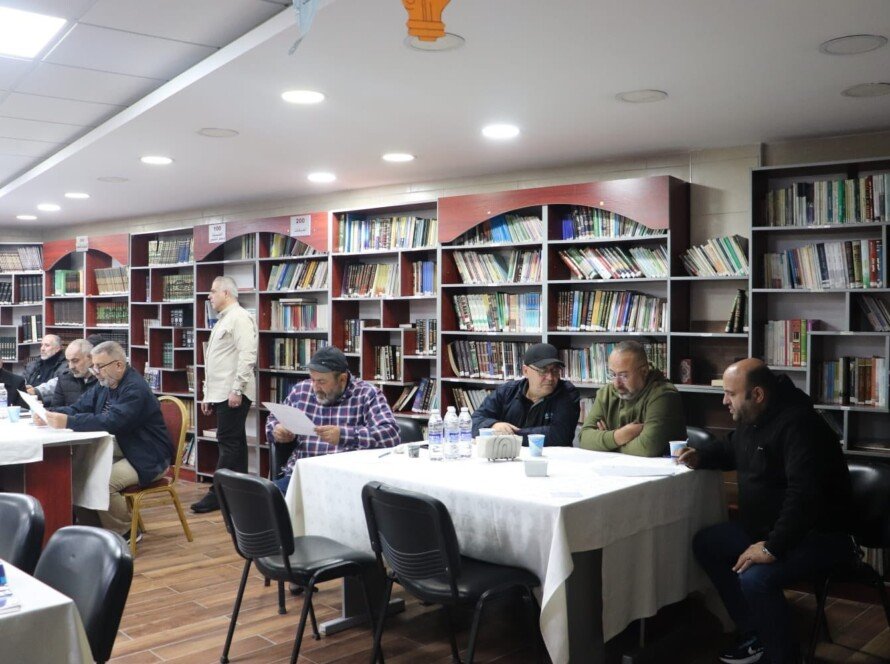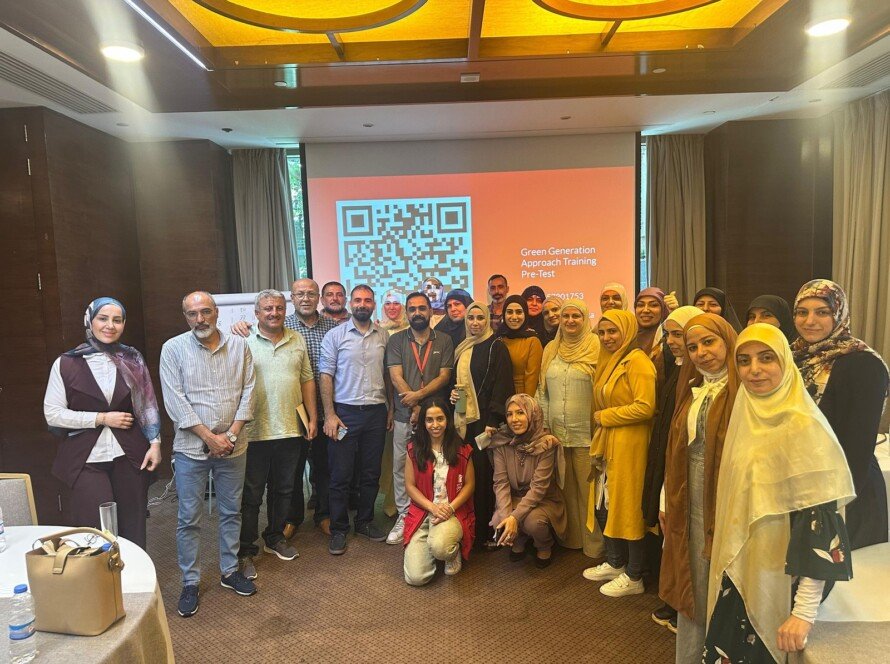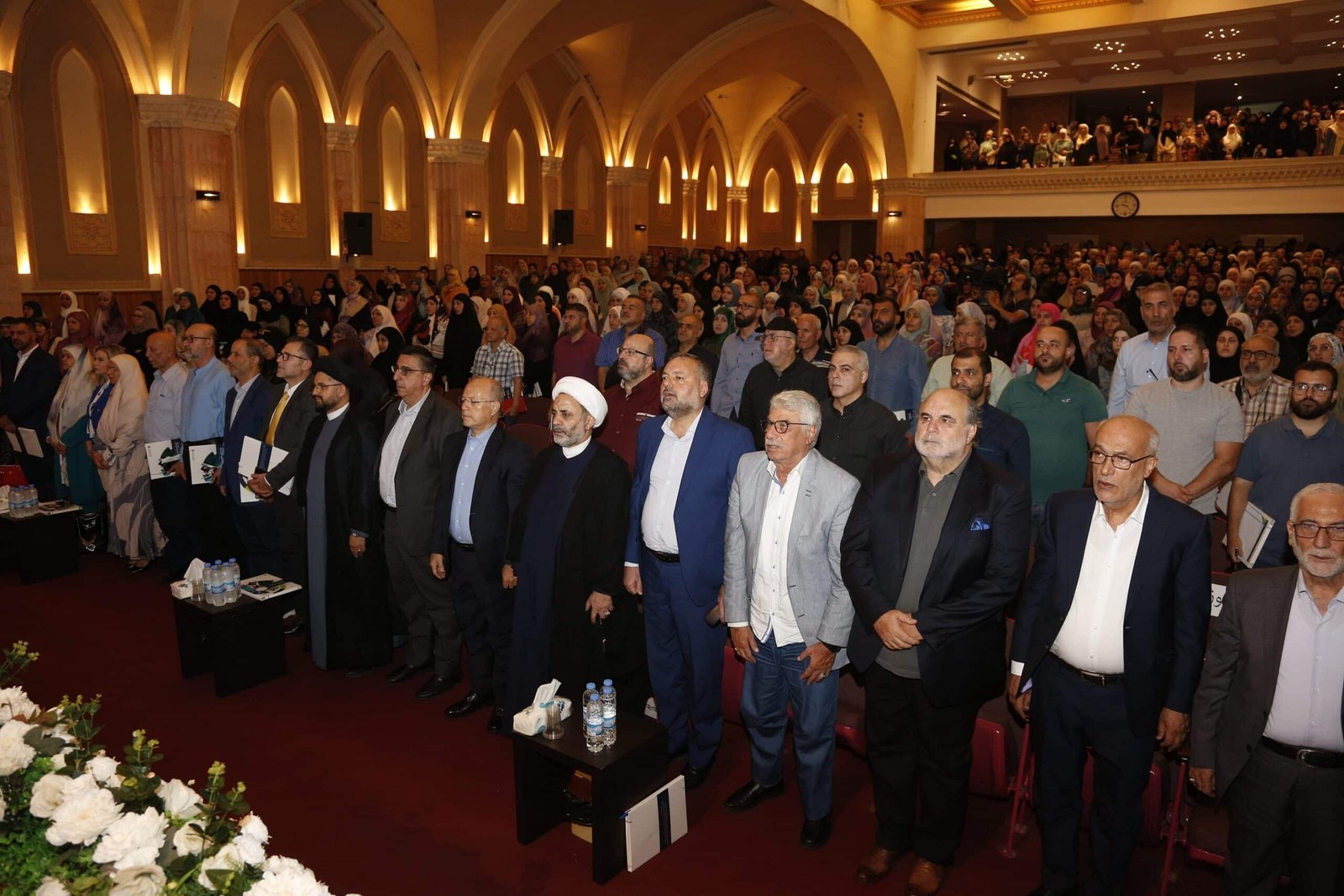
Al-Mabarrat Charitable Association held the main day of its thirty-third educational conference under the title “Character Education and Values at the Heart of Learning: An Approach to Good Citizenship”. The conference was held on the fifth of September 2024 in the Al-Zahraa Hall attached to the Imamain Al-Hassanain Complex in Haret Hreik, under the patronage and in the presence of the Minister of Social Affairs in the caretaker government, Dr. Hector Hajjar. It saw a large attendance of prominent figures in the educational and social fields, representatives of educational institutions and cultural centres, heads of municipalities, as well as academic and religious figures and the directors of Al-Mabarrat's educational and care institutions.
The conference's main day was presented by Mr. Ghassan Wehbe, director of the Ali Al-Akbar Vocational and Technical Institute and a member of the conference committee, who noted that Al-Mabarrat was closing the events of its conference, which had included sixty-one workshops with the participation of academics and specialists in the field of education, attended by more than two thousand of Al-Mabarrat's educational staff, and that the conference would conclude with recommendations to be incorporated into the work plans of all the institutions.
The thirty-third educational conference opened with verses from the Holy Quran followed by the Lebanese national anthem, after which filmed excerpts of the late founding religious authority Sayyed Mohammad Hussein Fadlallah were shown under the title “The example is stronger than the word”.
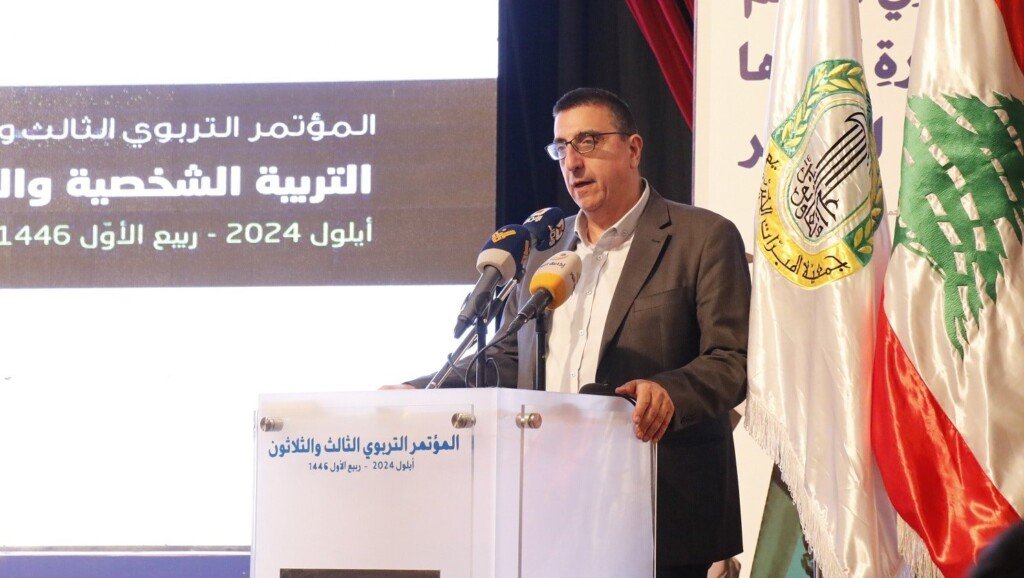
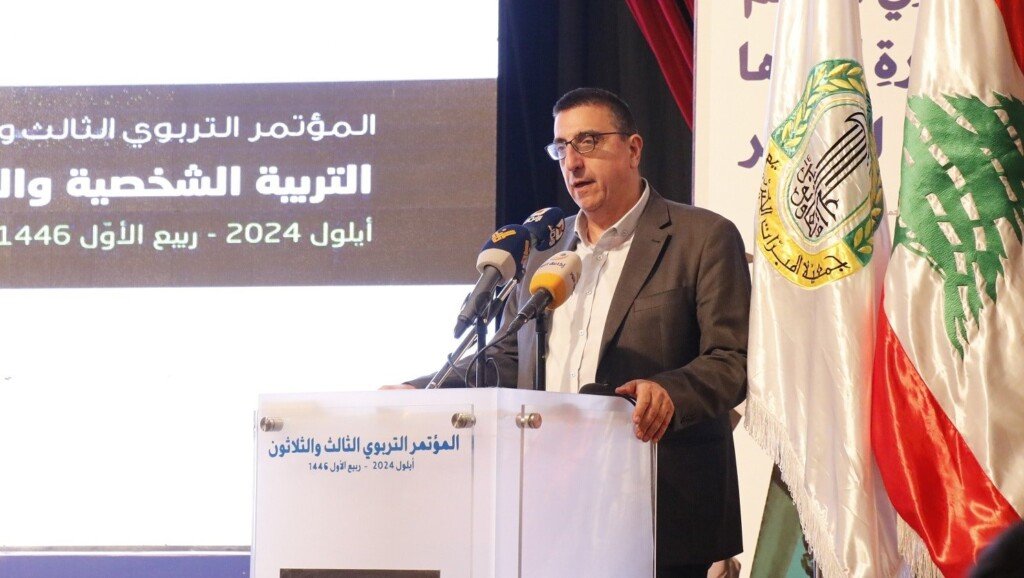
The Minister of Social Affairs, Hector Hajjar
This was followed by a word from the Minister of Social Affairs, Dr. Hector Hajjar, who stressed the importance of combining efforts and supporting the institutions whose sacrifices, work and achievements we take pride in. He said: “All we need today is to combine our efforts and support our institutions, whose sacrifices, work and provision we are proud of. Here we offer the highest feelings of gratitude and appreciation to Al-Mabarrat Association, which has never withheld its giving and has spared no effort in education and care.”
The minister also addressed a word to the teachers and those working in the educational field, stressing the importance of continuous learning: “While I appreciate the efforts of all teachers and administrators, I call on everyone to engage in continuous learning and to adopt an approach of lifelong learning, which develops our minds through what it produces in ourselves and our society and helps build a society whose foundation is knowledge and whose bounds are learning.”
He added: “We will not look at what we have lost, but at what awaits us and awaits our children of success, creativity and development. We look at the greatness of the sacrifices and pray that God grant us days that bring peace and safety, and help us to consolidate our sense of belonging and to defend it as long as we live.”
After that, the conference's organizers showed a video highlighting the achievements and successes of Al-Mabarrat's students, which lent the conference an inspiring character.
The Director General of Al-Mabarrat Charitable Association, Dr. Mohammad Baqer Fadlallah
The Director General of Al-Mabarrat Charitable Association, Dr. Mohammad Baqer Fadlallah, spoke about the importance of the conference under the title “Character Education and Values at the Heart of Learning: An Approach to Good Citizenship”, noting that the choice of a new title reflects the current challenges and needs in the education system.
Fadlallah stressed the need to review policies, programmes and activities, and the importance of offering positive models to meet contemporary challenges around values. He also referred to the cooperation with the Centre for Educational Research and Development in forming committees to prepare the scope-and-sequence matrices for competencies, holding these to be a basic pillar of the curricula.
He also called on everyone working in Al-Mabarrat's institutions to keep up with developments and to take part in the preparation workshops, affirming the association's readiness to offer support to make this national achievement a success. He highlighted the importance of preparing and qualifying teachers through the “pre-service teacher” programme, stressing the role of the administrations in planning, implementing and evaluating programmes, with a focus on continuous performance assessment and on planting values in learners' characters.
In his speech Dr. Mohammad Baqer Fadlallah addressed the effect of digital transformation on educational institutions, noting that it represents a radical change in the nature of education and its mechanisms. He affirmed that digital transformation offers immense opportunities to improve teaching and develop skills, but also brings major challenges in building a balanced character. He pointed out that success in this digital age requires a careful balance between exploiting technology's potential and preserving the basic values of education and personal development.
He referred to the situation of the orphans at Al-Mabarrat, explaining that the care institutions are a protective shield for orphans and a beacon of hope for their future, providing varied services to more than 4,500 children. Despite the worsening economic crisis and the growing numbers of orphans, Al-Mabarrat has carried on providing complete care, which constitutes an added financial burden, with 80% of the children placed in Al-Mabarrat's educational institutions.
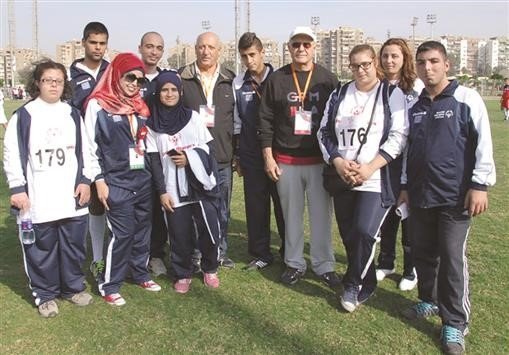
Fadlallah also spoke about Al-Mabarrat's work with those with special needs, such as the blind and the deaf, noting that the Al-Hadi Foundation includes more than six hundred children and provides them with services and treatments by specialist experts, despite the high cost of these needs.
He pointed to the importance of the relationship between parents and educational institutions, affirming that rooting values and building character are among the most important educational aims, and that this process requires the combined efforts of parents and school, especially given the upheavals the digital world is witnessing. Cultural diversity among pupils also makes it difficult to meet everyone's needs, which requires close cooperation between parents and school.
In closing his speech he turned to religious guidance, pointing to the new challenges imposed by globalization and rapid technology. He stressed the importance of the role model in dealing with these challenges, calling for the development of innovative methods to make religious guidance more appealing and more relevant to pupils' daily lives.
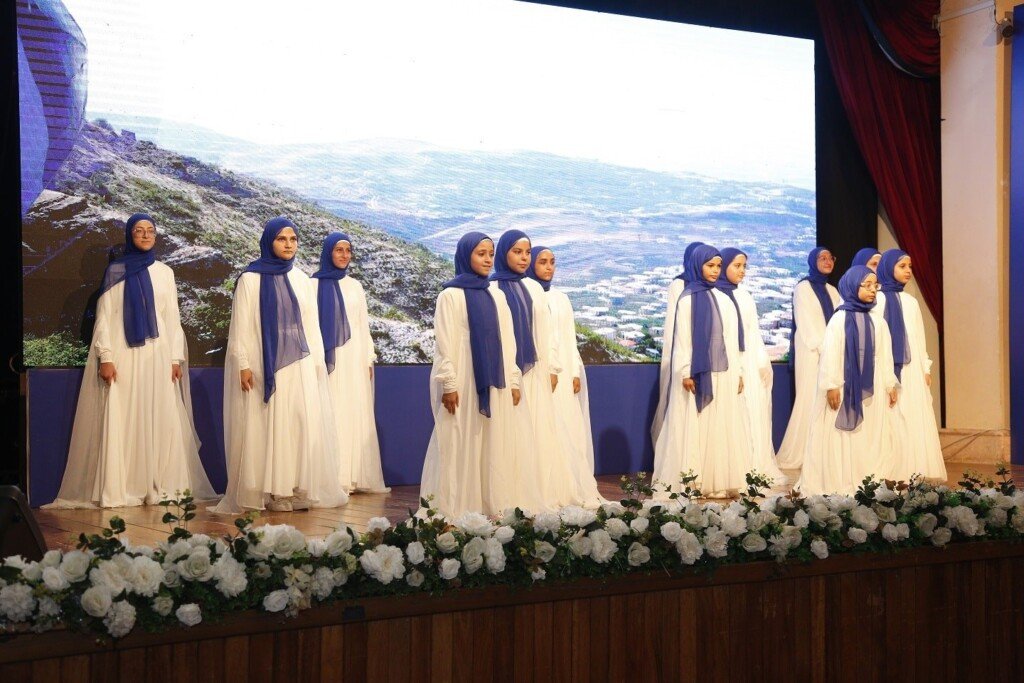
Following the Al-Mabarrat director's speech, the Al-Mabarrat choir presented an artistic segment entitled “Mawtini”, which lent an atmosphere of enthusiasm.
The seminar: entitled “Character Education in Learning: From Vision to Application”
The conference's main day then closed with an academic seminar entitled “Character Education in Learning: From Vision to Application”, chaired by the director of Imam Al-Jawad Secondary School, Ms. Souad Marah.
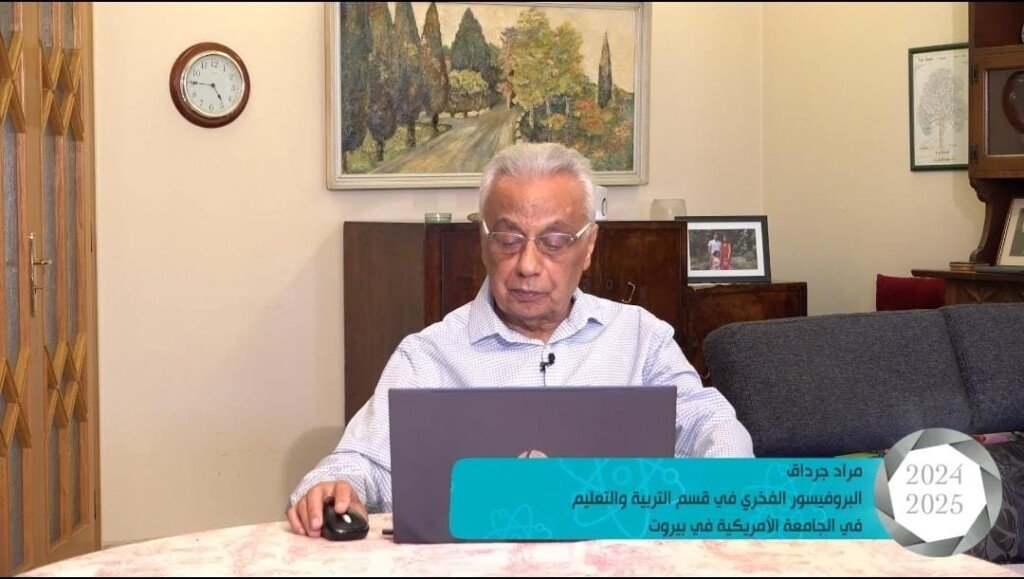
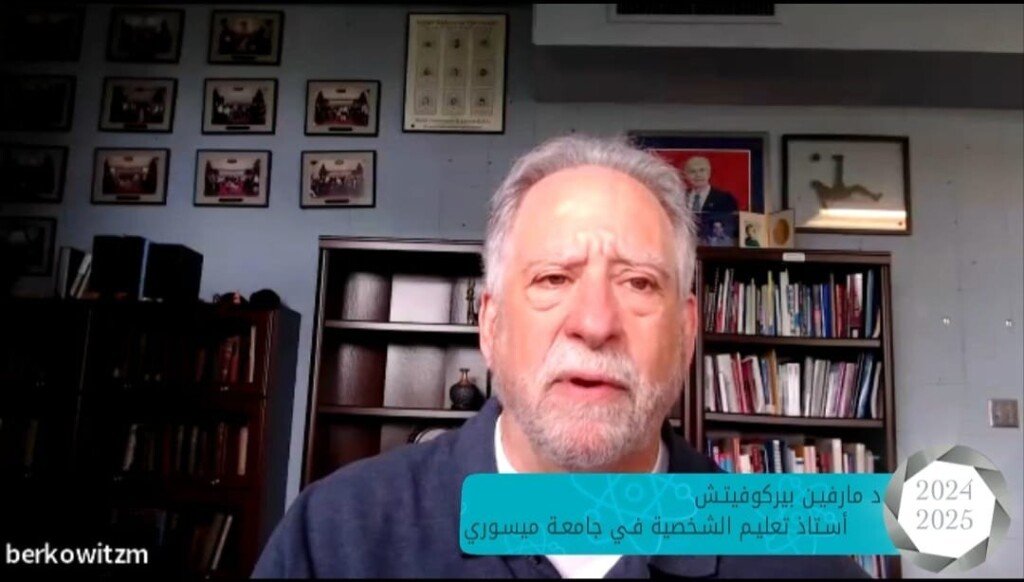
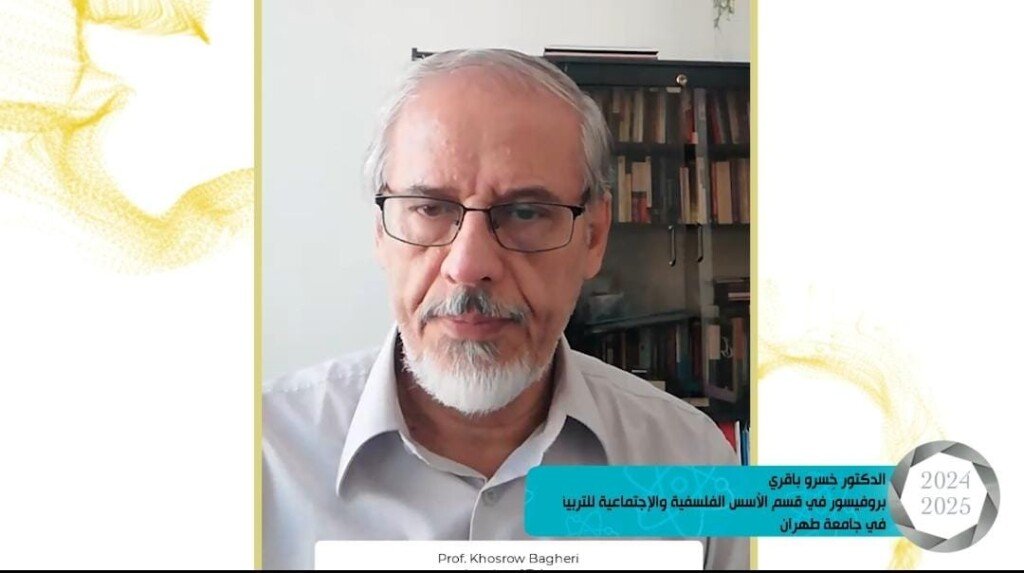
Speaking at the seminar were the emeritus professor in the department of education at the American University of Beirut, Dr. Mourad Jurdak; the professor of character education at the University of Missouri-St. Louis in the United States, Dr. Marvin Berkowitz; and the professor in the department of philosophical and social foundations of education at the University of Tehran, Dr. Khosrow Bagheri.
Dr. Mourad Jurdak:
In his intervention, Dr. Jurdak pointed out that values are a basic driver of many of the school's components, including the curricula, the priorities and aims of learning and teaching, and teaching methods. He noted that the contemporary school focuses on the cognitive role while neglecting the acquisition of values, even though its responsibility requires it to identify the personal and social values of the learners and of those working in the school.
Dr. Marvin Berkowitz:
For his part, Dr. Marvin Berkowitz affirmed the three-step model for every school adopting character and values education, in which the school's leader leads, then the teachers, then the pupils. He explained that there can be no distinguished school without a distinguished leader, holding that relationships within the school community are among the most important factors affecting academic attainment and the building of characters.
Dr. Khosrow Bagheri:
As for Dr. Khosrow Bagheri, he held that character education requires making the learner responsible for their actions, which calls for securing a suitable educational environment. He also linked character education to three dimensions: the qualitative, the quantitative and the critical, deducing from Quranic verses the learner's agency within the Islamic framework.
This was followed by comments on the academic interventions by the General Religious Supervisor at Al-Mabarrat Charitable Association, Sayyed Jaafar Fadlallah, and the director of the Siraj Centre for Educational Diagnosis, part of Al-Mabarrat, Dr. Shatha Ismail, and a word from the conference's secretary, Ms. Ayat Nour Eddine.
Dr. Shatha Ismail, commenting on Dr. Jurdak's intervention, held that teaching values is essential to building a leadership character, which is one of the most important features of the Al-Mabarrat graduate. To achieve this, the teacher must use a teaching pedagogy built on active and experiential learning in order to strengthen critical thinking.
For his part, Sayyed Jaafar Fadlallah, commenting on Dr. Khosrow Bagheri's intervention, said that religious discourse aims at shaping the human being as steward, which rests on fulfilling God's will on earth through their own conviction of it. He stressed the importance of nourishing this discourse with knowledge based on evidence and proof rather than on rote instruction.
Ms. Ayat Nour Eddine referred to what Dr. Marvin had addressed, noting that the approach to character education sets out from the school's mission, which defines the features of the graduate, and is embodied in daily school life - from the models the learner encounters, to the relationships that govern the school community, to the systems of reward and punishment, as well as the school's climate and environment.
At the close of the conference, the president of Al-Mabarrat Charitable Association, the scholar Sayyed Ali Fadlallah, spoke and called on the Lebanese to “activate the educational and ethical role at the level of the educational institutions in order to build generations whose intellectual, political, social and economic directions and whose aspirations for the future are governed by the ethical, values-based and human heading”, pointing to the need “for what opens the doors wide before dialogic, communicative and transparent relations that work to build the homeland on the basis of the common ground among all its social components and political positions”.