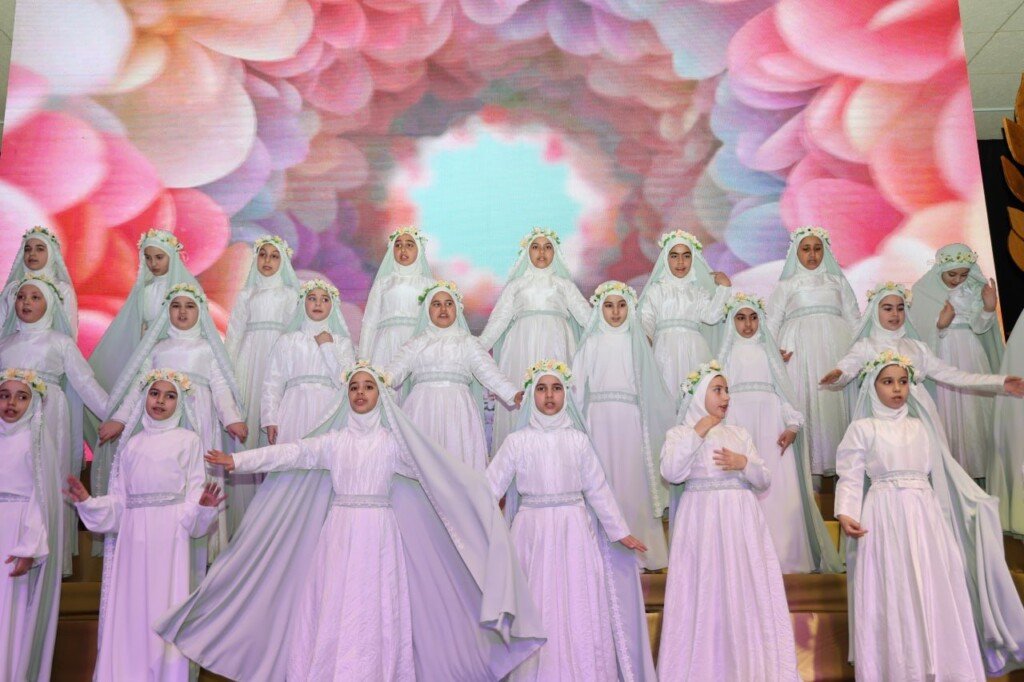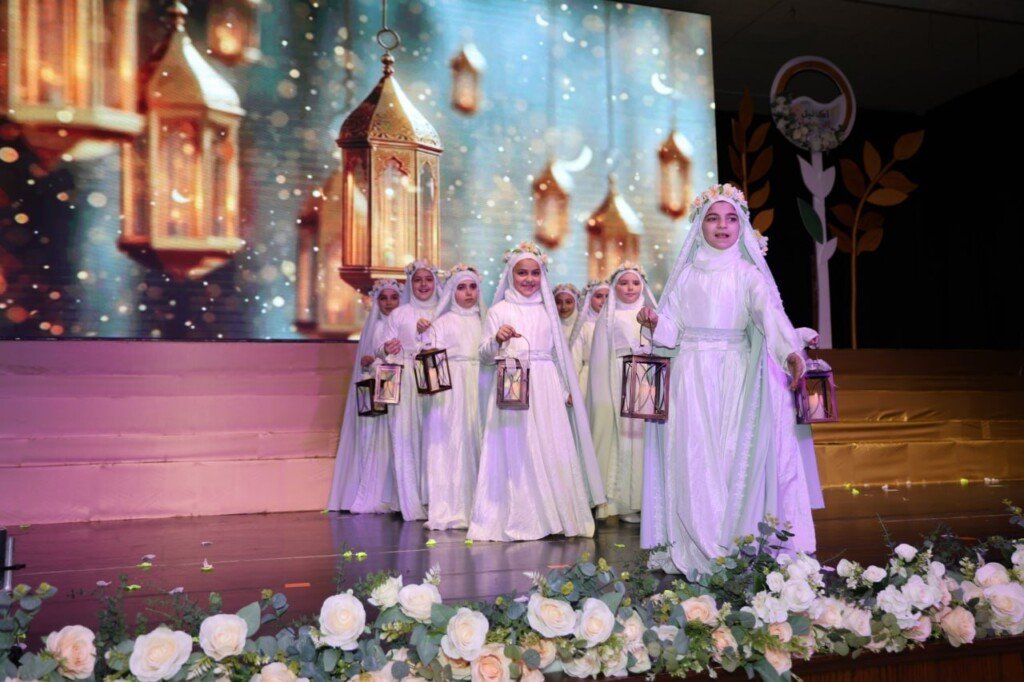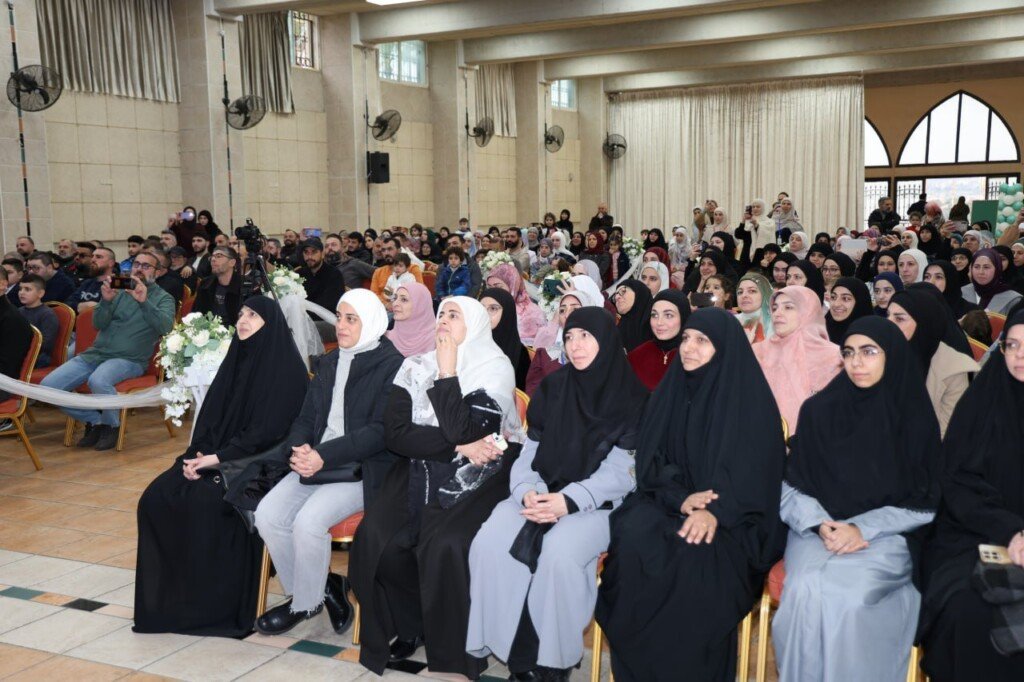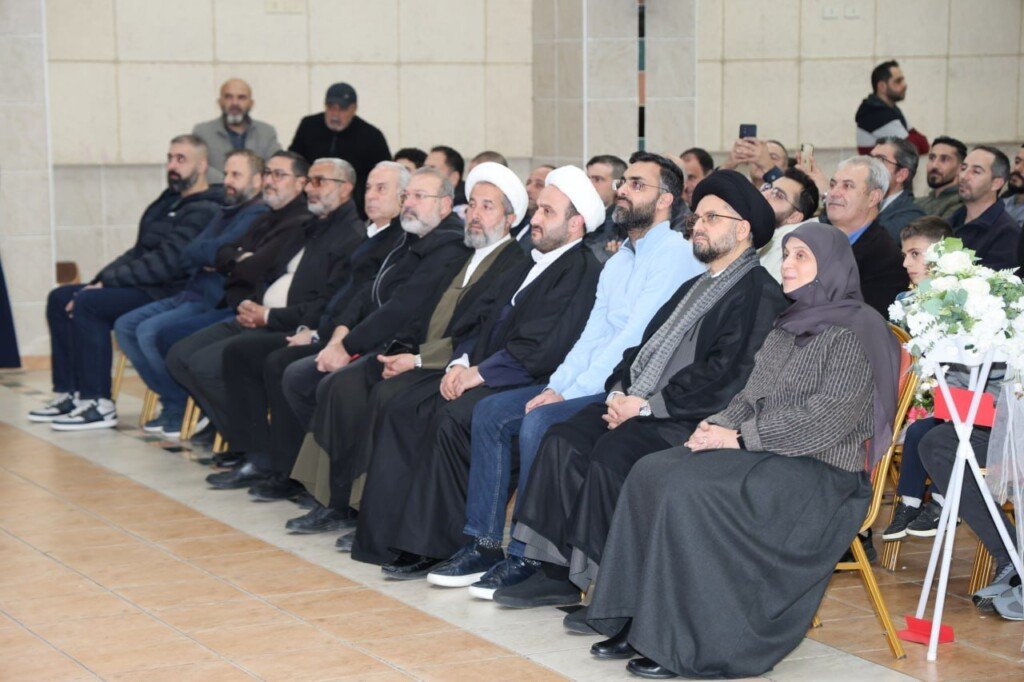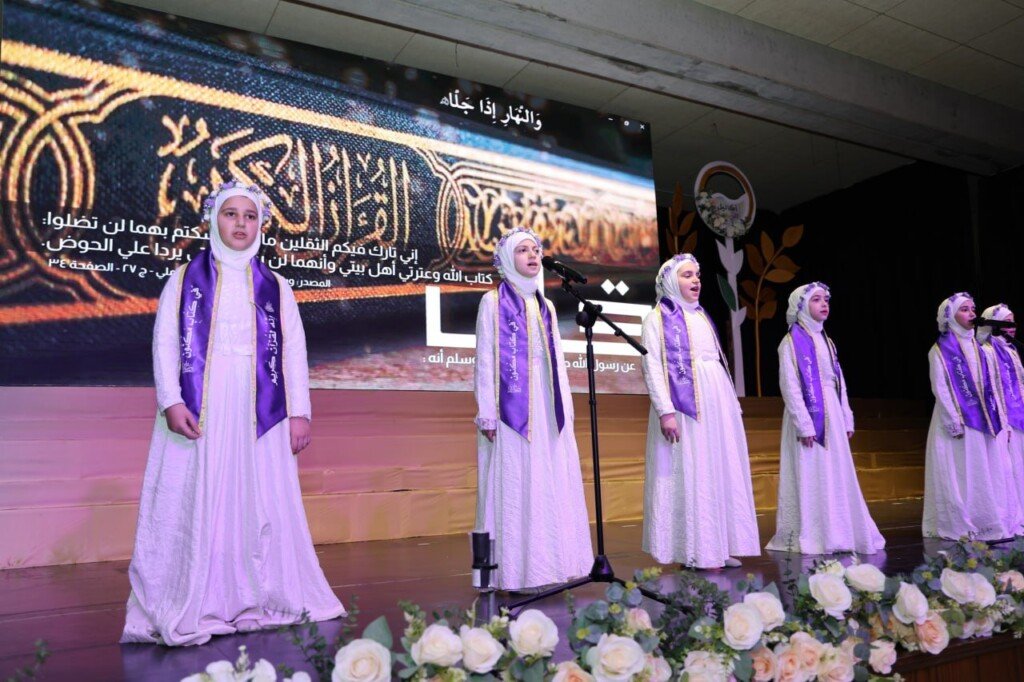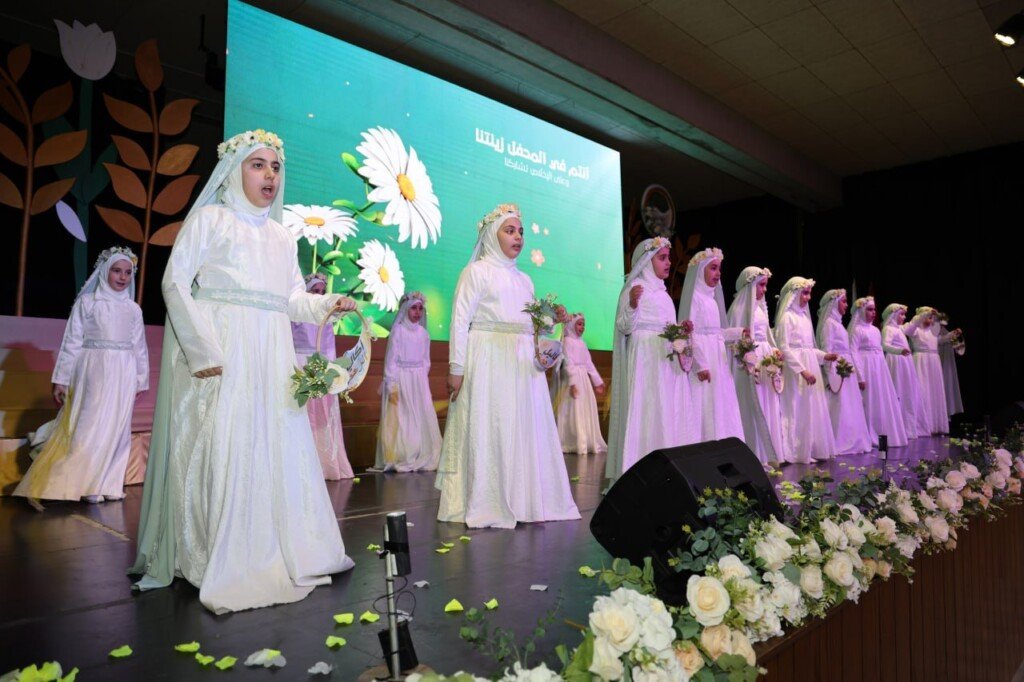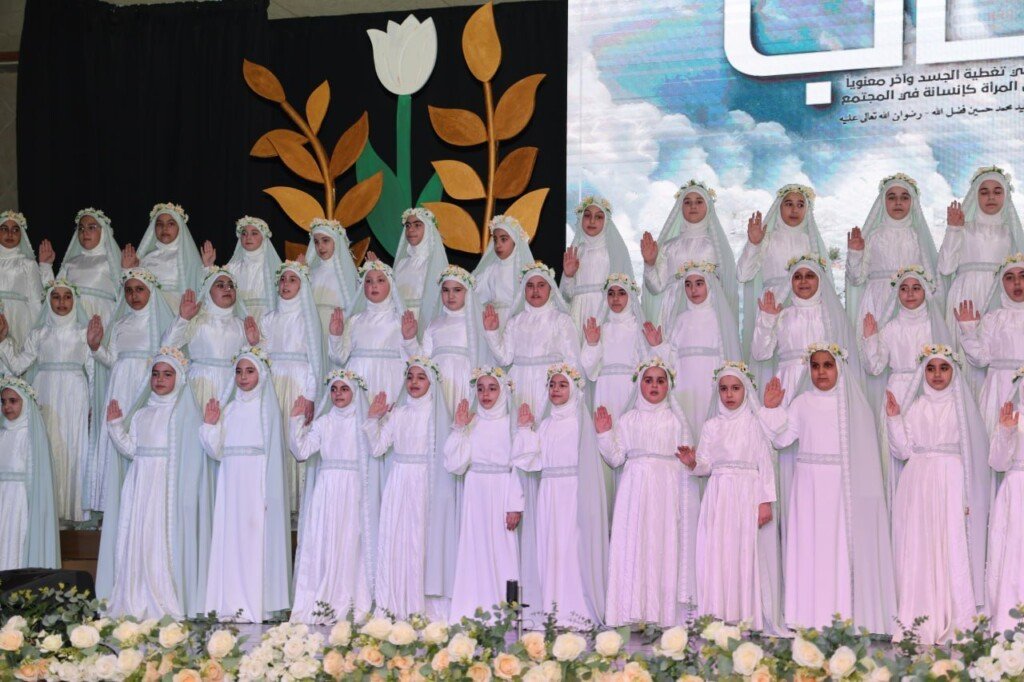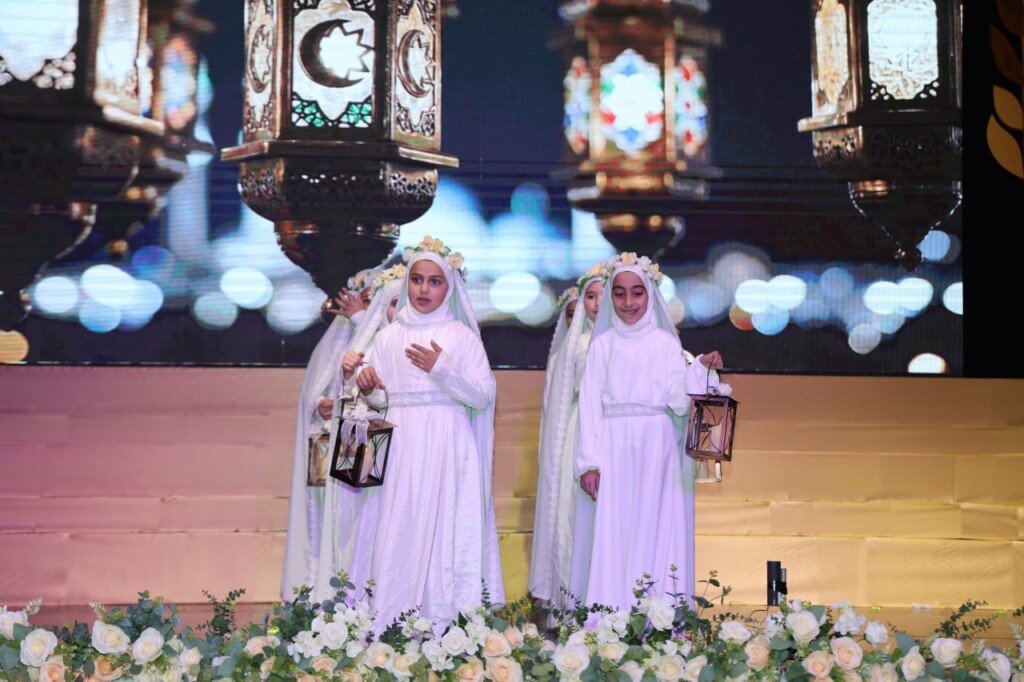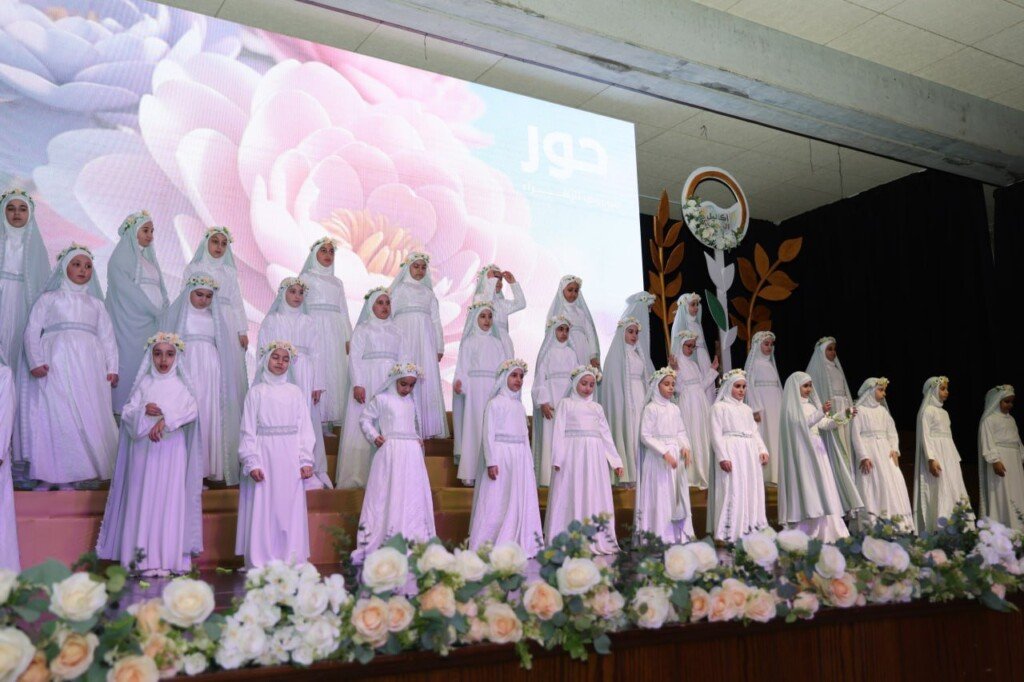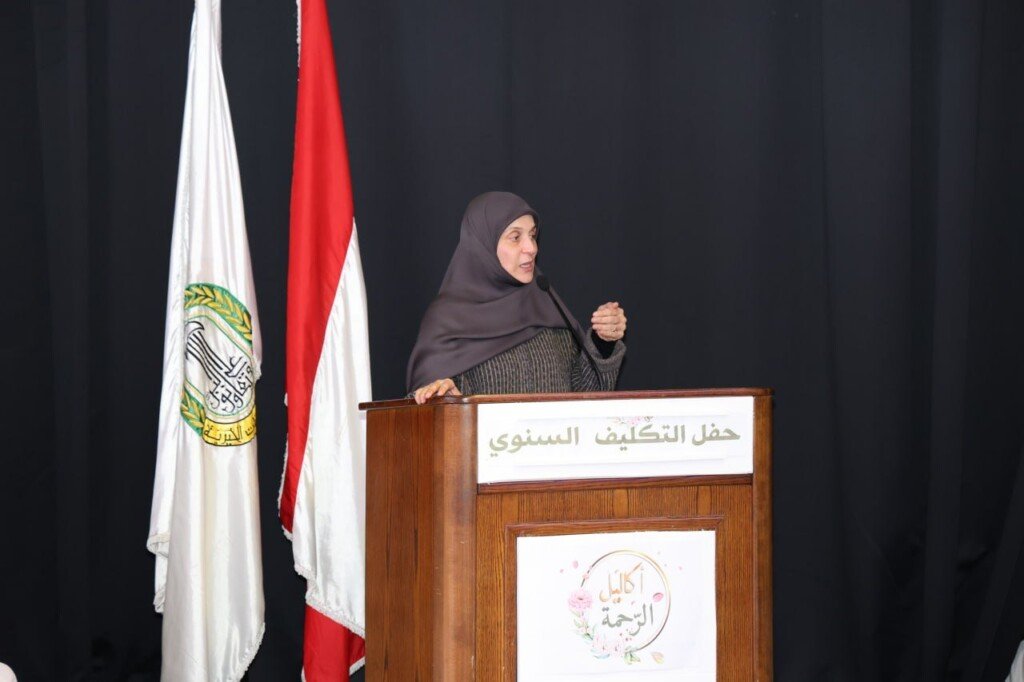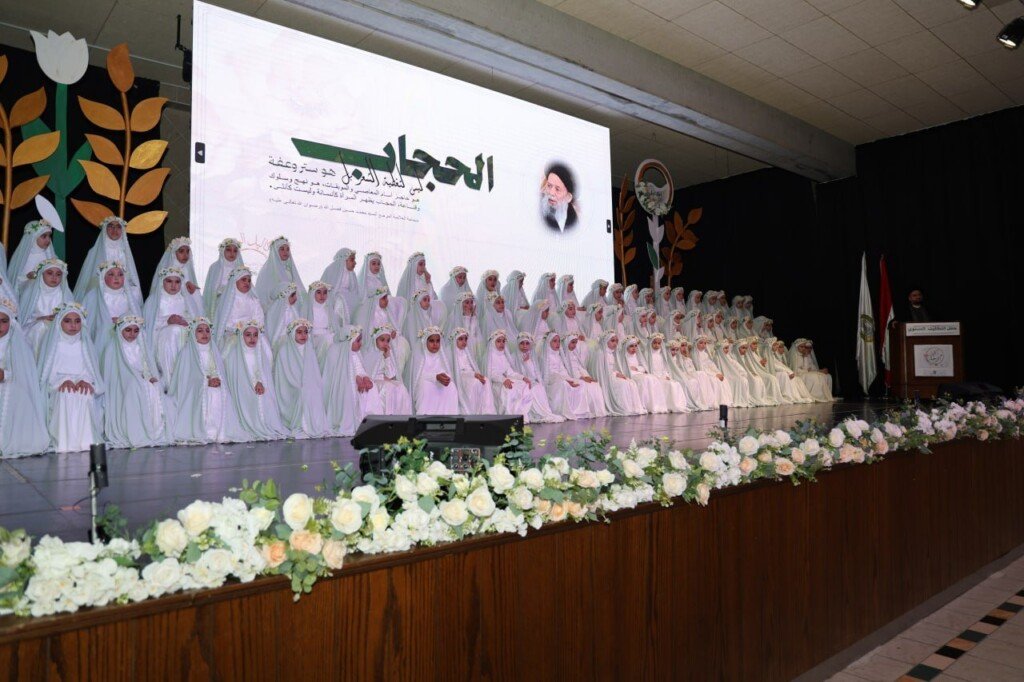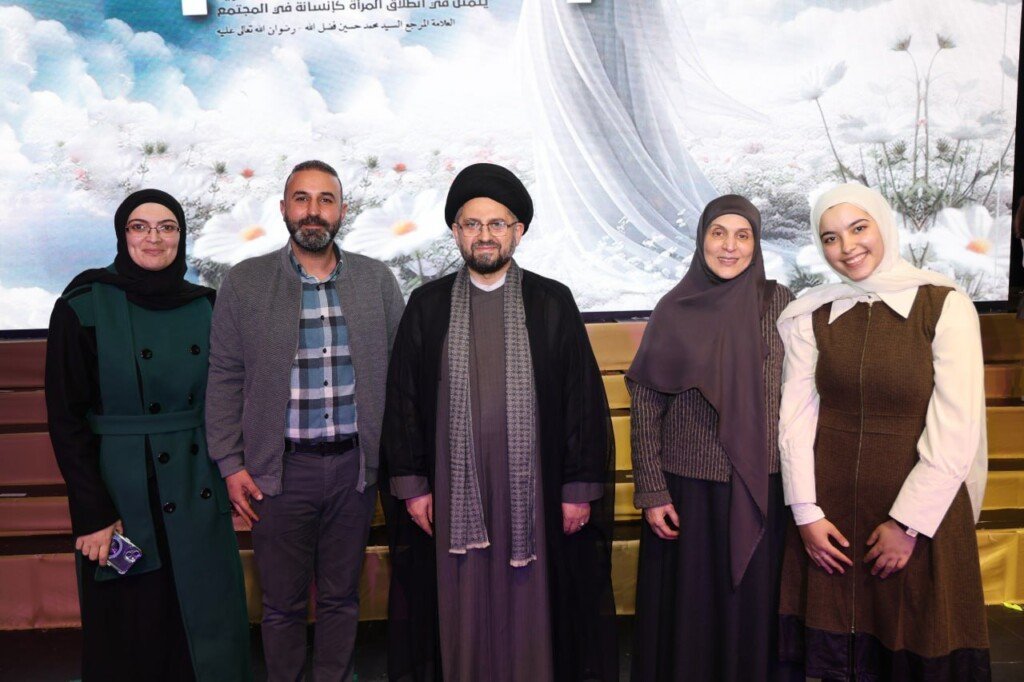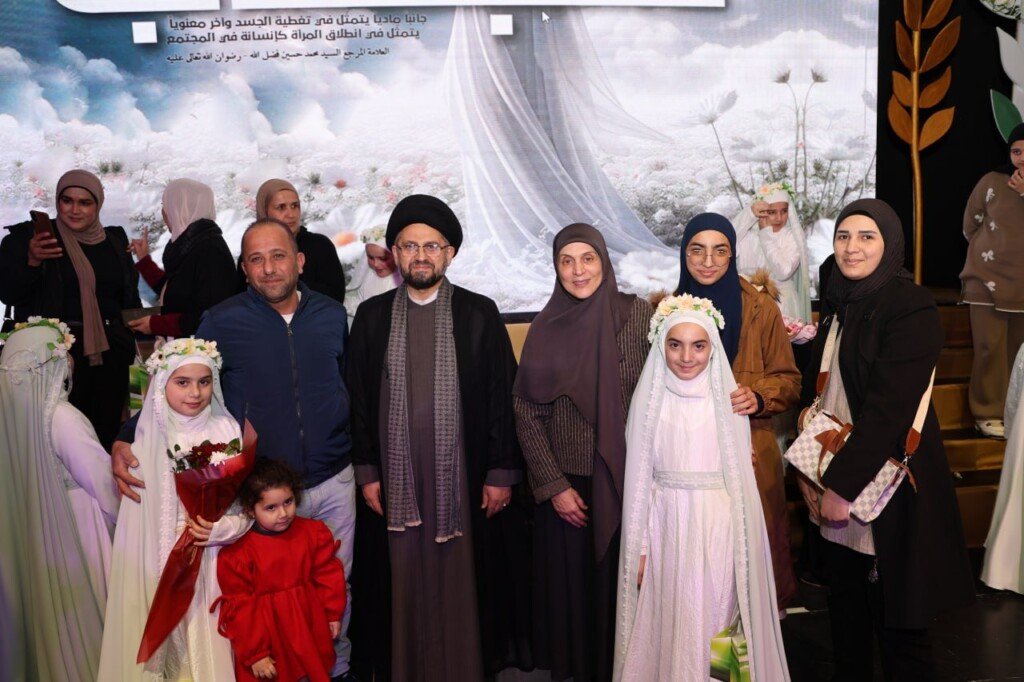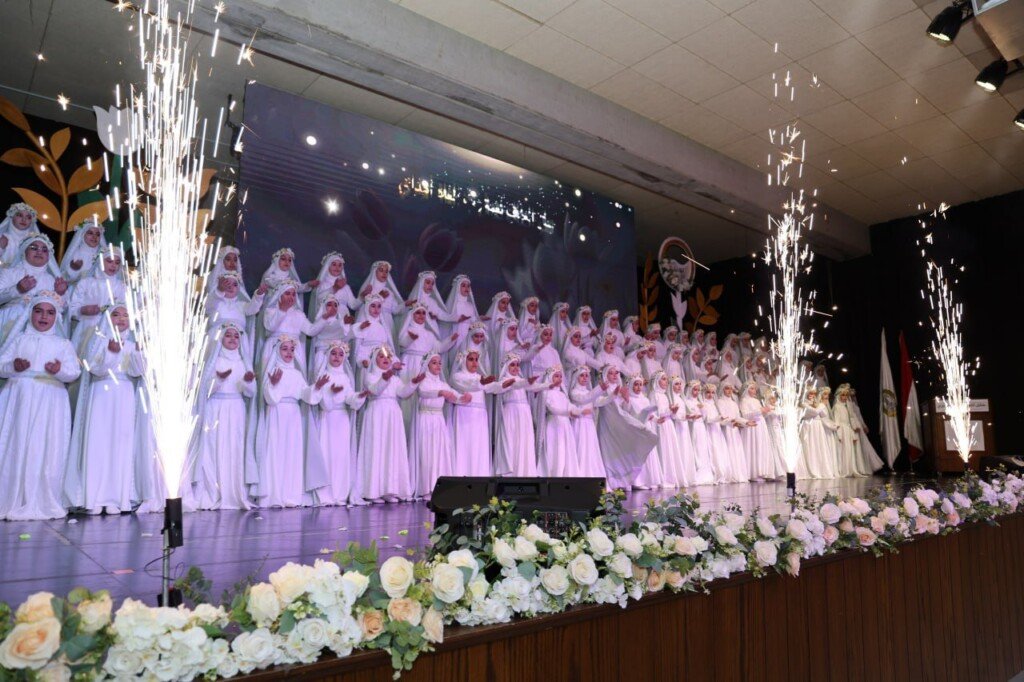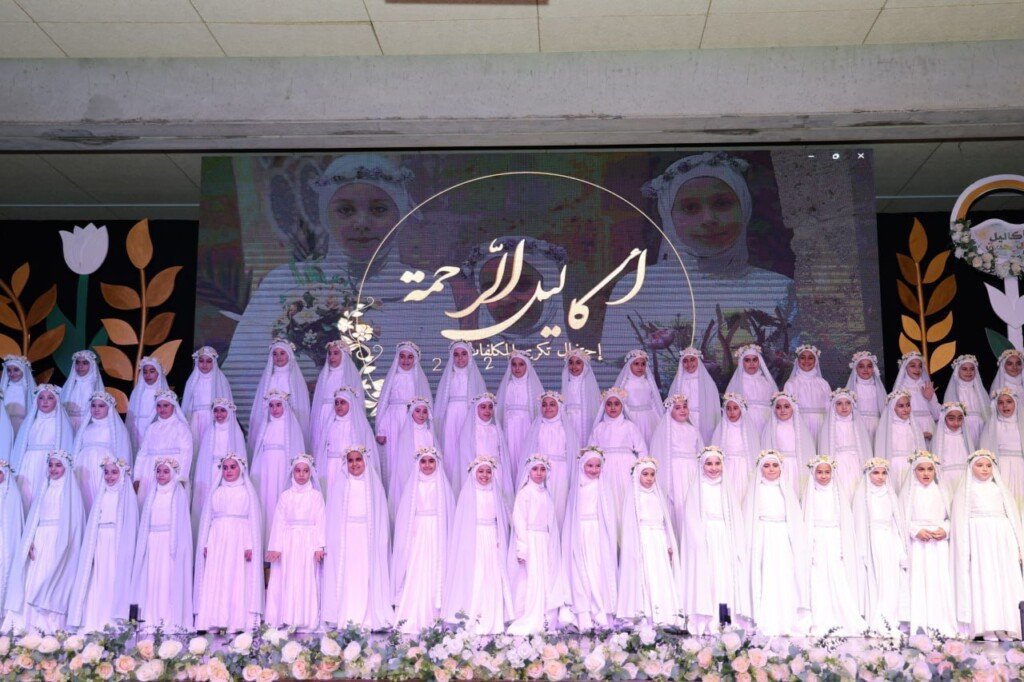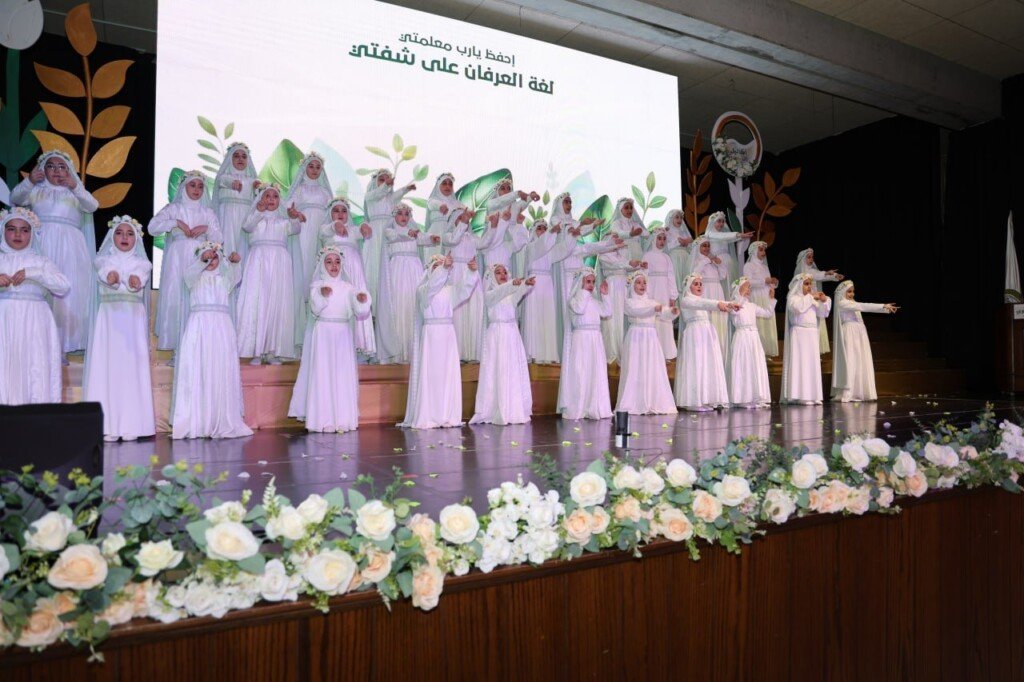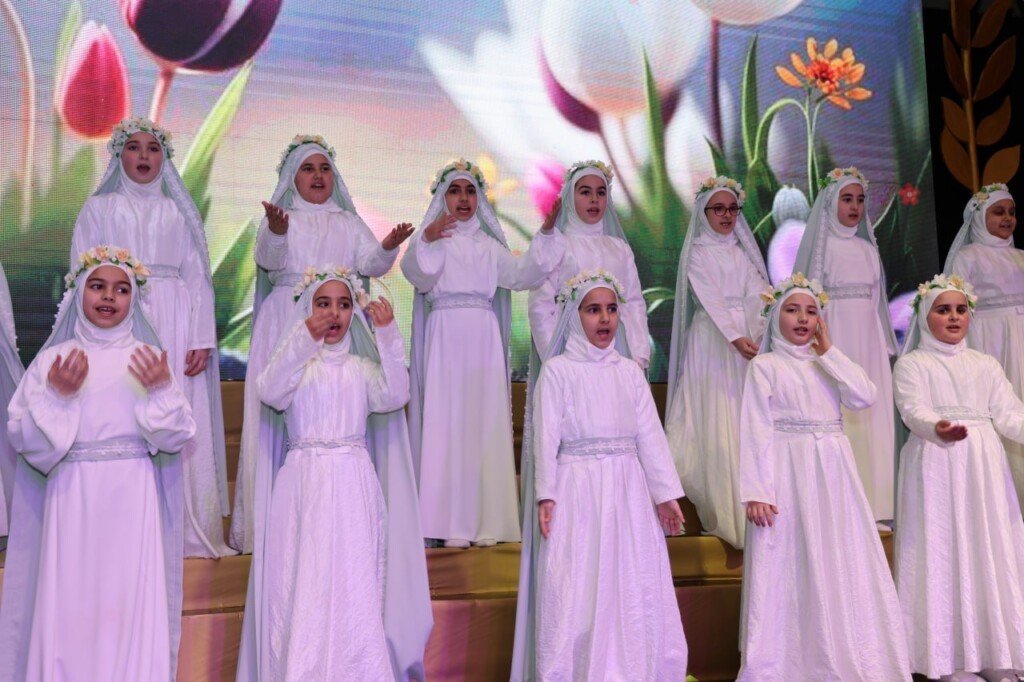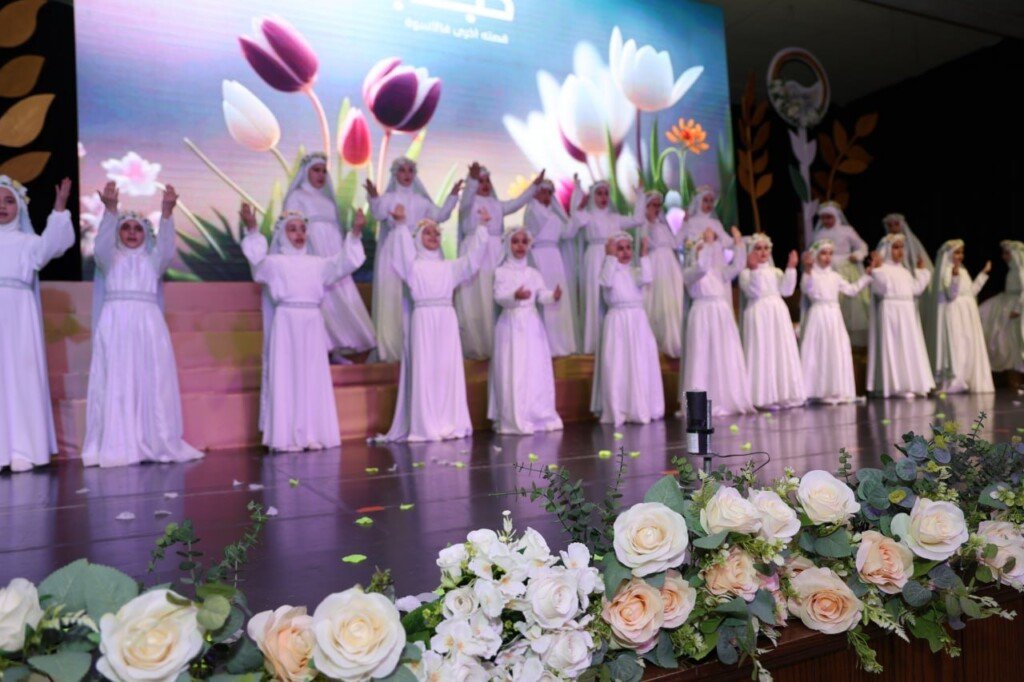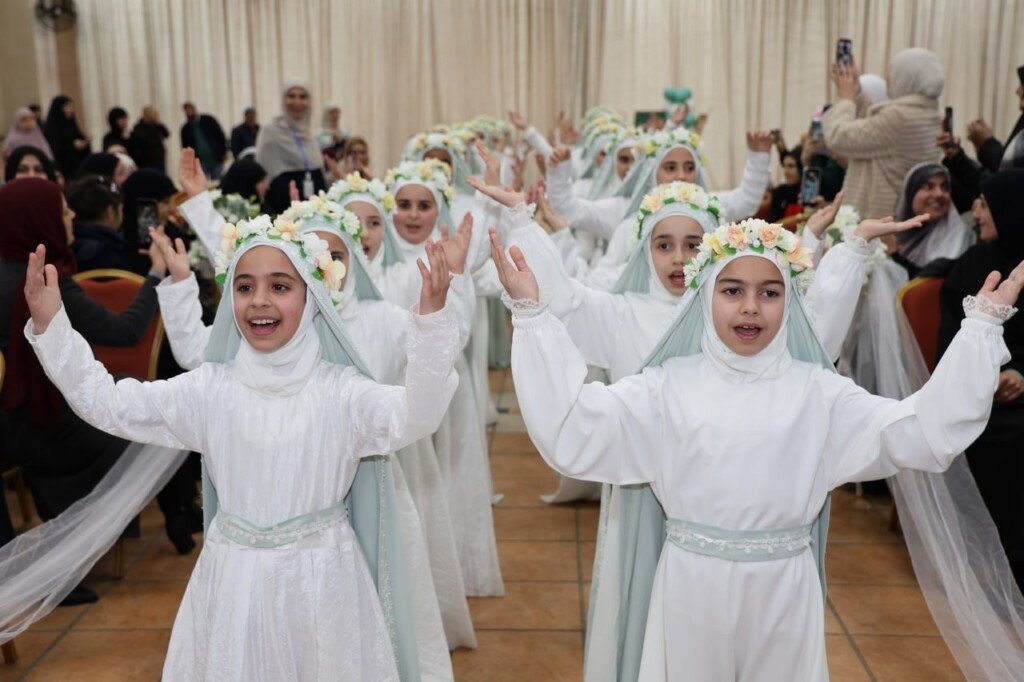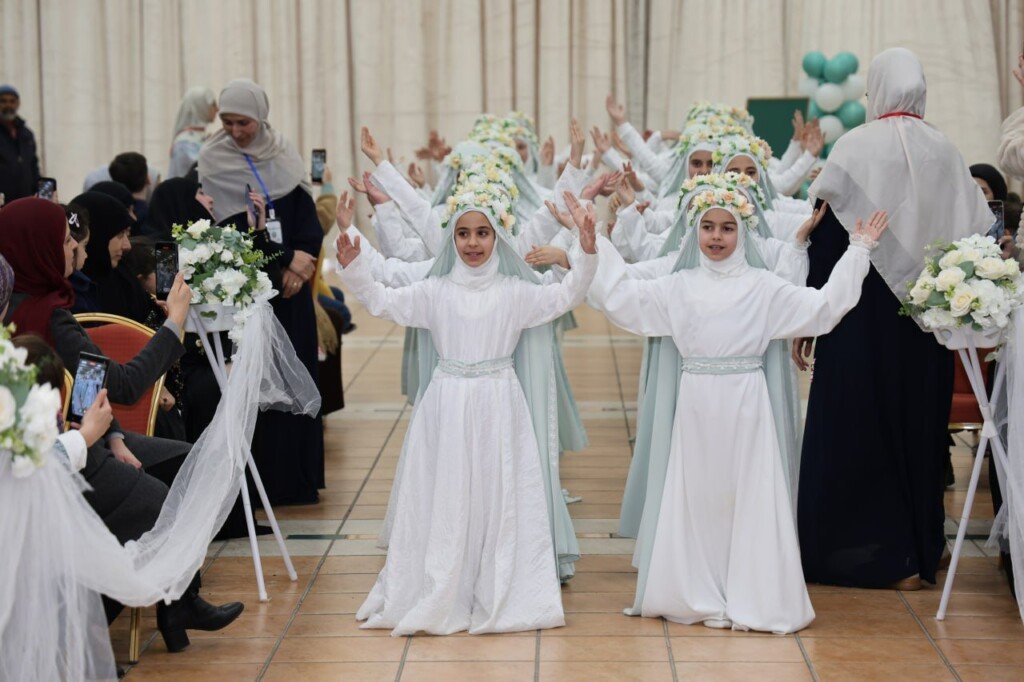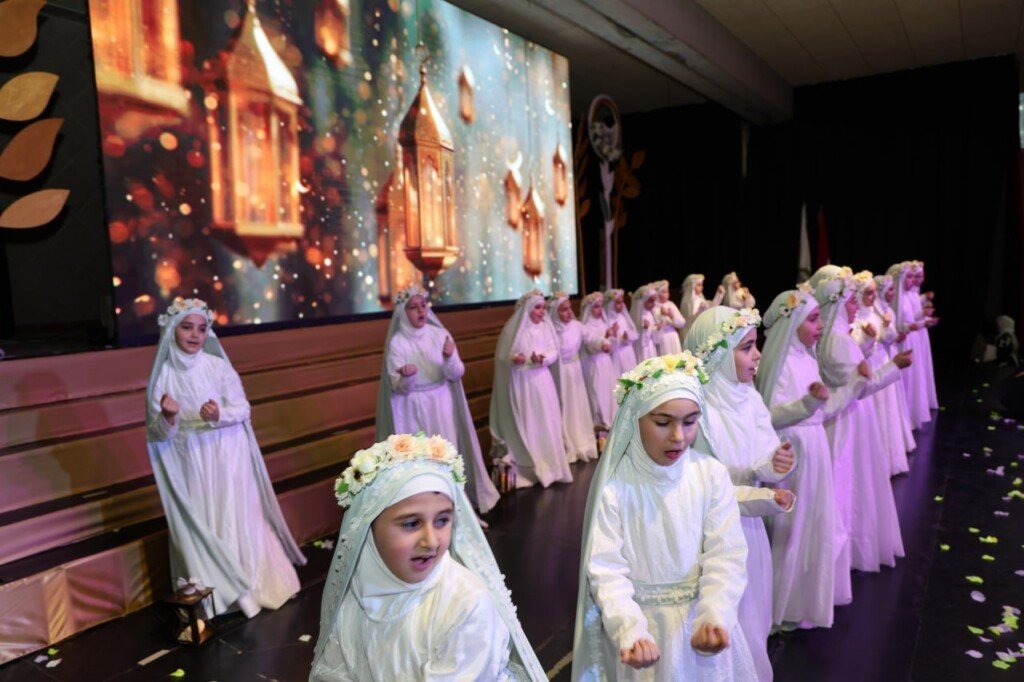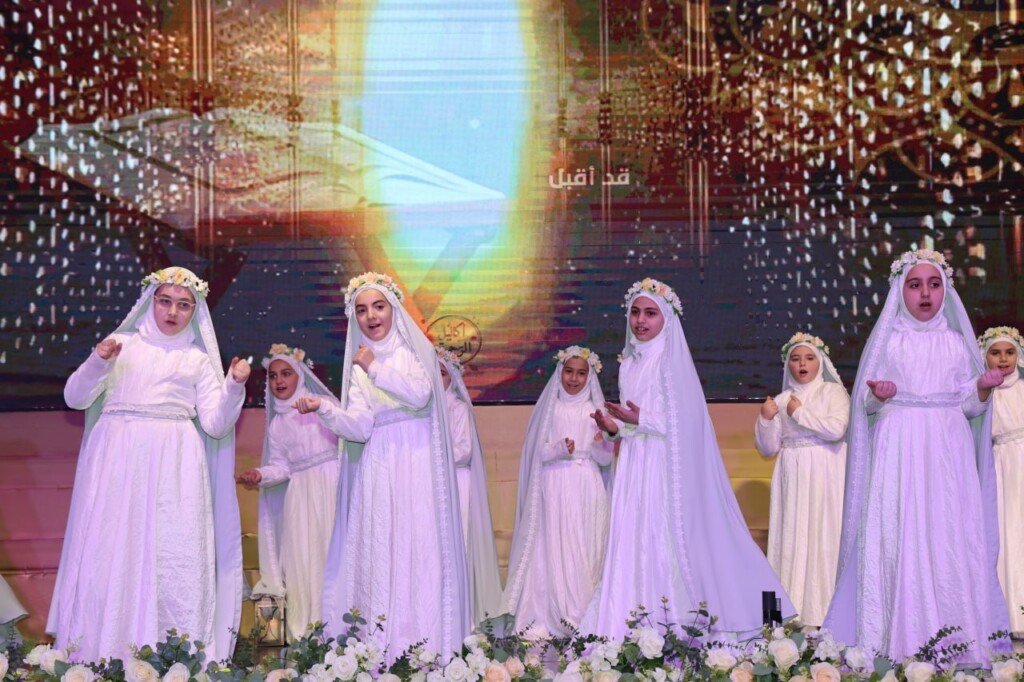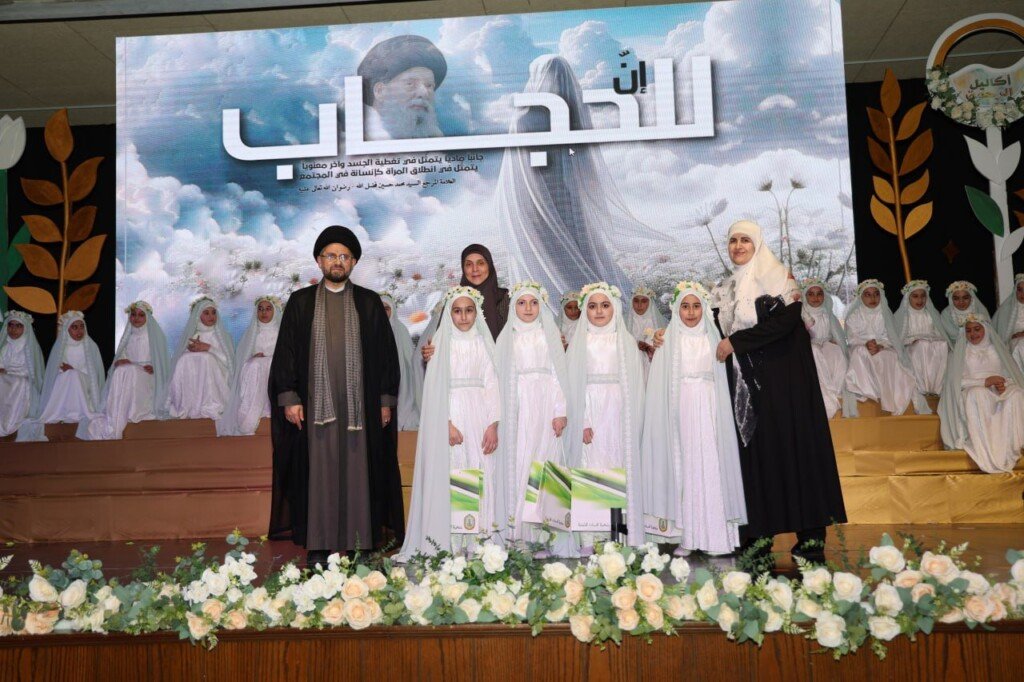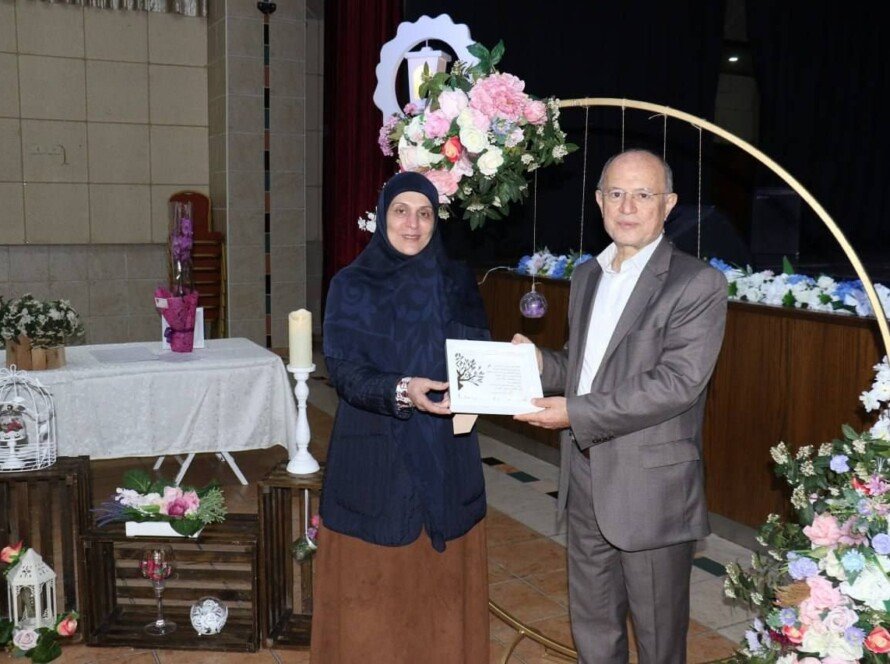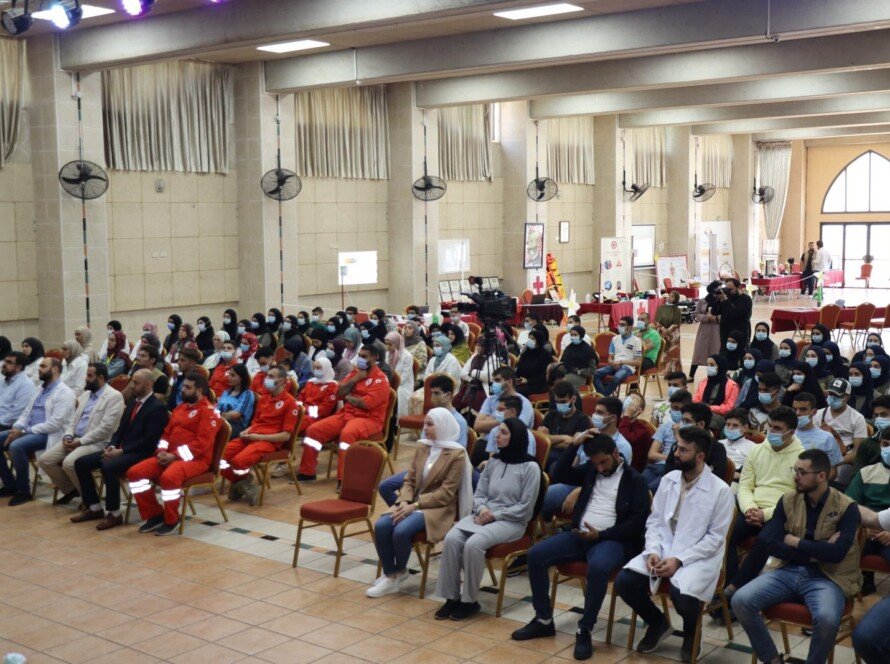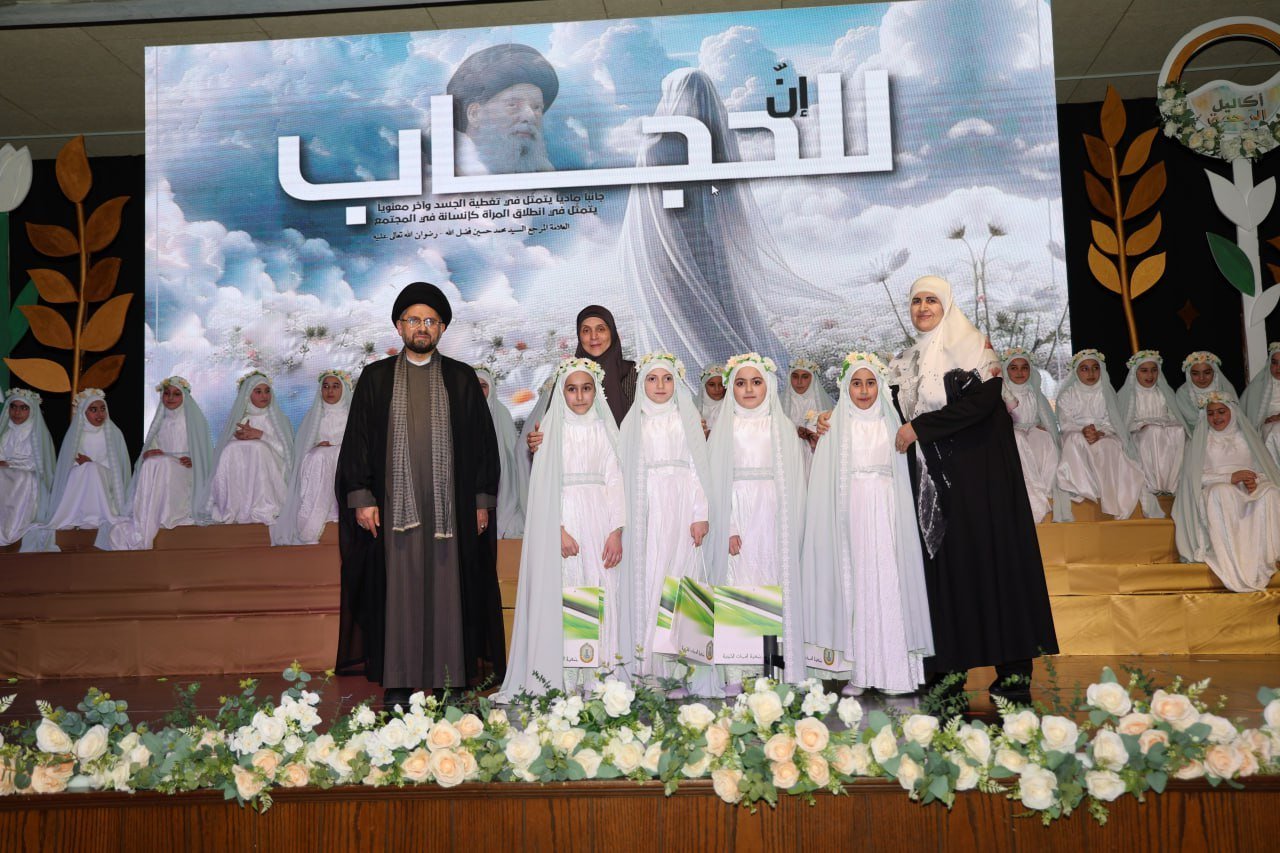
Under the patronage and in the presence of the General Religious Supervisor of Al-Mabarrat Charitable Association, His Eminence Dr. Sayyed Jaafar Fadlallah, Al-Rahma Secondary School honored its pupils approaching the age of religious maturity at a special ceremony titled “Wreaths of Mercy”. Alongside the school's principal, Ms. Soulaf Hashem, it was attended by Sheikh Fouad Khreiss; Ms. Rabiaa Al-Faqih, Director of Imam Al-Rida (PBUH) Charity; Sheikh Ali Al-Shawi, the religious supervisor; Sayyed Bilal Fadlallah, Director of the Sponsorship Office at Al-Mabarrat Charitable Association; Sheikh Ali Ghandour, Director of the Sponsorship Office in Nabatieh; Mr. Naji Rammal, head of the Parents' Committee at Al-Rahma Secondary School; cycle directors, supervisors and members of the administrative and teaching staff; educational, cultural and social figures; the parents of the girls coming of age; and a large gathering of guests.
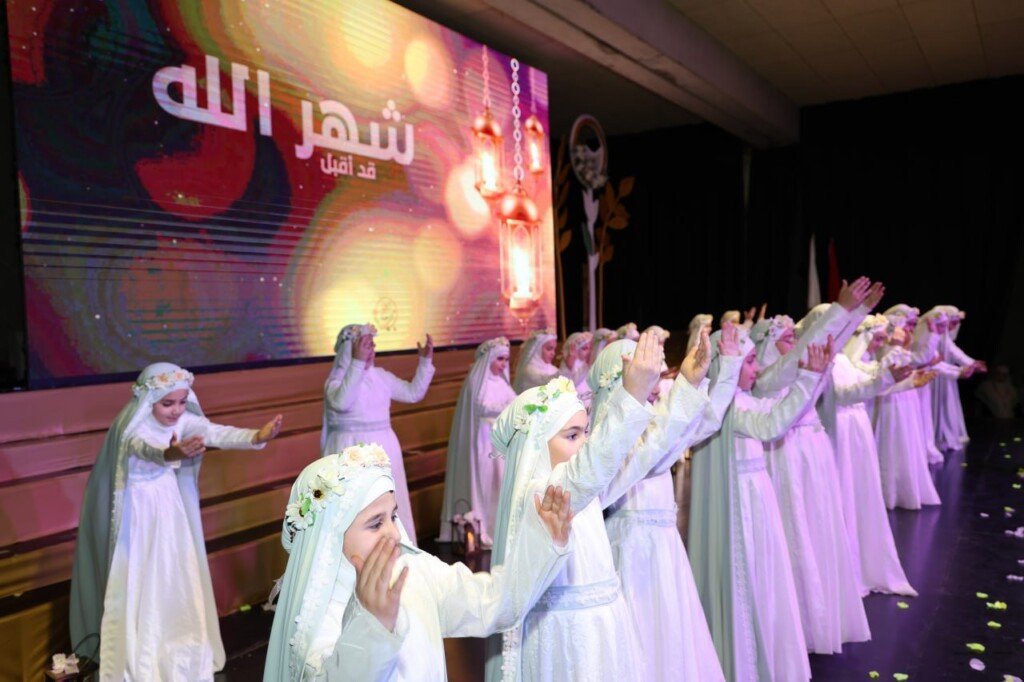
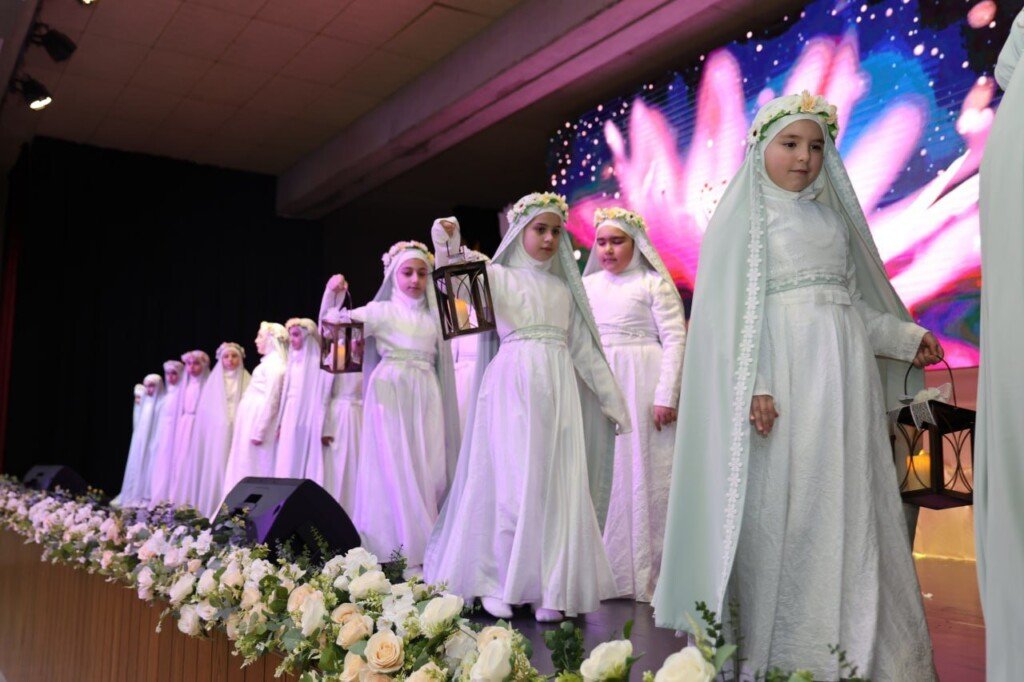
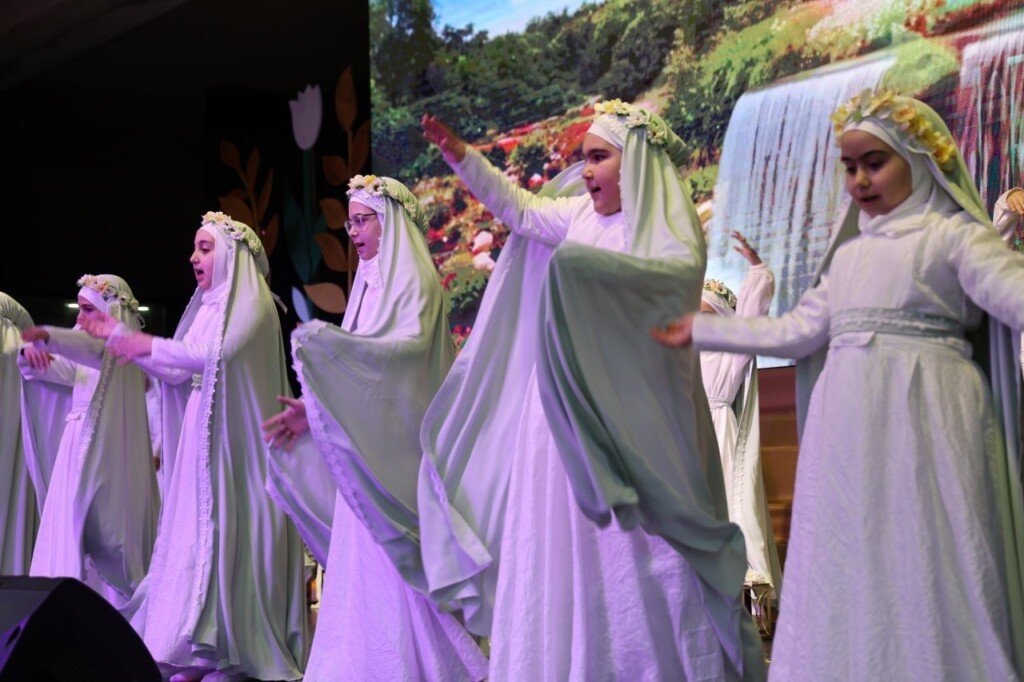
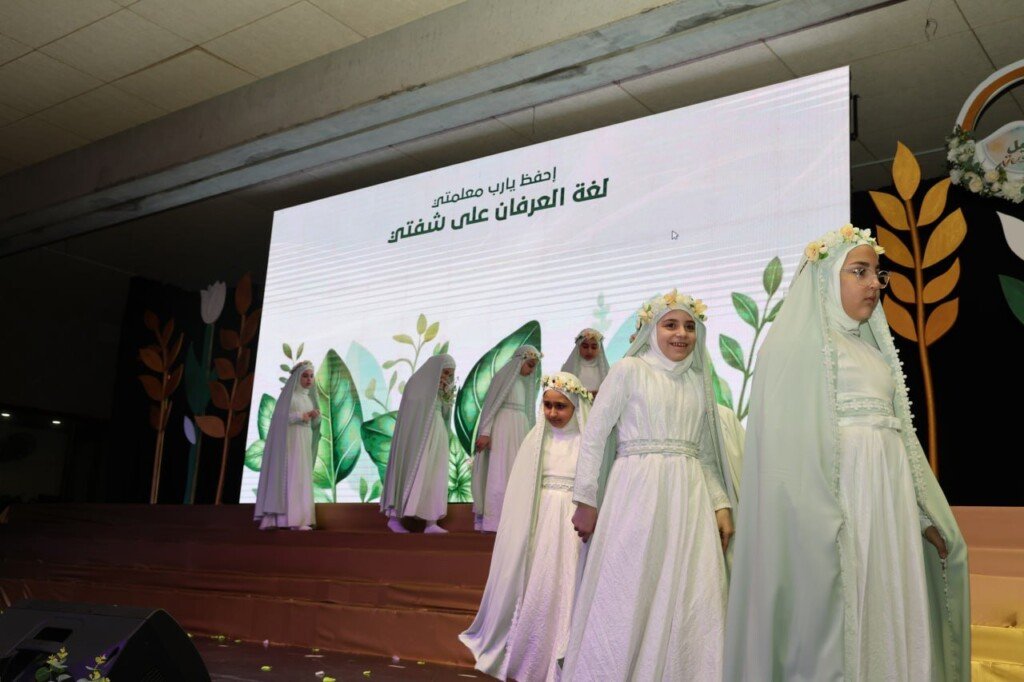
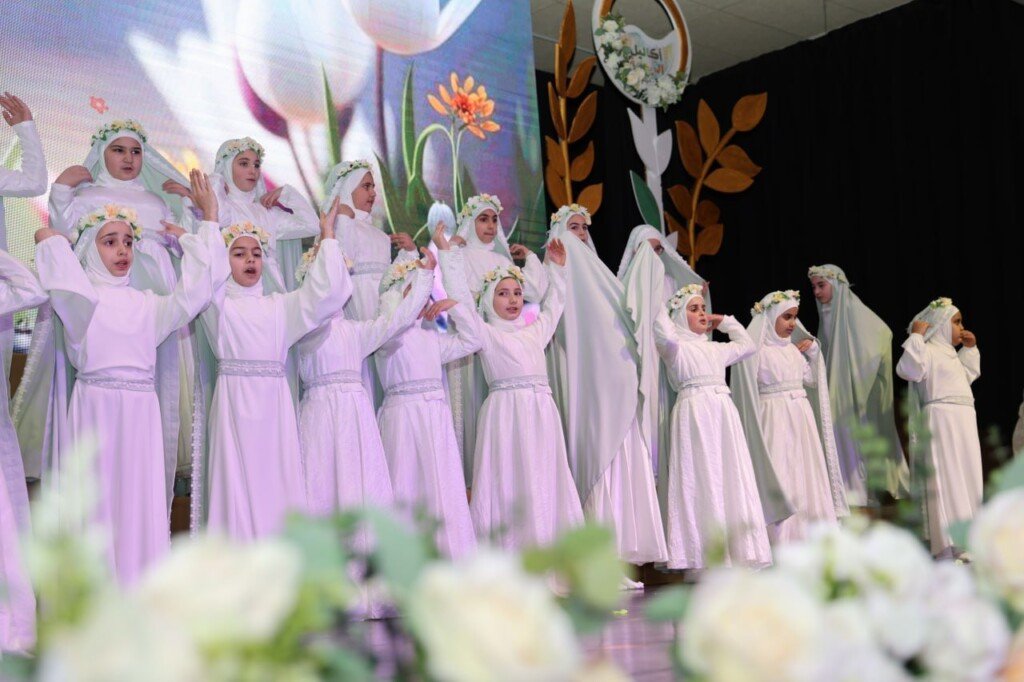
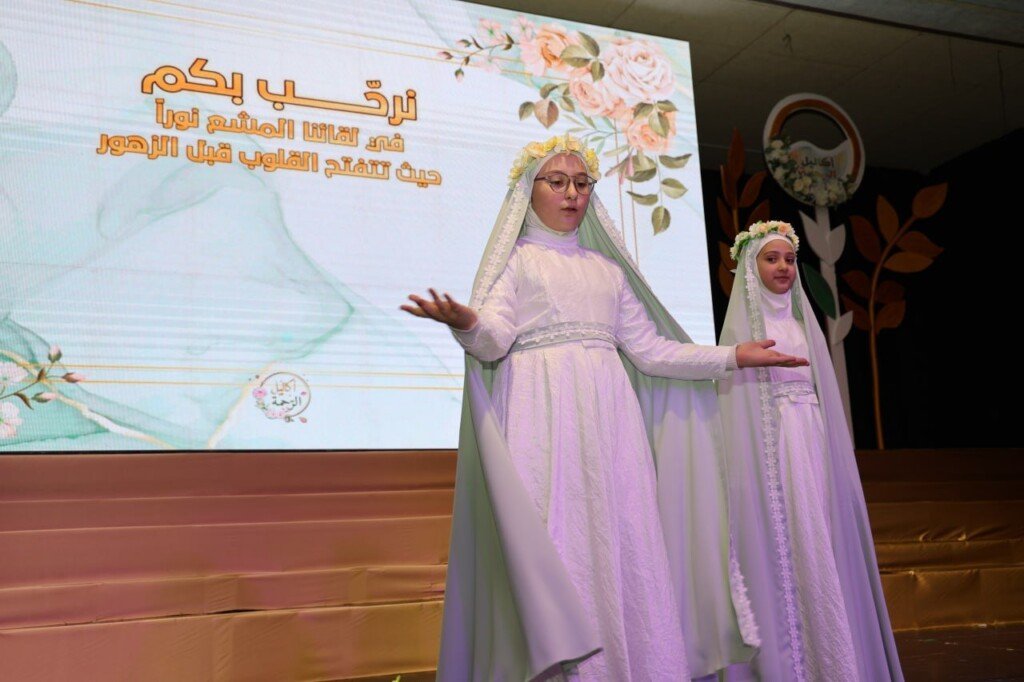
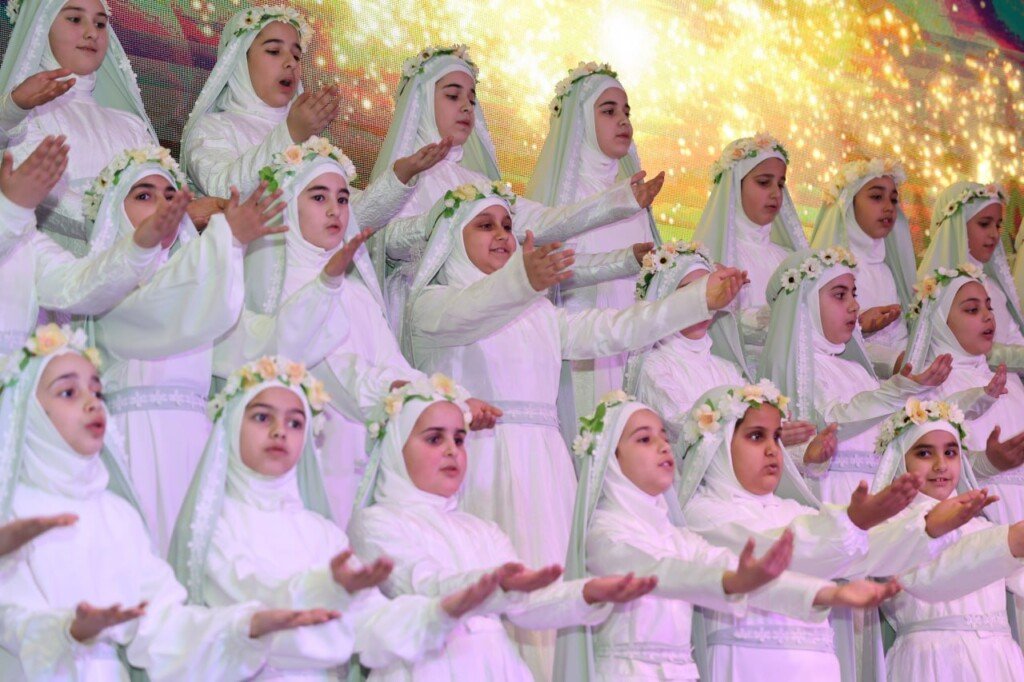
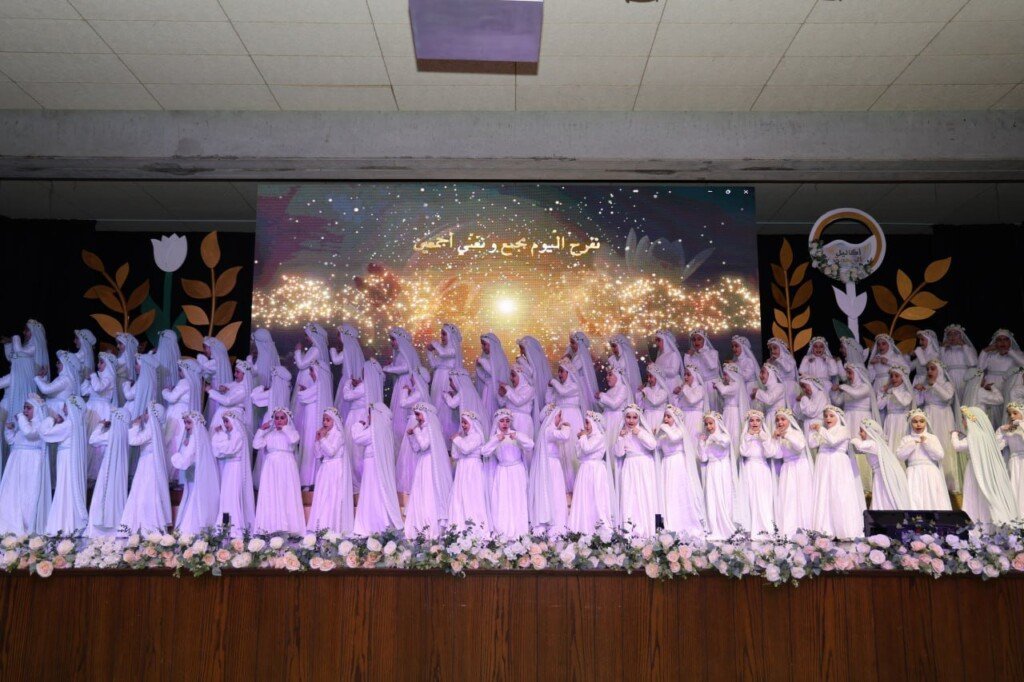
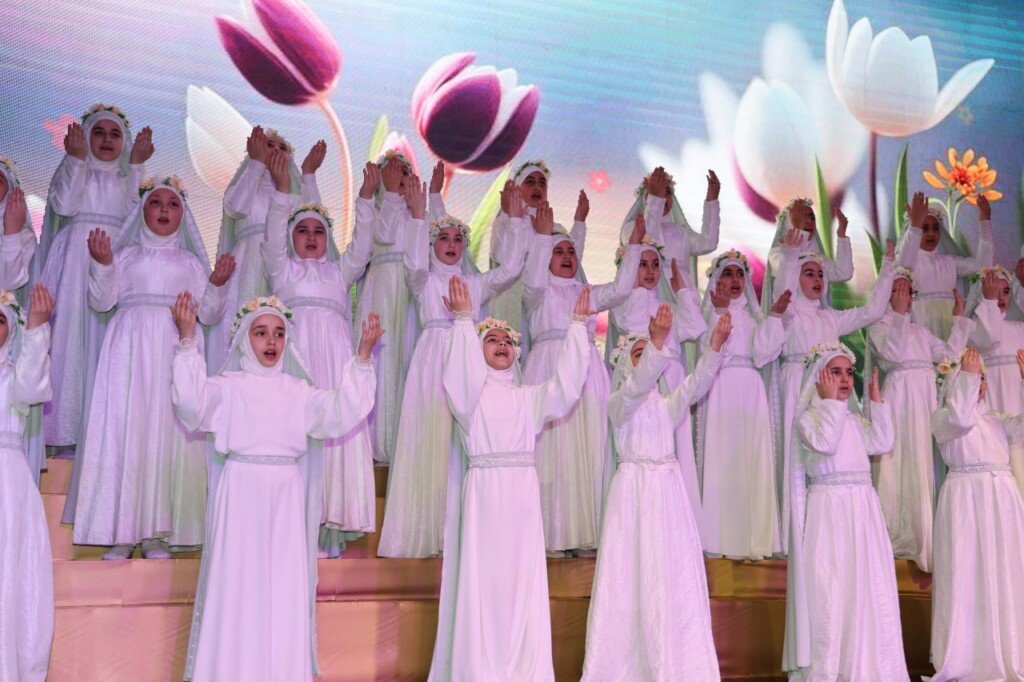
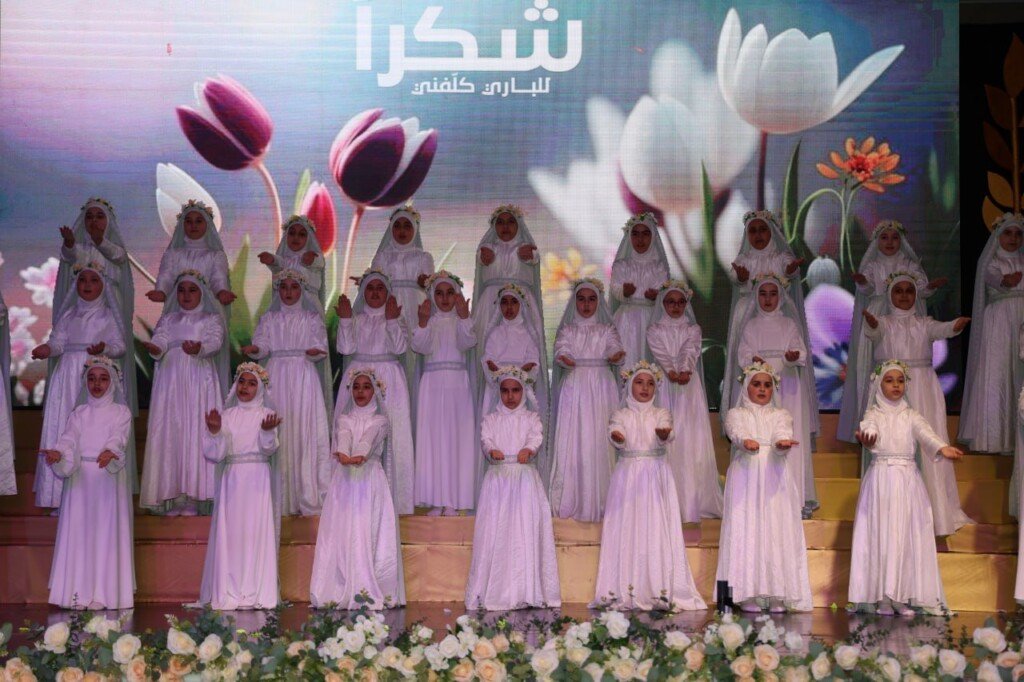
The ceremony opened with clear verses from the Holy Quran recited by a group of the girls, followed by the Lebanese national anthem. Various choral and artistic segments were then presented, along with a selection of films made for the occasion, concluding with a speech by the girls and a pledge and oath to commit to what pleases God and to shoulder responsibility.
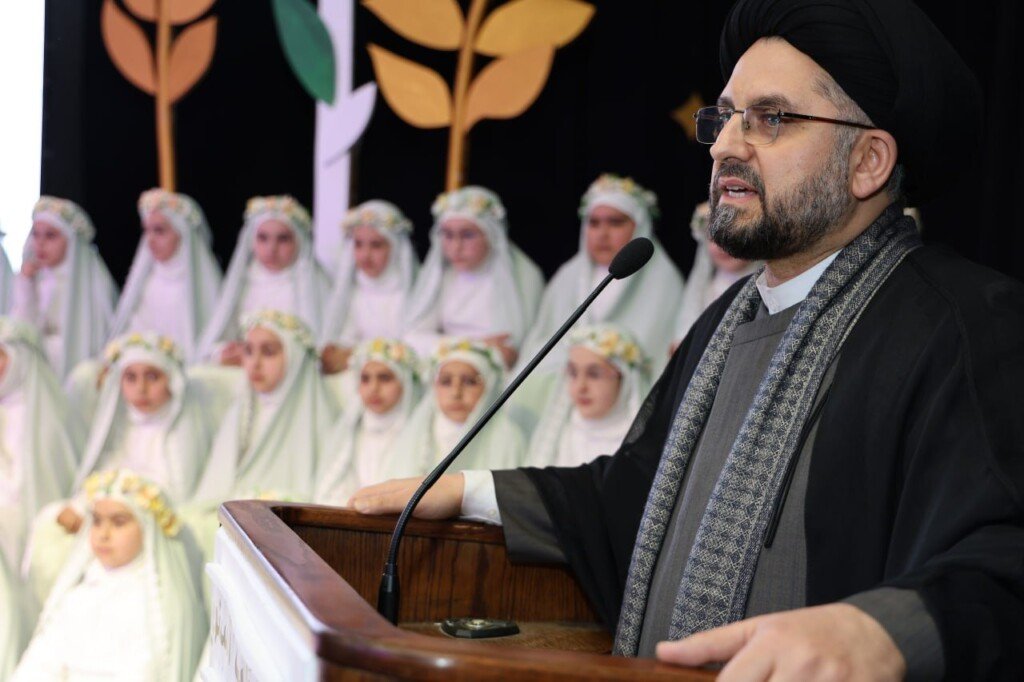
In his speech, Sayyed Jaafar Fadlallah noted that the affluent and self-indulgent are the root of corruption in societies and were the first to confront the prophets and reformers; that they are the deniers who entice people in order to distort the image of those who seek to bring light to people's lives, portraying them as lords of darkness; and that they are the ones who intimidate people and live off producing backwardness and regression. This is how the self-indulgent portrayed the prophets, so that people would turn away from them, and in every age they live by the same mentality, the same conduct and the same approach; the method by which earlier generations lived is the very one we see before us today, directed at the followers of the prophets. And we, the followers of the prophets, are the ones who see that we have a mission in this life; we are not bodies created and sprung from the earth merely to eat as cattle eat, whose sole concern is their fodder. And if the concern of such a mentality is its fodder, then its concern will be an economy produced by others, politics planned by others, and all the knowledge and culture produced by others, which we import from them as we import our goods, because others also wanted us not to be producers.
We found that those who raise the banner of human rights are the ones who slaughtered the human being on the altar of their desires and instincts; they are the ones who sank low and made this human being descend, as God Almighty said, to the lowest of the low. Today they have shown themselves to us with a visible face and plain conduct, and have split this world into two camps.
When we stand at a ceremony such as this, which is beautiful in every sense, in all its parts and details, we must thank all those who wove its threads so that we could live a beautiful moment in this whole world; we lived this beautiful, creative time, filled with much spirit alongside much form and imagery. The image was not the concern, but rather what it symbolizes. So thanks to everyone who stitched a thread into this beautiful, creative picture. This brings us to an essential point about our responsibility in this world, the present world and the world to come: our identity is a source of pride, and therefore we must not be swept along by anyone who seeks to distort the reality we live in, pushing us to be severed from our roots, to exchange one identity for another, or to import our values, concepts, principles and way of life from what others produce. God Almighty, who created us, told us: O people, I created you with two dimensions; a clay dimension, which is these bodies and their needs in all that they want, and the other dimension is the spiritual one, which is your meaning, attained through the spirit and not through the body. The body has narrow limits in the scale of the human being, but the spirit holds all this meaning, connected to the principles we embody and the values by which we move upon the earth in every detail of our lives. We therefore attain meaning through this spirit, and we see a person lose their meaning in life when they let their spirit die.
As we stand on the threshold of the end of this month, which held at its midpoint an anniversary that concerns us in every beat of our present and in the entire horizon we look toward, I mean the anniversary of our Imam Al-Mahdi (may God hasten his noble relief), the Imam of whom God Almighty told us, and this is glad tidings for us, when He said: “And We wanted to confer favor upon those who were oppressed in the land and make them leaders and make them the inheritors.” God did not say “We shall give them”, but rather He moves them out of the lowest place in which the arrogant wish to keep them and turns the scene upside down, so that the oppressed of the earth become leaders guiding this world. This is glad tidings for us and also a responsibility: whoever wants to be among the leaders in this world must live the spirit of the imams in the mind, so as to think deeply about this life.
Which of us feels that the Commander of the Faithful, Ali, is not present? Or Al-Hassan, Al-Hussein and the rest of the imams of the Ahl al-Bayt (PBUT)? Who feels that they are absent from us?! Rather, they are present in every word and deed, in every approach and behavior, in every goal we strive toward and every objective we seek to achieve, and in every value we embody in our lives. And our Imam Al-Mahdi (may God hasten his relief) is more present still, because today we realize that our responsibility before this unjust world order is to stand with our Imam in order to hold fast to the opposing project: that the order governing the world be a just world order. Do you know what a just world order means? It means that we cannot think in terms of marginal matters and minor details, nor stir up strife among ourselves; rather, we must always seek to close ranks in order to fix our gaze on the horizon of this world.
Sayyed Jaafar asked: where is the human being today? The human being has become an “other”, because he has become subject to complete oblivion. Whoever's heart does not beat for humanity in this world cannot live the meaning of the great cause, and so, when the Imam (may God hasten his relief) stands before him, he will be a stranger to him, and he too will find the Imam far from him.
On the day of taklif we say the following: in this setting, and at ceremonies such as these, which have a philosophy and a vision, we celebrate our insistence on shaping quality in the human being. It is true that our girls may appear outwardly alike and similar to you now, but each of them has a mind being shaped and a heart being filled with love for God and for God's friends, and with an approach and conduct that enable her to move through this life on the path of piety and uprightness. This is the quality in which we take pride and which we store up for the future to come, a future in which our children, boys and girls, must be protected; they must carry the meaning of divine obligation in their hearts, because in the days ahead people will face greater challenges than we faced, and will face turning points along the way. If they do not possess clarity of vision on the path, in their hearts and feelings and in their movement through life, then many will set up barriers for them here and there to snatch away our young ones, the generation of the future. And so today we say: taklif is a responsibility, taklif is an identity, and taklif is what it means for a human being to be truly human.
We return to the beginning to say that, just as God created the human being from clay and from a breath of His spirit, the philosophy of this hijab is to preserve the spirit in the public sphere, so that the body has its own private domain in which it moves freely. But when it comes to the human being who gives of their mind and of their competence, then it is the man as a human being and the woman as a human being who move within society.
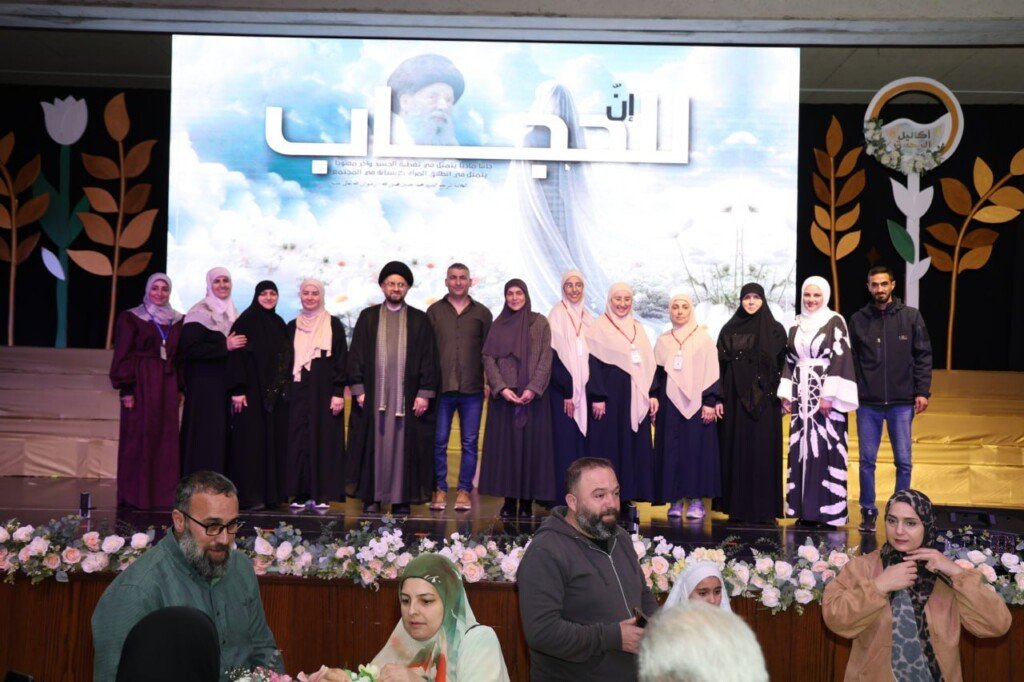
At the close of the ceremony, photographs were taken and gifts were distributed to the girls.