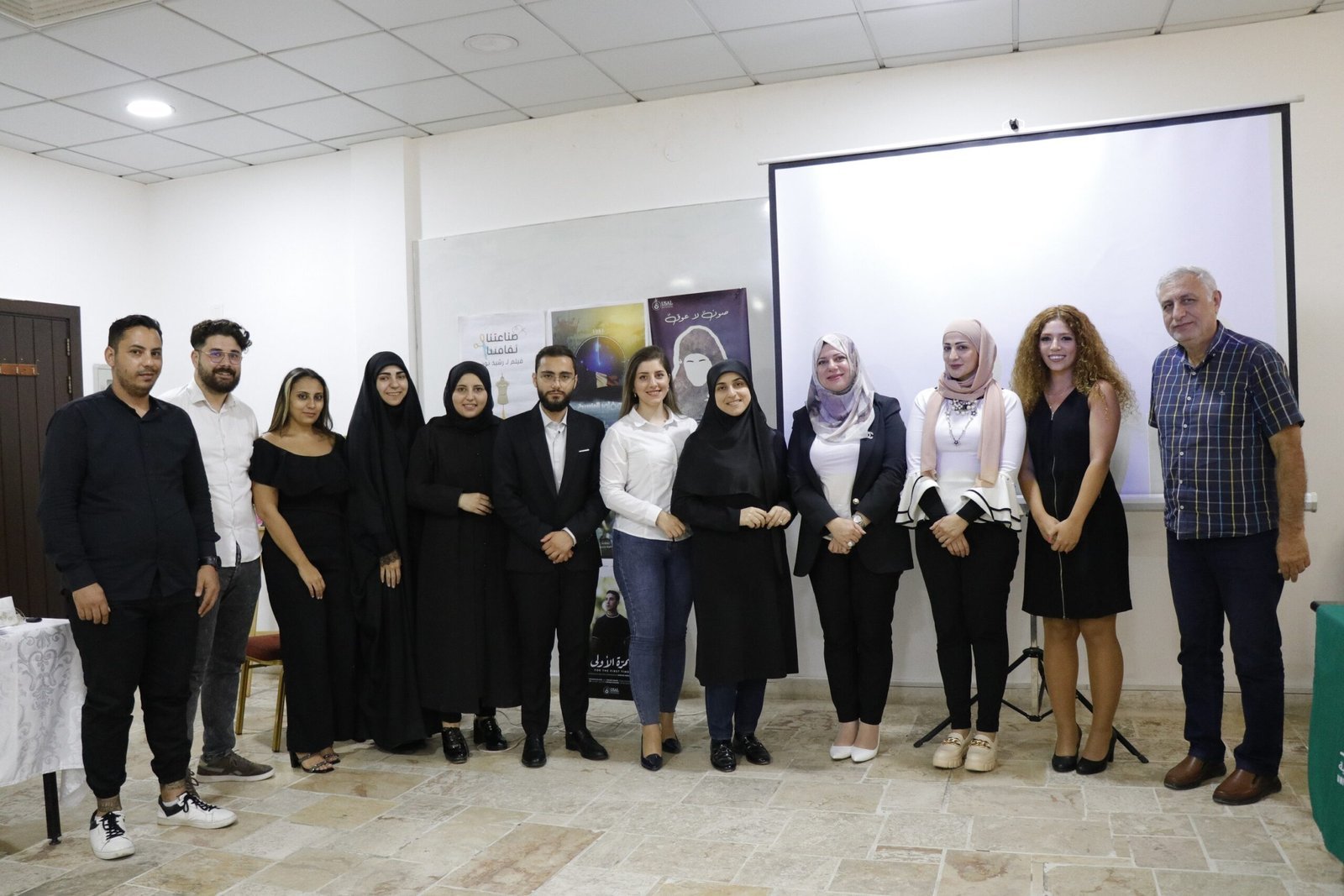
The University of Sciences and Arts in Lebanon (USAL) held, over two days, discussion sessions for the graduation projects of the media students for 2022-2023 in the specializations of digital media, public relations, and radio and television.
The presentations and discussions were attended by the head of the university's media department Farouk Rizk, lecturers from the three specializations, and the students' families.
The first day was devoted to discussing the graduation projects of the digital media students, before a judging panel comprising Dr. Ali Ahmad and Dr. Diaa Abu Taam. Three projects were submitted to this panel, of which “Old Beirut” by student Fatima Nasrallah received a grade of excellent - a project aiming to spread Beirut's heritage in terms of architecture, art, dress, food, appliances and the movement of life. Student Sarah Deeb's project “Not Politics” aimed to refute the misinformation campaigns the Lebanese public is exposed to in the virtual world, in a satirical way, while student Hussein Nasser Eddine's project “The Charlatan” aimed to criticize the details of daily life satirically.
After that came the discussion of the public relations projects, before a panel comprising Dr. Lana Abdullah, Dr. Alissar Qozoq and Mr. Farouk Rizk. Four projects were submitted to this panel, of which “My Comfort Is My Books and My Library” by student Tayba Zeaiter received a grade of excellent - a project aiming to urge the university's students to read and to improve their experience of the library, through varied promotional techniques inside and outside the library. Student Sanin Al-Bahadli's project “Between Dream and Reality” aimed to refute the negative stereotype of university students. Student Malak Shaalan's project “K-one For Shipping Services” was devoted to launching a media campaign for a Lebanese international shipping company, while the project “Hey Honey” presented by student Nisreen Amhaz aimed to organize an advertising campaign for the products of the Lebanese company Beesline, which specializes in natural beauty preparations derived from honey products.
The next day saw the discussion of the graduation projects of the radio and television students, before a panel comprising Dr. Hawraa Houmani, Dr. Diaa Abu Taam and Ms. Mona Zaarour. Ten projects were submitted to the panel, of which “The Forgotten Souffleur” by student Mariam Dalloul received a grade of excellent - a documentary film aiming to uncover the forgotten French submarine “Souffleur”, sunk by the Allies in the Second World War off the Khalde shore at a depth of forty metres. The other films bore the following titles: “For the First Time” by student Ahmad Abu Hamdan, on the experience of seeing for the first time after blindness; “Who Am I?” by student Alaa Shheimi, following patients suffering from schizophrenia and presenting their problems; “Loss” by student Hala Al-Mismar, raising the problem of the rise in cosmetic surgery and awareness of its risks; “Our Industry Is Our Culture” by student Rashid Noun, on the Lebanese clothing industry, its importance and its ability to compete; “A Temporary Homeland” by student Hassan Saleh, on the experience of a displaced artist who took up the water art of “Ebru” amid his struggle with daily life in Lebanon; “Head of the Building Committee” by student Rola Shamas, on the problems between tenants and building committees in Lebanon; “Protection Without Impairment” by student Malak Sbeity, addressing the difficulties faced by veiled women at work and presenting successful experiences that broke the stereotype; “A Currency Without a Face” by student Lara Qarsifi, on the trading in and commerce of the digital Bitcoin currency and its financial impact; and “The Hidden Power” by student Lama Kamouni, on a way of life capable of awakening the latent powers within a person.
The panels noted the importance of the subjects and their variety, the way they were approached and the novelty of their techniques, while asking some students to make adjustments in order to improve the quality of the projects submitted and present them later on specialized sites and platforms, or take part in student competitions for documentary film-making.