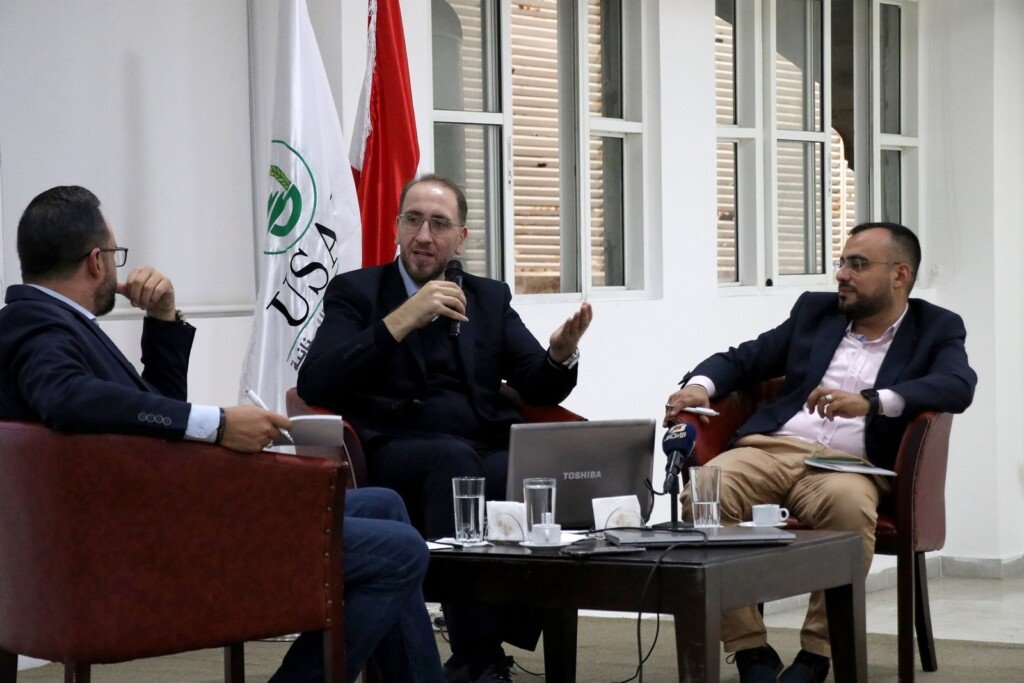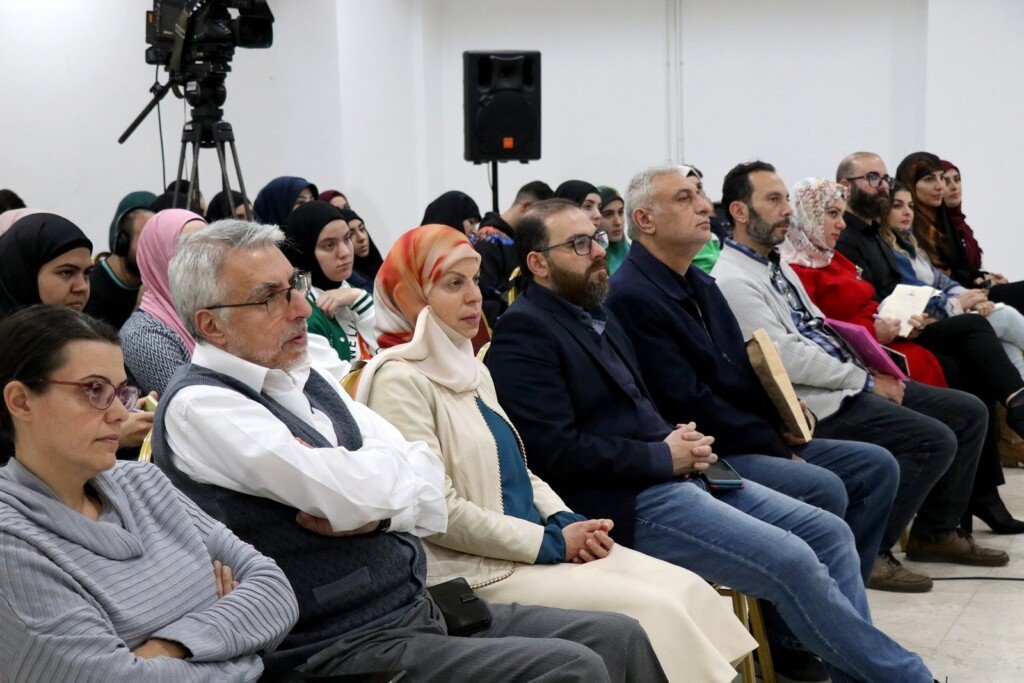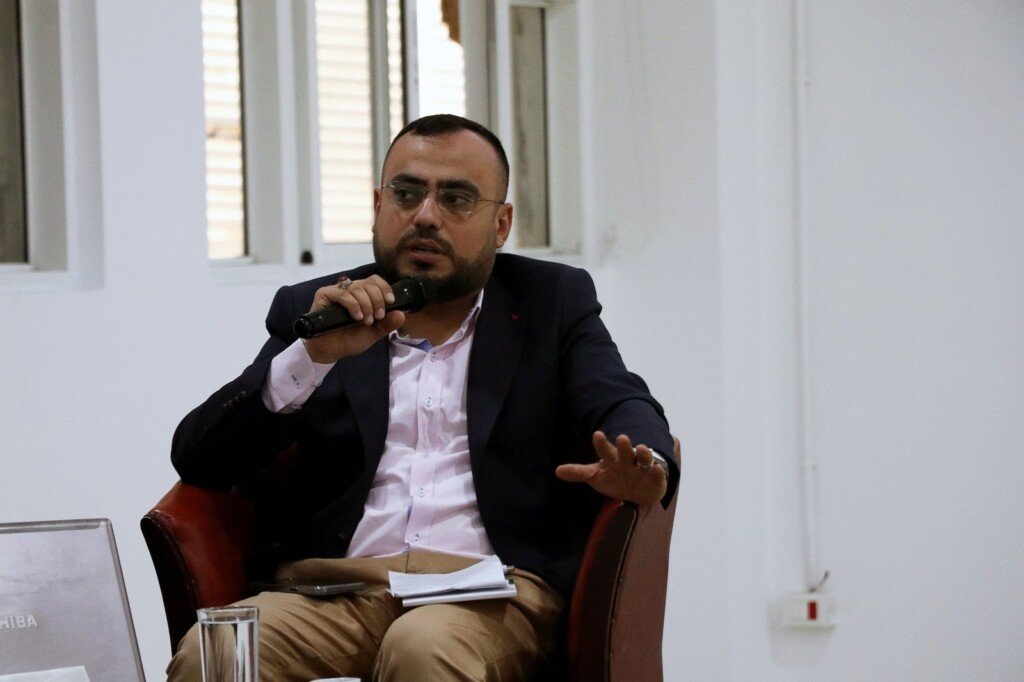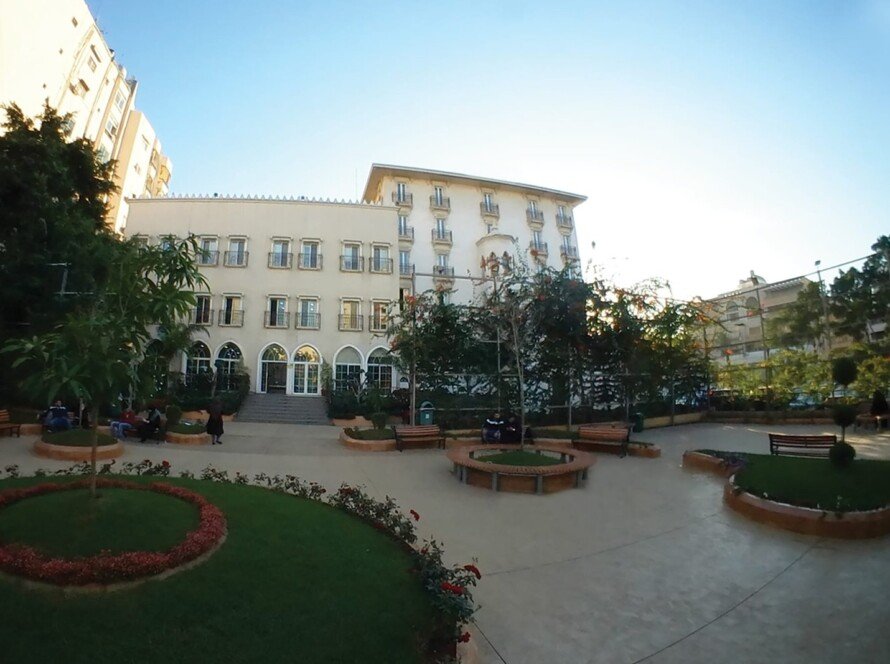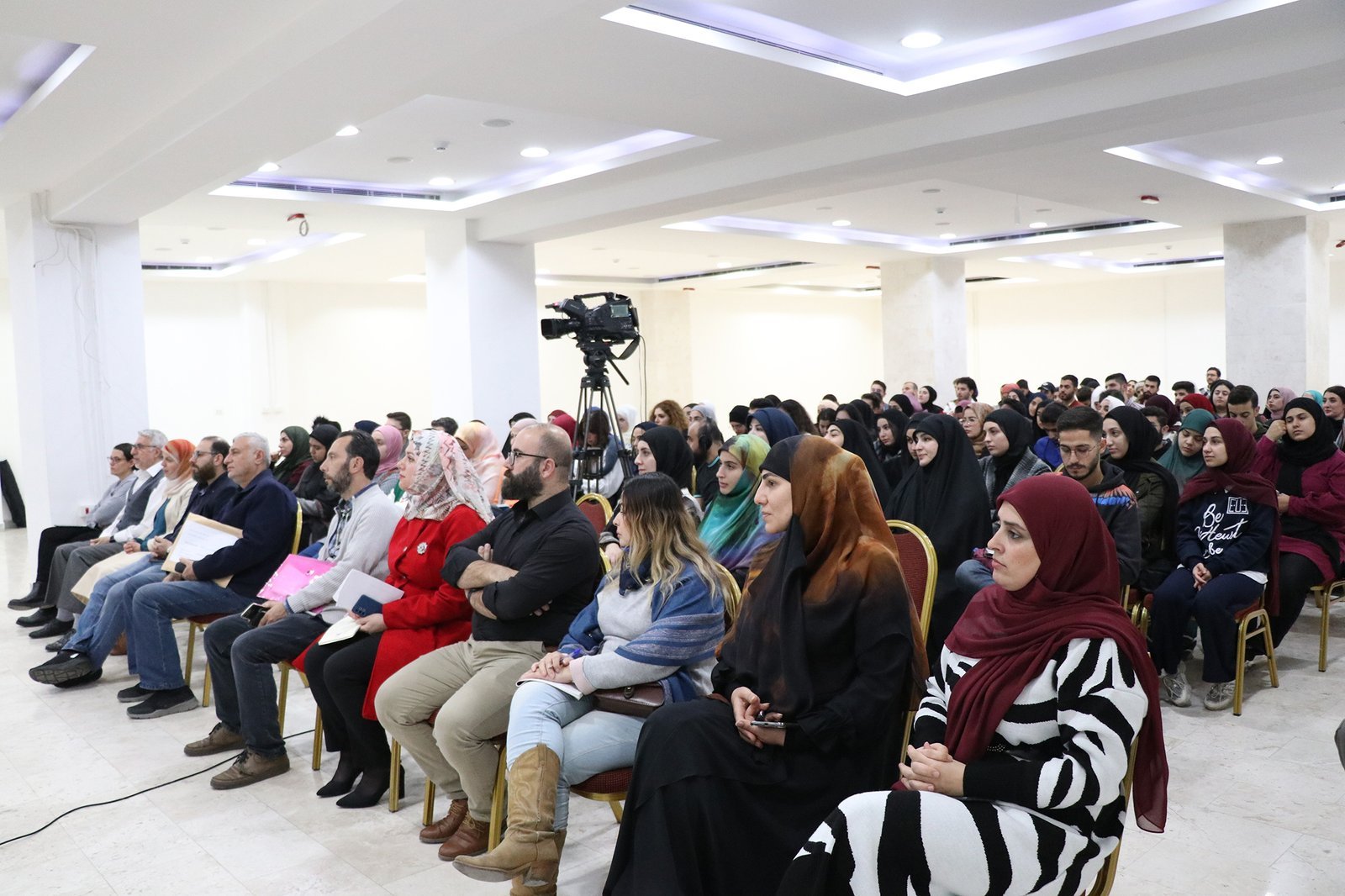
The University of Sciences and Arts in Lebanon organized a discussion panel entitled “Artificial Intelligence in the Media”, in which the head of the technical and digital experts committee in the digital transformation network in Lebanon Dr. Jamal Muslimani took part, along with the researcher in digital media and lecturer in electronic media subjects at the university Mr. Ali Ahmad, and the lecturer in the investigative reporting and news bulletin course at the university Dr. Diaa Abu Taam, in the presence of students, lecturers, administrators and interested people.
At the outset, the assistant head of the media department at the university Ms. Mona Zaarour welcomed those present and spoke of the importance of panels within the university's activities, saying: “Through panels, activities and workshops the university has always been keen to enrich students' culture with varied knowledge outside the framework of the curricula, so as to absorb everything new and shorten the distance in the different fields of knowledge.”
After that the speakers discussed “the effects of artificial intelligence on the media, the paths of using this technology, and the horizon of this field of knowledge and its future effects on people's lives and their work”
In this context Dr. Muslimani held that amid the accelerating technological challenges the most important question currently posed about digitization is: “Can we digitize the human being, or must we humanize digitization?”
Muslimani explained that “despite the existence of economic and industrial gaps between the countries of the world, the technological gap is narrowing with the world's openness to itself under globalization: Arab start-ups now take part in the most important international technology exhibitions, and the star of many young Arabs has risen in the fields of innovation in technological industries, so that they have become among the most important global competitors”.
For his part the researcher Ali Ahmad held “that artificial intelligence will abolish many professions but will also create many professions”, calling on media workers “not to fear the accelerating developments in the field of artificial intelligence, because the media profession and the technologies used in it have been developing continuously for a long time. What is required is to make a professional media worker armed with high cognitive skills that artificial intelligence cannot take the place of”.
Ahmad stressed that “digital transformation and the move towards using artificial intelligence have become obligatory for all media institutions”, holding “that the matter is not the ability to produce a large quantity of media material within a timescale that cannot be humanly competed with, but rather the ability of this technology to divide audiences into segments and to target each segment separately according to what it desires intellectually and psychologically, and in different news forms at one and the same time”.
For his part Dr. Abu Taam held that “the media is not merely production but a message and an identity”, pointing out “that the West manufactures the technology and puts it on the market with an integrated intellectual system, and imposes it on users”, and adding that “using technology without awareness will turn a person from a producer into a product”. At the close of the panel there were many questions put by the students and those present to the speakers, focused on the dangers that will arise from the accelerating technological developments and on the mechanisms and ways of absorbing them and limiting their problems amid the crises buffeting the homeland.