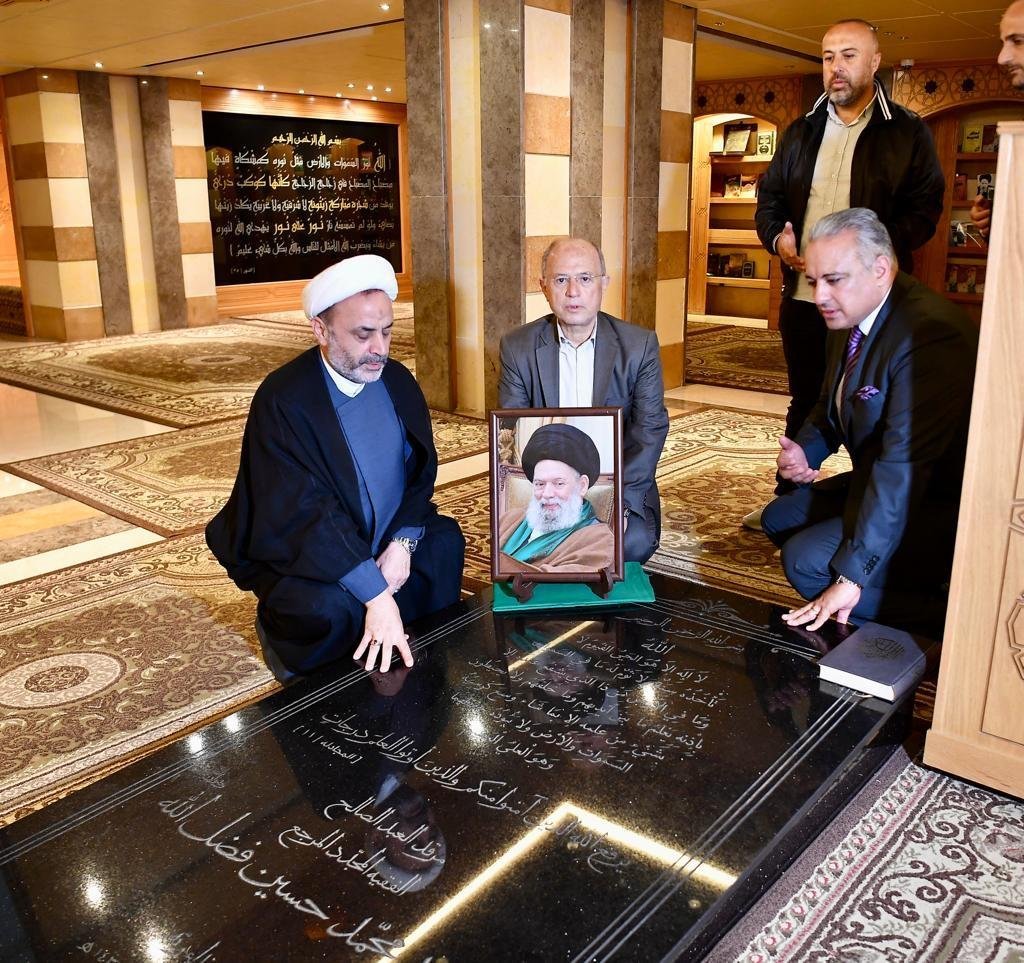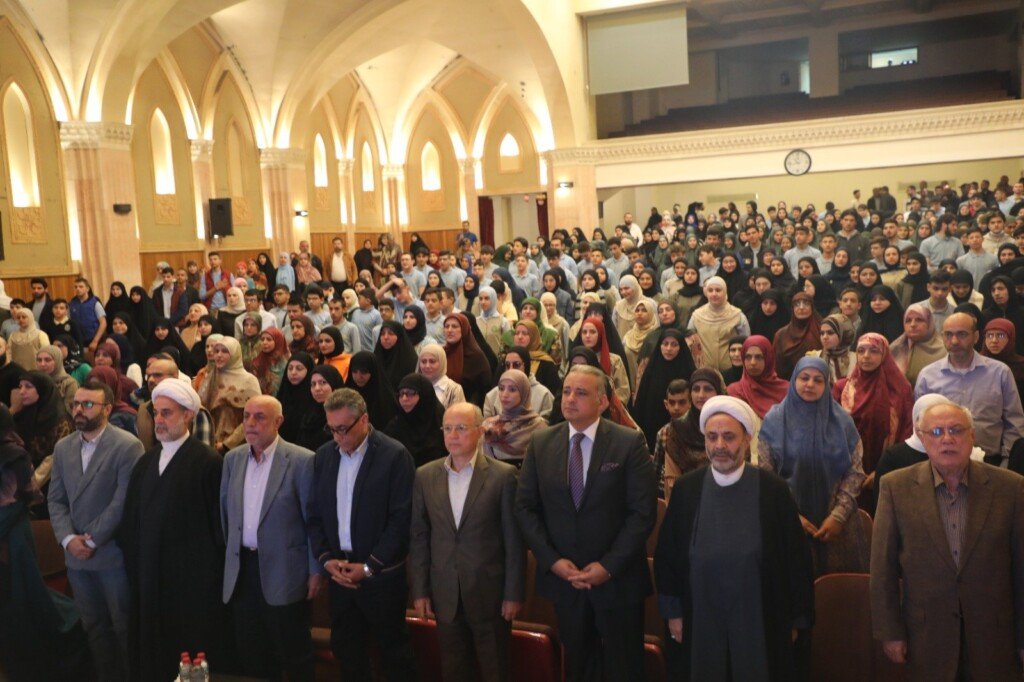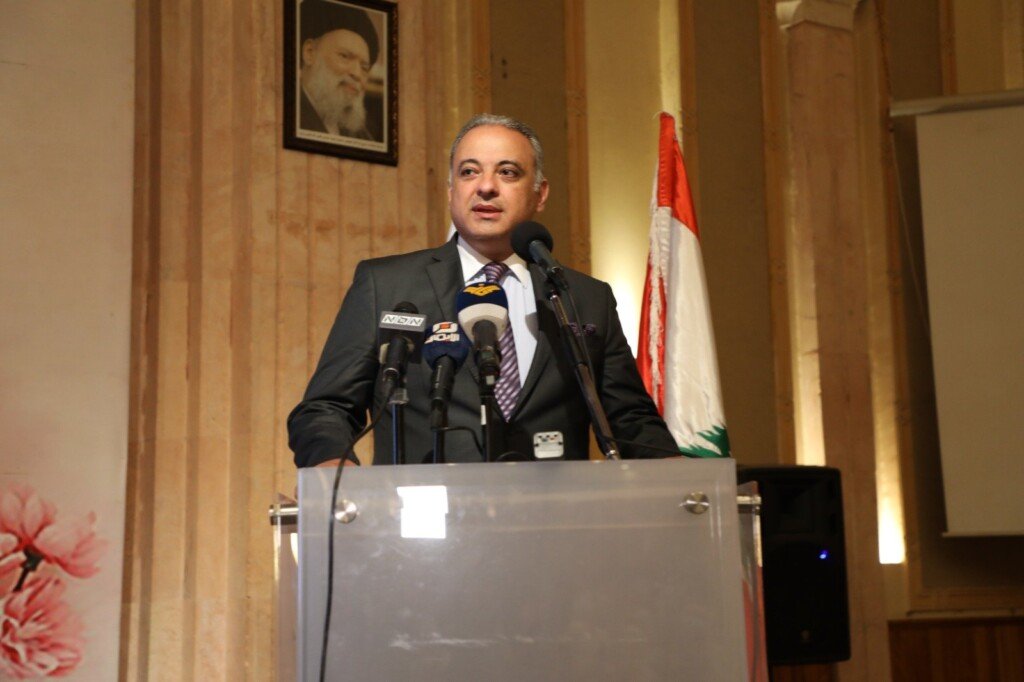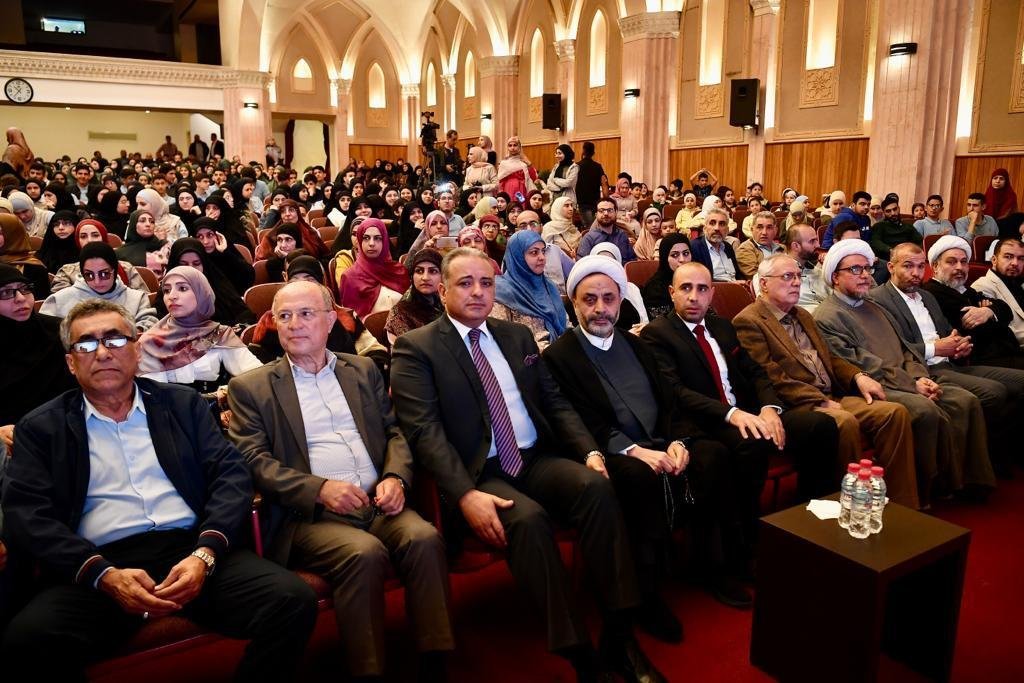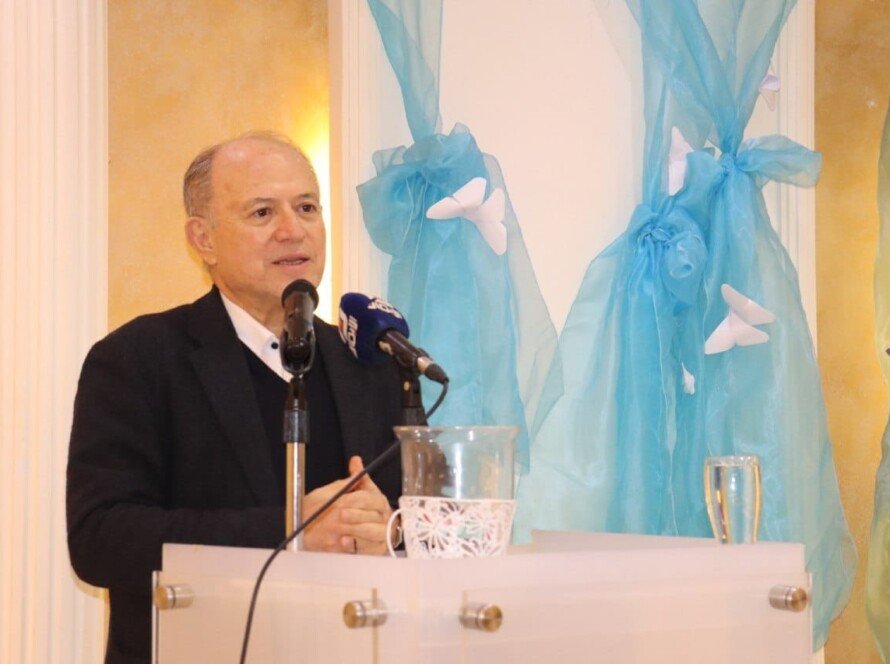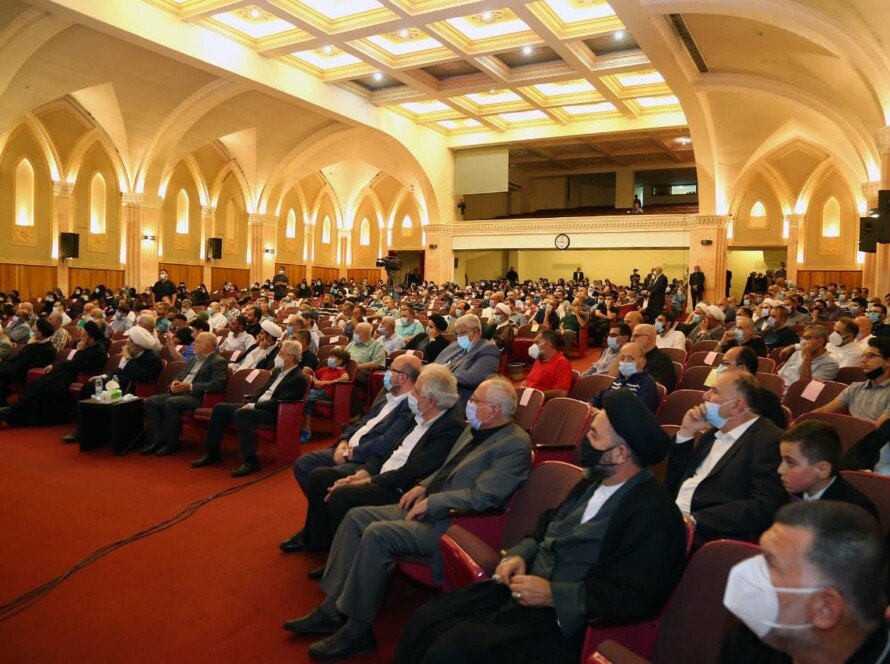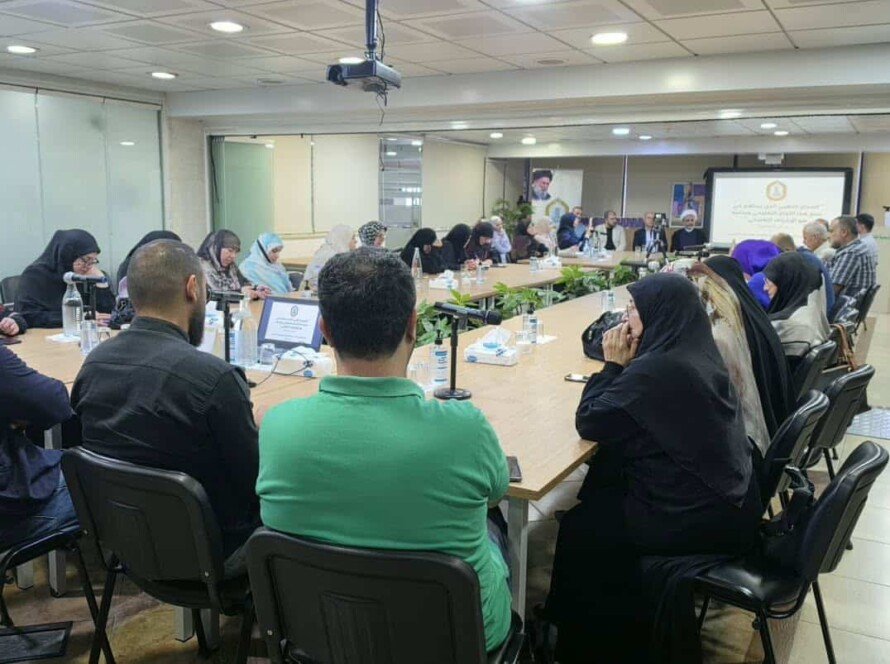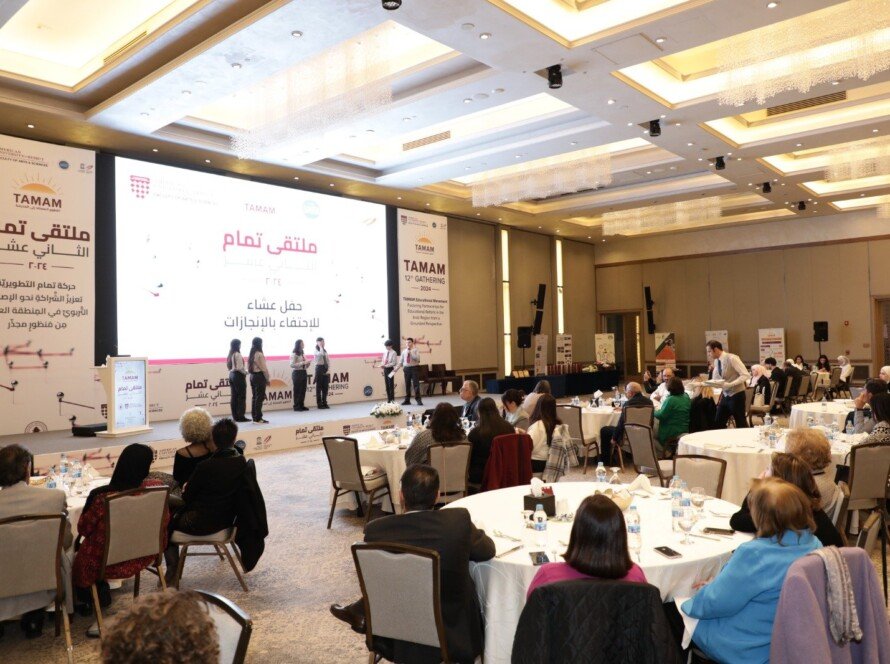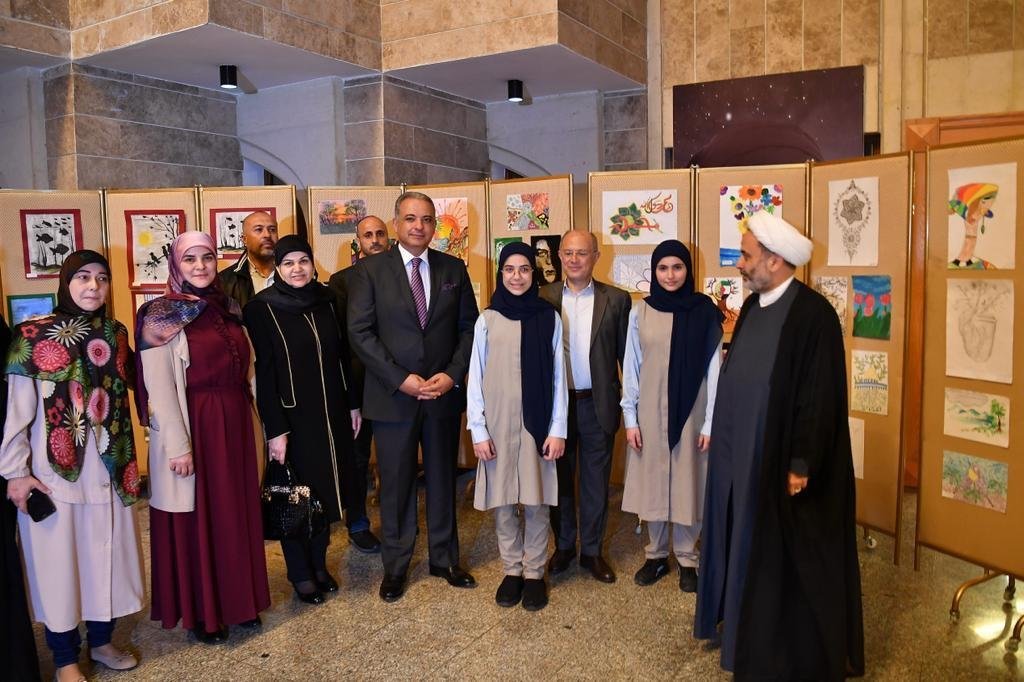
Under the patronage and in the presence of the Minister of Culture in the caretaker government Judge Mohammad Wissam Al-Mortada, Al-Mabarrat schools opened the fourteenth reading week under the title “We Read and We Take Up the Challenge in Al-Mabarrat's Embrace”, in the Al-Zahraa Hall attached to the Islamic Cultural Centre in Haret Hreik.
Taking part in the opening ceremony were the Director General of Al-Mabarrat Charitable Association Dr. Mohammad Baqer Fadlallah, the directors of the educational, vocational, care and cultural institutions, the directors of Al-Mabarrat's central departments, educational and social figures, and students from the various teaching stages.
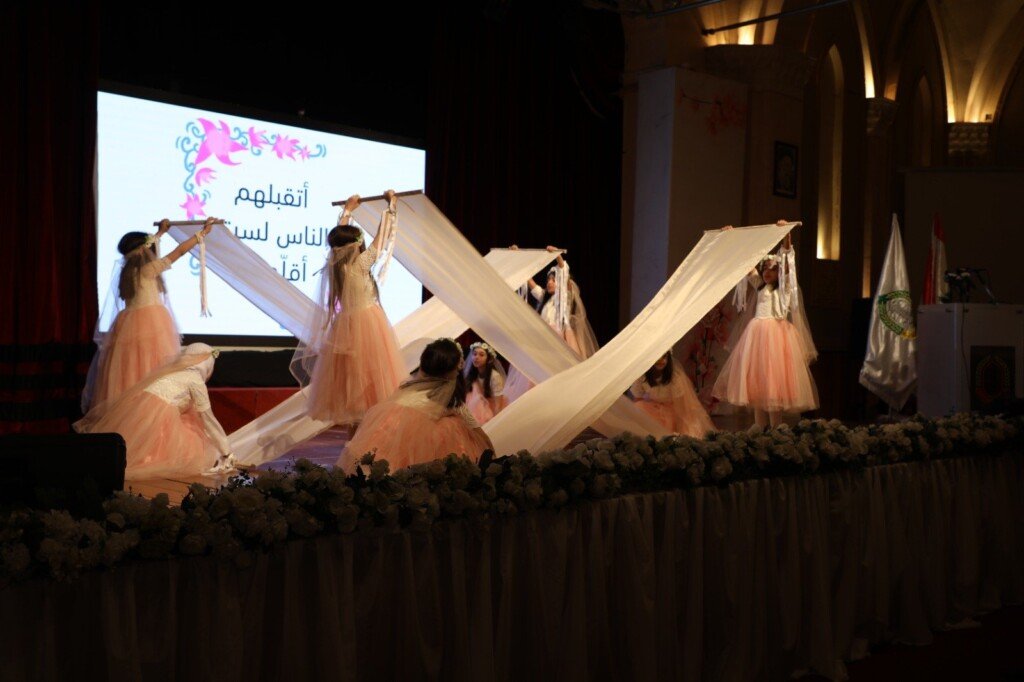
It began with Quranic verses presented by a group of secondary section students from Al-Mabarrat schools, followed by the Lebanese national anthem, then an artistic segment presented by first cycle pupils from Al-Mabarrat schools.
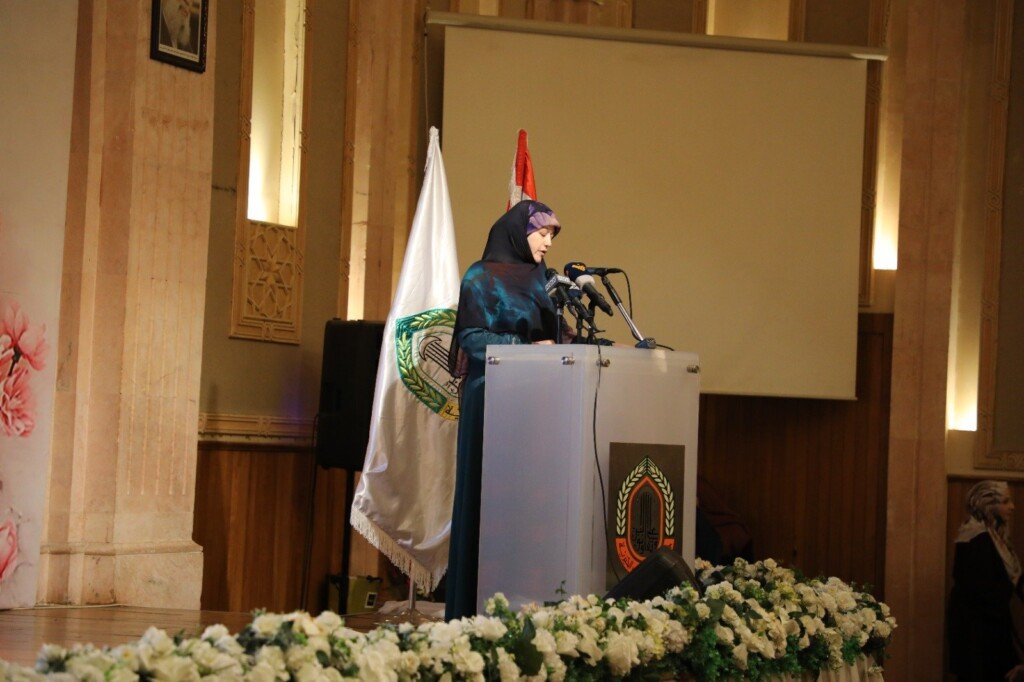
After that Minister Al-Mortada delivered a speech in which he stressed the importance of reading, saying: “We are here to open the fourteenth reading week at Al-Mabarrat schools. So let us turn to some of the words of the religious authority, the teacher and the educating jurist, with this launch of reading week… The Sayyed says: our future is knowledge; whoever sets out with knowledge to establish themselves and to establish others, sets out to make the future. Be makers of the future, be makers of the movement of creativity in the nation, makers of the human being; be in a state of scholarly emergency in idea and in method, so that you may succeed in your work of making the new human being.”
He added: “When we come into the embrace of the giant of the word, the letter, language, poetry, eloquence, literature, clarity, jurisprudence, authenticity and heritage, we know that we are in the presence of the favour of God, which He gives to whom He wills among His righteous servants, the scholars and the callers - and God is the possessor of great favour. And when the meeting is over the reading of the book of life and of the human being, and of the knowledge and beauties it contains, in houses which God has permitted to be raised and in which His name is remembered, we realize that these houses are the schools of the verses, the charities of giving and generosity, and the ears of righteousness.”
He continued: “How great is what the imperative [Read] has inspired, of what God Almighty brought about and caused to flow at the hands of the scholar of language and knowledge and the jurist of poetry and letters, the late religious authority Sayyed Mohammad Hussein Fadlallah, who has not been absent from the embrace of life and who still calls us to the shade of his books, his library, his heritage, his pulpit, his dialogues, his sciences and his readings, by which we measure the times of knowledge and thought. So if we are asked about the season of reading week in Al-Mabarrat's embrace, we say to those who ask: it is the Sayyed's season, which he set down in his answer to one of his interlocutors when he was asked: how many books do you read, my master? His answer was: ‘I read two hundred books a day - through the experiences of those I met during the day, or at prayer, or in the lessons and lectures.'”
The Minister of Culture expressed the hope: “that God inspire all the Lebanese to read the lofty book over which His Eminence Sayyed Mohammad Hussein Fadlallah spent his life calling us to read and to take up its content - the book of awareness, which dictates to us the building of a firm Lebanese national unity, just as it dictates constant wariness of the danger of the entity of evil planted in our holy land, which targets us as a homeland, as a formula and as a model, because it knows with certainty that a single, diverse Lebanon is its opposite, exposing the ugliness of its racism.”
This was followed by a word for Al-Mabarrat schools delivered by the director of Al-Kawthar Secondary School Ms. Rana Kobeissi, in which she pointed to “the importance of reading in widening horizons and opening the doors of knowledge and learning - reading that is not bound by type, time or place, but is as comprehensive as the mind itself. Yet sadly, for some time now, we have noticed that the nation of ‘Read' has all but become a nation that does not read.” She added: “Al-Mabarrat Charitable Association, on the guidance of its founder His Eminence the scholar and religious authority Sayyed Mohammad Hussein Fadlallah, has been careful to strengthen reading and to give it great attention by establishing libraries at all its educational institutions, because it regards the school library as a centre of cultural and academic radiance and an effective tool that helps enrich the curricula and spread general culture. It has made reading an important part of the teaching process by adding weekly reading periods to the teaching programme for all age stages. We would also mention here the public library of Sayyed Mohammad Hussein Fadlallah, which holds tens of thousands of books and is frequented by readers, students and researchers from various universities and research and study centres.”
She continued: “Because reading has become a habit for our pupils and students and is no longer a hobby, their participation in the ‘We Read and We Take Up the Challenge in Al-Mabarrat's Embrace' project was distinctive, since it arose from their personal desire, despite this being the project's first year. This is a drop from Al-Mabarrat's flood and from the seed of goodness planted by His Eminence the scholar and religious authority Sayyed Mohammad Hussein Fadlallah - a seed that grew and became trees of goodness extending their branches so that thousands of the sons of our beloved homeland may take shade beneath them, drinking of their goodness and growing, then spreading out as messengers of knowledge, creativity and goodness for life. This celebration is nothing but the beginning of a series of cultural activities, seminars and lectures to be organized during the central reading week.”
It is worth noting that the number of participants in reading week reached 5,430 students from Al-Mabarrat's schools and institutes, whose reading ranged across stories and cultural, religious and scientific books. Of these, 54 pupils qualified for the final rounds; they were celebrated and the names of fourteen top pupils from all the teaching cycles were announced.
In closing, the Director General of Al-Mabarrat distributed certificates of appreciation and cash prizes to the winners and those who qualified for the final rounds, while the Minister of Culture presented each of the winners with a tablet as a symbolic gift from the Ministry of Culture.