13 years since the passing of the religious authority Sayyed Mohammad Hussein Fadlallah
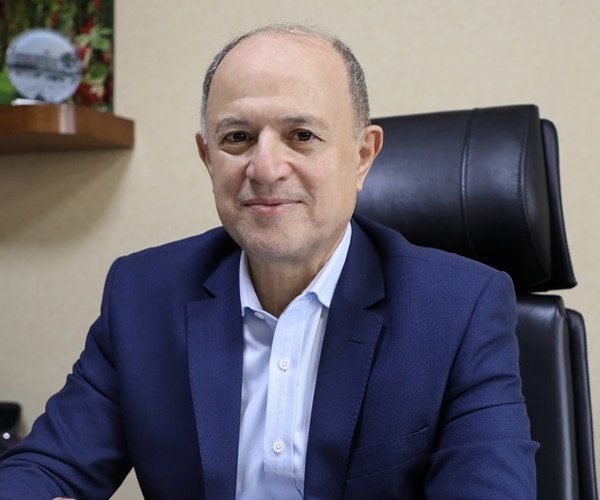
On the thirteenth anniversary of the passing of the religious authority Sayyed Mohammad Hussein Fadlallah, “Al-Qaws” conducted an interview with the Director General of Al-Mabarrat Charitable Association Dr. Mohammad Baqer Fadlallah, to speak about the principles of justice and fairness in Sayyed Mohammad Hussein's thought, and about how they are translated into practice, spread, generalized and rooted in society and among people regardless of their affiliations, sects and denominations
Tell us about the foundations of Sayyed Fadlallah's thought and creed and about his understanding of justice, fairness and social justice
Achieving balance and equality lies in the just distribution of wealth and resources in society. Social justice is also achieved when society adopts policies, programmes and laws that reduce the social, economic and cultural disparities among its members rather than the opposite. It also provides basic services to all members of society regardless of their material circumstances, by providing fair opportunities for education, health, work, housing and political participation.
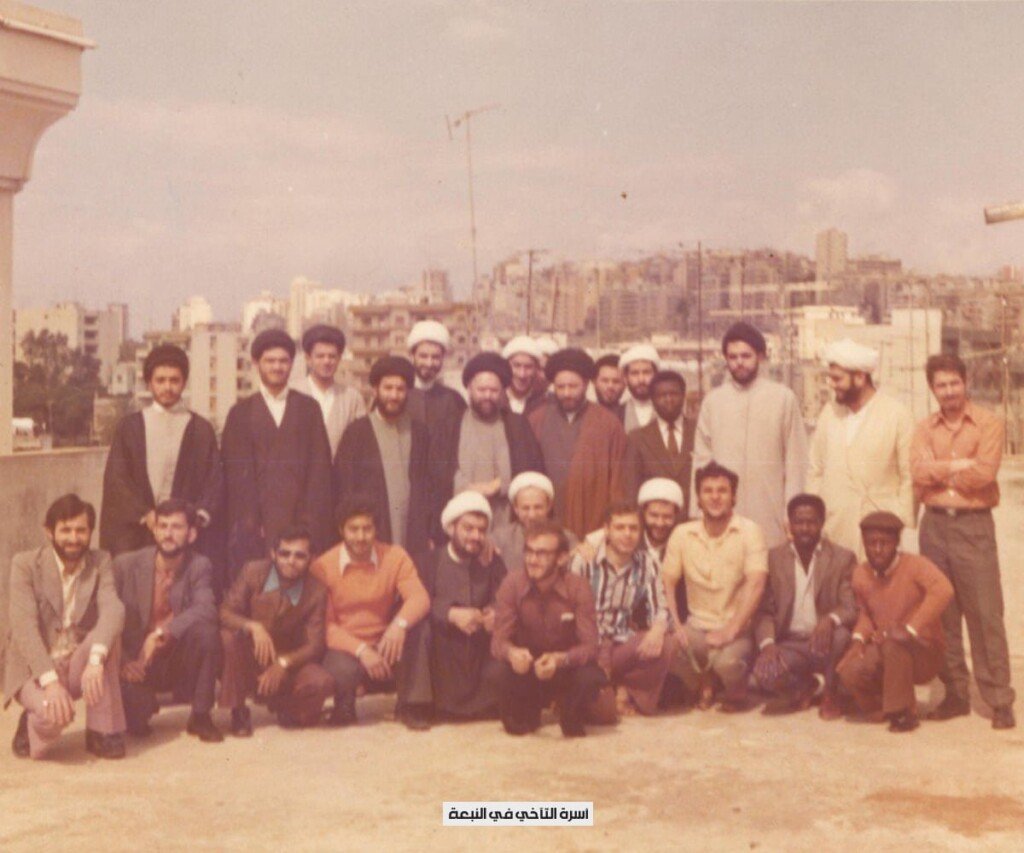
Sayyed Fadlallah was a pioneer of social justice: he did not accept the prevailing reality and customary traditions but broke with them. To achieve this justice it must appear in an open thought, and this is what was shown in the Sayyed's thought from the beginning of his life, when he entered fields in which the mere thought of them was regarded as overstepping the prevailing custom in the traditional milieu. When he was in Iraq, during his studies in his years before twenty, he would go himself to the poor and remote places in Najaf to see their conditions and to support the poor and the deprived. The Sayyed carried the concerns of the oppressed; and when he returned to Lebanon and lived in the religiously and communally diverse area of Al-Naba'a, and began his institutional work at the Usrat Al-Taakhi Charitable Association, he established a clinic next to the mosque and the religious institute, attended to the matter of family planning and helping the poor, and built a school, though it was not completed because of the Lebanese war.
What ways did Sayyed Fadlallah put forward for solving the problems among the Lebanese during the war?
Sayyed Fadlallah used to describe the Lebanese war that began in 1975 as “the war imposed on Lebanon”, since he believed that if the Lebanese were left to themselves they would need no one to bring them together. He called for abolishing the demarcation lines so that people could meet without any barriers. War, in his view, was not a way to solve problems, and he insisted on remaining in Al-Naba'a despite the destruction and the density of the shells falling around him, feeling a responsibility to stay there and to hold firm with the people. He issued his book “Islam and the Logic of Force” by candlelight at that time; but the intensification of the war and a health problem forced him to leave Al-Naba'a and move to another working-class area, Hay Al-Sellom in Beirut's southern suburb, and then to the Bir Al-Abed mosque. Sayyed Fadlallah turned every place of worship he attended into a centre for meeting and dialogue with people; despite the difficult security conditions he did not abandon the mosques, whether in Hay Al-Sellom or in Bir Al-Abed.
To what extent did Sayyed Fadlallah's thought help bring about a positive breakthrough in society, especially toward achieving the project of social justice?
Sayyed Fadlallah made the field of social issues one of his priorities: his concern was the care of orphans and their right to education and health care, and the creation of a safe environment for them in the institutions and for their families too. Likewise the rights of persons with disabilities, some of whose institutions were lost in the furnace of the Lebanese war - for institutions, in his view, form an advanced space in which they overcome the difficulties of disability, and provide the right to education, to care and to varied specialisms. In addition, social and health services in society were a pressing need, and so they took their place among the Sayyed's concerns, which ranged from religious and jurisprudential to cultural, social and humanitarian. The Sayyed sought to affirm his thought, his convictions and his visions and to embody them on the ground; he addressed people with every affection, felt their pains, touched on their needs, lived their aspirations and eased their suffering.
Justice is achieved through policies, programmes and laws that reduce the social, economic and cultural disparities among members of society, not the opposite
The Sayyed's mind was neither regional nor sectarian nor denominational; rather it embraced all people and all the deprived, the poor and the orphaned. His thinking was bounded by no land, no ties of kinship, no personal relationships or anything of the sort. His thinking was human and faith-driven when he thought of the most deprived areas in Lebanon.
It is true that he took steps against the current that aimed to spread rancour and fighting among the Lebanese. His discourse was a human one, setting out from the human being and flowing into humanity, into building the human being and their humanity, and into not separating Islam from the human being. For this the Sayyed became known for his famous phrase “Truth is the daughter of dialogue”, and he regarded dialogue as a cross-pollination of knowledge that enriches thought, narrows distances, and leads either to the entrenchment of convictions or to abandoning them when convinced by the other side's argument. He used to say: “Everyone has the right to a point of view, and reaching the better opinion comes through mutual understanding and through presenting the evidence supporting one's point of view.” From his experience he affirmed “that nothing can move a person like dialogue”.
We therefore hold that the Sayyed went beyond achieving social justice in Lebanon by building institutions - educational, care, health and social - to another positive breakthrough for Lebanese society, by putting forward a social justice at the level of dialogue with the other and recognition of the other, so as to be open to them, to discuss with them and to hold dialogue with them on the basis of the Quranic verse “And indeed, we or you are either upon guidance or in clear error”. A social justice that secures respect for one person's opinion by another, as a basic Islamic value that he represented.
How did Sayyed Fadlallah translate his understanding of social justice through his movement and his institutions?
The Sayyed held that establishing institutions turns the concept of social justice from an abstract meaning into tangible facts, and turns the worth of individuals into a social and human worth. This calls for spaces and distances that must be paved, for means to be secured and for the obstacles in their way to be removed. So from the Usrat Al-Taakhi Charitable Association in Al-Naba'a to Al-Mabarrat Charitable Association, which the Sayyed saw as a means of achieving social justice for the problems of orphanhood, poverty, education, unemployment, disability, narrow horizons, the brain drain and all other social issues - by building institutions that help achieve social justice, that build capacities and competencies, and that keep pace with the West in its sciences, which helps in refusing to submit to a reality imposed by force.
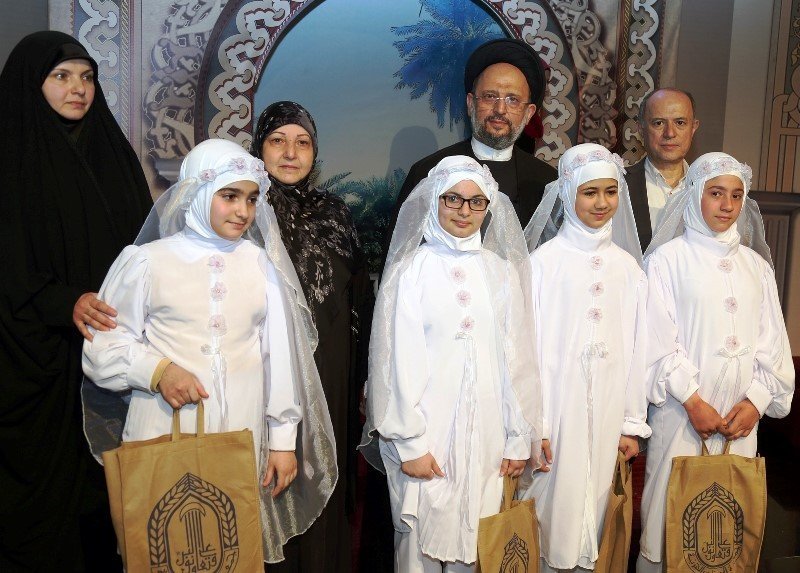
The Sayyed wanted Al-Mabarrat Charitable Association to mirror his thought - not to be merely traditional orphanages but a welcoming association that moves to affirm the excellence of our people. As the Sayyed used to say, “the heart is open and the house is open”: it opens its doors to everyone who asks for a service. He affirmed that it is not a sectarian association and does not raise a person to close in on their sect, but raises them to be open to the other sects, to the other human being and to the whole homeland. So Al-Mabarrat set out from the Sayyed's faith-driven thinking about the most deprived areas in Lebanon - from Beirut to the Bekaa, then the South, then Byblos and Tripoli.
Can social justice be achieved today given the difficult reality in the state's institutions?
How can social justice be achieved, and the concepts of this justice planted as a human value in the awareness of the new generation, when we live in a homeland where corruption has spread and will leave its effects on a generation we are working to raise, care for and educate? We are in an age in which values are changing, but we strive to devise varied methods to plant awareness in our children's minds about ethical corruption, which is the cause of a nation's ruin, in what it represents of corruption in education and in the media, as well as the economic corruption we suffer every day inside the institutions, threatening their continuity.
The paralysis of the state's institutions is a challenge to the continuity of social institutions, but we will not let despair and discouragement weigh us down, and we will not allow that to lead us to lose trust in God - especially as Al-Mabarrat enjoys the trust of a number of people of goodwill in Lebanon and abroad, so that it may carry on its humanitarian giving.
Can “Al-Mabarrat” carry on its services despite the difficult economic situation?
Al-Mabarrat Charitable Association and the institutions of the religious authority Fadlallah have, from their founding until today, embraced 85,145 orphans and 11,764 pupils with special needs, and care for 300 elderly people within them and 865 outside them. They will not abandon their responsibilities today; they will remain responsible for the tragic cases of orphans, the elderly and persons with disabilities in society, because they are part of this society - even if the state contributes what neither nourishes nor satisfies hunger.
Nor will we abandon our responsibilities in raising the level of teaching for the beneficiaries at Al-Mabarrat's schools and institutes, whose number exceeded twenty-four thousand last year; we expect larger numbers next year, at fees that do not cover the cost, relying on Al-Mabarrat's productive institutions to cover the accumulated financial deficit.