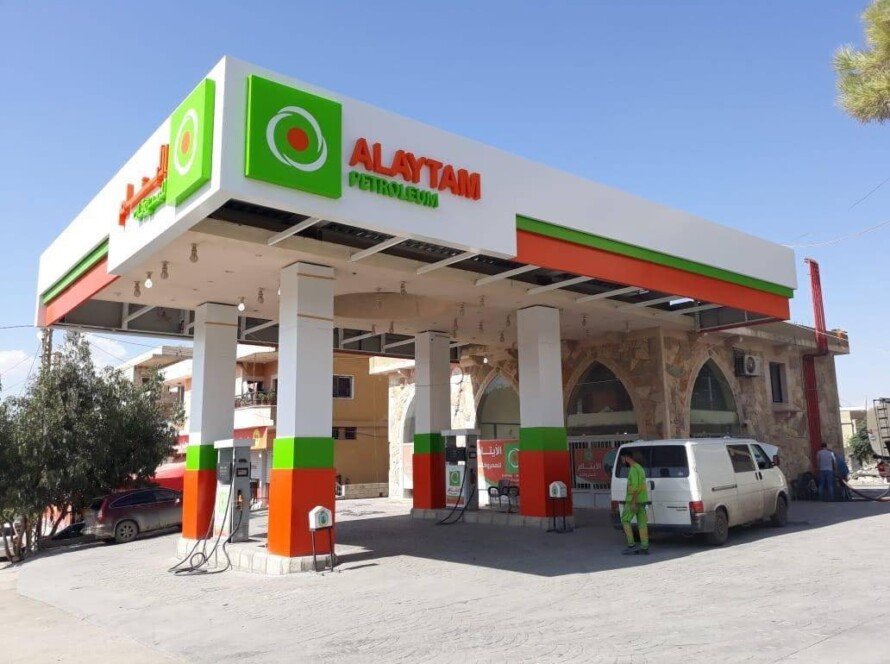
On the way to Haret Hreik, where the Al-Imamain Al-Hasanain Mosque stands, one hears repeated appeals from Allama #Sayyed Ali Fadlallah, in the recent period, urging the officials to pull the country out of its black horizon. And going down to the house of the late Marja, where the constant meeting with “Al-Nahar” takes place on many occasions, there is an affirmation of the continuation of charitable work, “from the people and to them”, however severe the circumstances.
From his father's chair - he who was keen to turn social work into inclusive institutional work for all the people of the homeland - Fadlallah calls on people to “be patient”. The pressing concern of living requires that the charitable institutions not turn their backs on them. This is the banner carried by “Al-Mabarrat Charitable Association”, which “works out of a human and religious duty to ease the living crisis, since solving it entirely needs greater efforts and means”.

“Al-Mabarrat” continues without outside support
Charitable work is not something of the moment; it has existed and continued for years. What may be new today is the widening scope of the groups unable to secure their daily bread, in the various areas - and this is what Fadlallah affirms is being seriously sought to be covered. He says that “Al-Mabarrat's social offices exist in every area, reaching the Bekaa, Tripoli and Byblos. The association has a direct responsibility towards a number of orphans, people with disabilities, the elderly and the poor whom it cares for, and we provide daily food assistance, especially in the month of Ramadan - in addition to the health centres, some of whose services are free. As for teaching, we are keen that no student should leave our schools because of financial need.”
“Al-Mabarrat Association” is affected by the difficult social reality, like the other charitable institutions that struggle to continue their work. But people still have trust in it, and “the approach continues with clear service goals, with no political or media dimensions to them”.
And although it is “weighed down by its basic burdens”, it has not closed its doors to anyone; rather it has turned with many initiatives - some through the personal effort of contributors - to a wide public (petrol vouchers for public transport vehicles and gas refills). Here Fadlallah stresses that “charitable works set out from the people, such as the religious dues and alms. Our institutions do not rely on any outside body; rather they receive contributions from Lebanese expatriates and others from inside the country.”

With the absence of an official plan for emerging from the living and political impasses, the Lebanese - or some of them - have found in the houses of their sect a window to salvation, even if temporarily. This is what Fadlallah rejects, finding in it “a dangerous way of thinking” for society. “We call for social work to be general, and we are not in favour of the idea that every sect should attend to its own affairs… Let us all work at the level of the homeland, so that no person feels that their sect is what protects them.”
#The government Priority for the solution
In addressing the political crisis, Fadlallah did not take off his religious cloak; rather he continued what he had begun in the Friday sermons, weekly, in calling for the politicians to find common denominators for the country's benefit.
He says in his interview with “Al-Nahar”: “It is true that the deterioration of the economic situation is now at the forefront, but the solution in Lebanon is political. There is no sound management of the country, and to this day no mechanisms have been put in place to combat the corruption rampant in the state and the public institutions.”
What are the proposed solutions? “There must be a government, and it must not be formed on the basis of dividing up interests and the state's resources, nor be unserious about fighting corruption, nor be a government pulled apart by conflicts. None of that will help solve the problem. We want a government capable of reform and far from all those who were the cause of the country reaching this stage.”
Your Eminence, who bears responsibility for the government's obstruction? “The responsibility is collective, and the country can only stand through mutual concessions and understanding - and the government must not be a vehicle for any party to achieve its political future.”
Fadlallah does not deny the existence of external influence on Lebanon. But he holds that “the basic problem is internal, and it must be treated, and any interventions that may help brake or obstruct the formation of the government must be prevented - but sadly no one is ready to cooperate now.” He adds: “The outside world's trust in Lebanon is non-existent so far, and we need the aid which it has become known will not be offered to the Lebanese with this political situation and without reforms. So if we do not find internal political solutions for the country, we will be forced to wait.”
On to the suffering of the Lebanese street, of which the Sayyed is aware of a large part through “Al-Mabarrat's” charitable work. He has recently sensed the scale of hardship and extreme poverty.
What do you say to the “hungry” citizen forced daily to wait in queues in front of the stations, the bakeries and the shops? “We call on people to be patient and to raise their voices. Their role is to store up their pains so as to express them one day, and not to repeat those who were the cause of their reaching what they have reached.”
The most important message today is the affirmation of “the people's unity in this stage”, according to Fadlallah, who called for the necessity of people cooperating together, and for “citizens to be united over their hunger, their suffering and their pain”.
Source: Al-Nahar newspaper
Writer: Batoul Bazzi