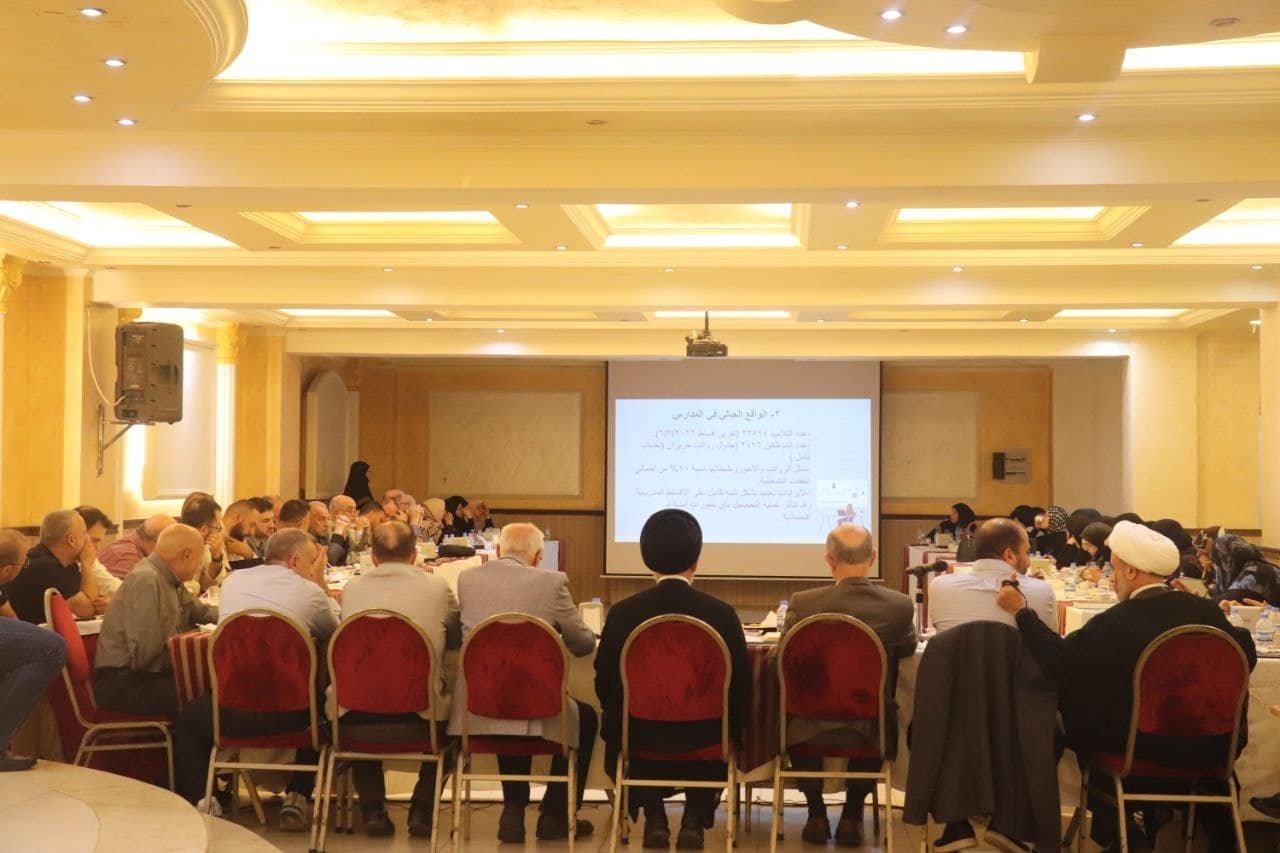
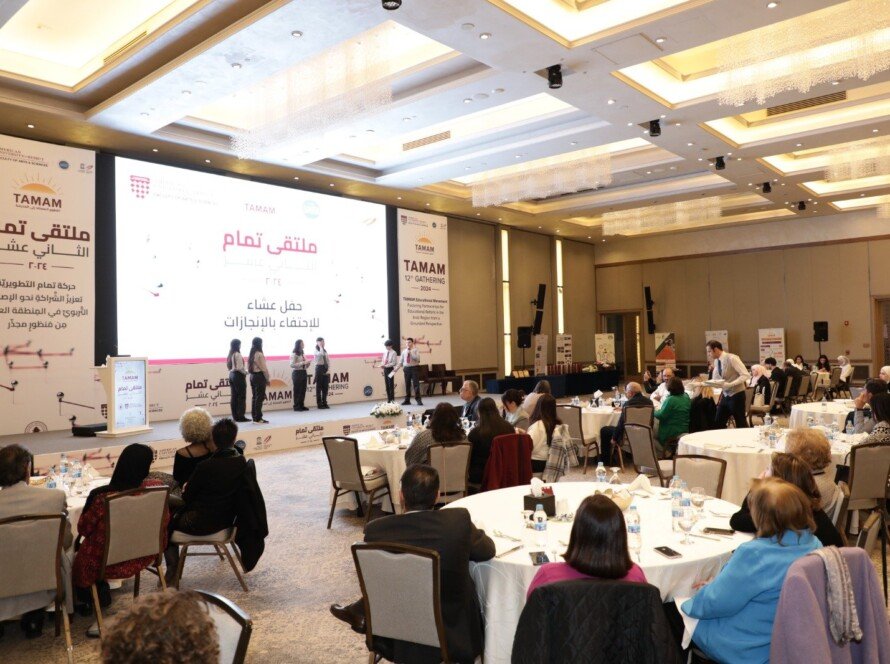
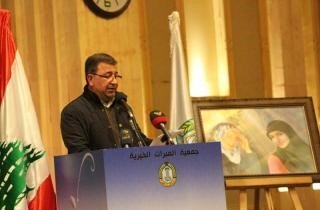
The President of Al-Mabarrat Charitable Association, Sayyed Ali Fadlallah, said “the Association's institutions represent a religious, moral and faith-based trust, and that it is a duty to preserve them and to work constantly on developing their performance and strengthening their role, so that they remain in the service of society and at people's side, for they were founded from the people and for their sake”. This came in his speech at the expanded meeting held by Al-Mabarrat Charitable Association at Lady Khadija Al-Kubra Charity for directors from the Association's various institutions and sectors.
The meeting was attended by members of the Administrative Board of Al-Mabarrat Association, directors of departments and directorates of the General Administration, the administrative boards of the educational institutions, higher education institutions, institutions for people with special needs, care institutions, health institutions, cultural centers and productive institutions, along with members of Al-Mabarrat Alumni Association and Al Mabarrat Scout Association.
This meeting comes as part of Al-Mabarrat Charitable Association's practice of holding periodic consultative meetings, grounded in its belief in the importance of strengthening communication among its various institutions and enhancing coordination and complementarity of efforts, in a way that helps develop institutional performance and consolidate a culture of partnership and teamwork.
The Director General of Al-Mabarrat Charitable Association, Dr. Mohammad Baqer Fadlallah, delivered a speech at the meeting in which he noted “that face-to-face meetings are a space for renewing the mission, strengthening partnership and bringing together the expertise of the Association's staff, and that what was achieved during the year was the fruit of the workers' sincerity and dedication in preserving the institutions' continuity despite the difficult circumstances”. He prayed for mercy upon the martyrs, recalling the effects of the war on society and on Al-Mabarrat's institutions, and affirming “that education remains an essential pillar in protecting people and shaping the future”.
He reviewed the main milestones of the school year, explaining “that it began with a development-oriented vision under the banner of balancing leadership with crisis management, before the war imposed exceptional challenges that made it necessary to move to distance learning and to convert some institutions into shelters for displaced families”, noting that “Al-Mabarrat succeeded in maintaining the continuity and quality of the educational process, while taking into account the humanitarian circumstances of pupils and parents”.
He added: “This success was not the product of immediate circumstances, but the result of accumulated institutional experience in crisis management, resting on staff who believe in their mission, aware administrations, and teachers, parents and pupils who together formed a model of partnership and responsibility”.
He affirmed “that Al-Mabarrat adopts decentralization as an institutional approach founded on trust in field leadership”, stressing “the importance of awareness and balance in reading events and dealing with them, in a way that preserves the institution's credibility and strengthens society's trust in its educational and humanitarian mission”
The Director General of Al-Mabarrat noted “that our priorities in the coming period are educational recovery, addressing learning loss, and strengthening psychological and emotional support for pupils, alongside preparing flexible plans that respond to various possibilities”, expressing his hope “that all institutions, particularly in the South, will return to their normal work as soon as the occupation ends”.
He spoke about Al-Mabarrat's preparations to keep pace with the new national curricula, affirming “the need to understand their philosophy and to launch training programs for teachers and administrations, so as to ensure they are applied well and turned into firmly rooted educational practices that strengthen the leading position of Al-Mabarrat schools”.
He announced that the next annual Al-Mabarrat conference will be held under the title “The Transformative Path of Education… Toward a Mission-Driven Human Being”, noting that “building the human being will remain the focus of Al-Mabarrat's educational project and its essential foundation”.
He called on educational leaders to “fortify the institutions with awareness and not to be drawn along by impulses or fast-moving events”, affirming “the importance of holding to the educational compass and consolidating the values of awareness, responsibility and steadfastness in facing challenges”.
Sayyed Ali Fadlallah then delivered a speech, opening by welcoming those present and wishing them safety, and recalling a number of the Association's pillars whom it lost to the Zionist aggression on Lebanon, as well as those who left a clear mark and played a leading role in the Association's journey and in serving its mission”.
He said: “We meet today amid difficult circumstances whose repercussions we are still living, and which are leaving their mark on the various institutions. Yet Al-Mabarrat Association was born from the womb of crises, and challenges have always been a spur to greater work and giving. These crises will not generate frustration or despair in us; rather they will add to our fervor and our determination to continue our mission. We will remain present wherever our society needs us.”
His Eminence affirmed “that responsibility requires everyone to follow through on what they have begun, each in their own post”, calling for consolidating a culture of constructive internal criticism aimed at development and at shedding light on shortcomings in order to address them, far from destructive criticism that seeks to defame, bring down institutions and undermine people's trust in them”.
He stressed that “the Association's institutions represent a religious, moral and faith-based trust, and that it is a duty to preserve them and to work constantly on developing their performance and strengthening their role, so that they remain in the service of society and at people's side, for they were founded from the people and for their sake”.
He noted that “these institutions are part of the mission-driven project whose foundations were laid by the religious authority Sayyed Mohammad Hussein Fadlallah, who worked to root it and embody it in reality”, calling for “a comprehensive grasp of this humanitarian project and for not confining it to a narrow framework or a single aspect”.
He called for “improving the conditions of those working in the institutions at all levels, for invigorating cultural activity within them, and for making use of mosques, occasions and celebrations to build an aware generation that carries the mission and is able to confront every attempt to fragment society and weaken its identity, through spreading awareness and culture at all levels”.
He concluded by affirming “that the approach of these institutions rests on a culture of dialogue and openness, far from insularity and withdrawal”, stressing the importance of “building bridges of communication and consolidating a culture of dialogue and acceptance of the other and of difference”. He said: “One of this country's foremost problems is that we sanctify rupture and provocative rhetoric and cut the bridges of communication, whereas what is needed is to spread a culture of dialogue and coming together, because that is the way to build a society that is more cohesive and more able to face challenges”.
At the close of the meeting, a group of directors were honored in appreciation of their giving and their efforts in serving the Association's mission and its humanitarian, social and educational journey.