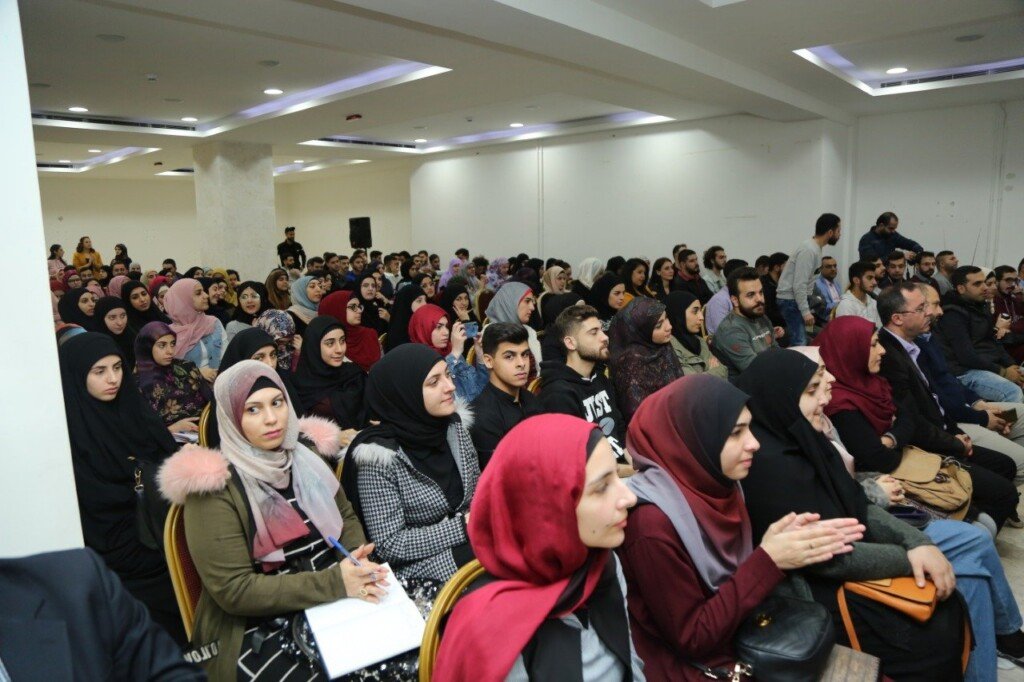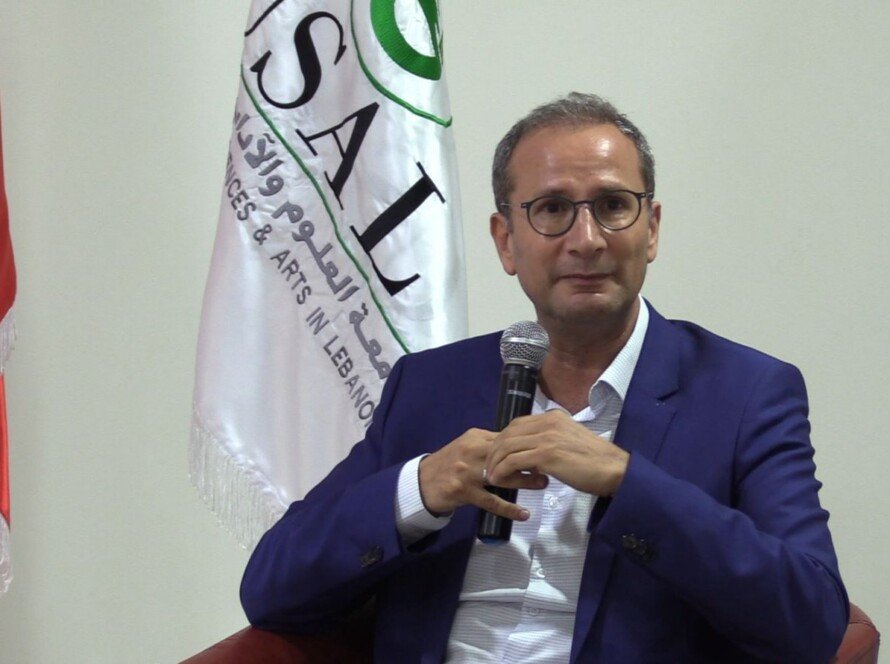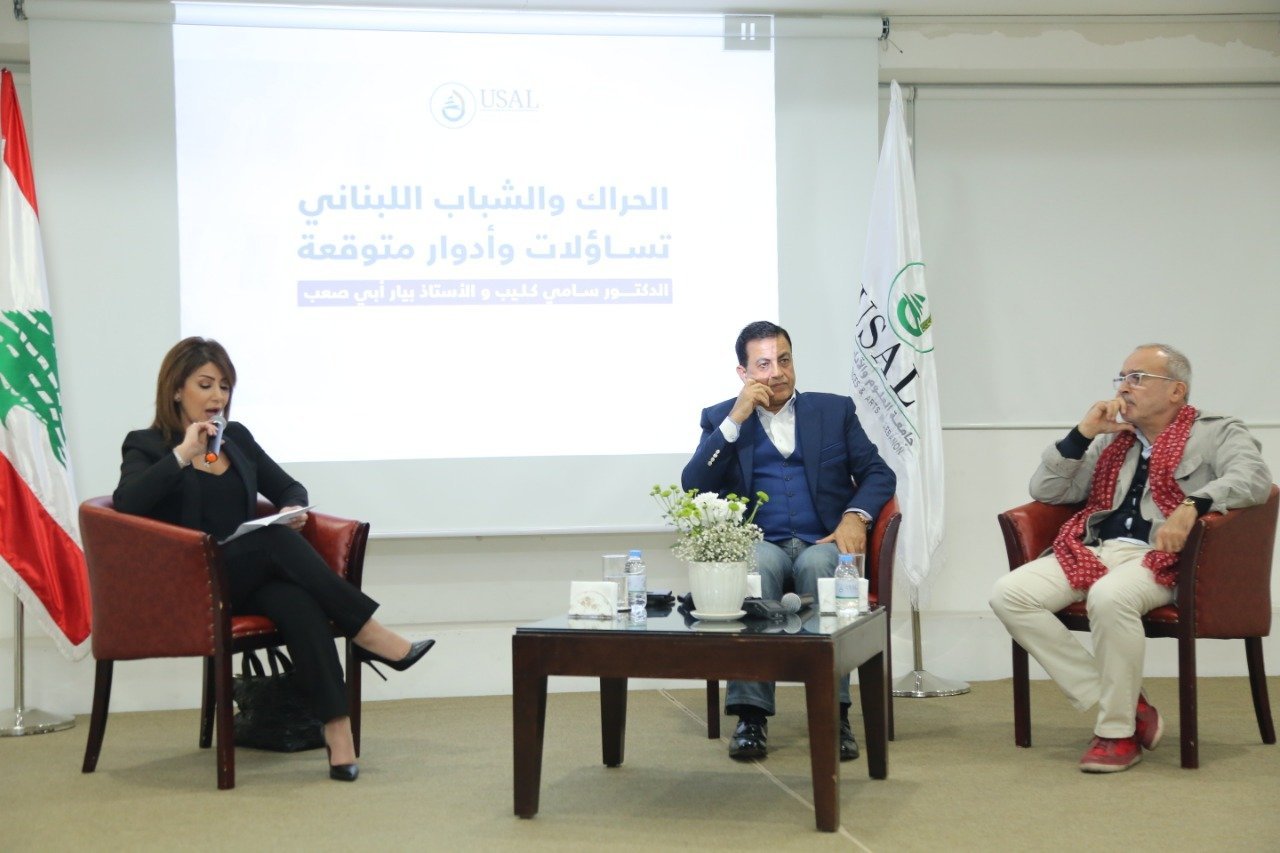
The University of Sciences and Arts in Lebanon (USAL) organized a discussion meeting with the journalists Sami Kleib and Pierre Abi Saab, moderated by the journalist Samar Abou Khalil, under the title “The Protest Movement and Lebanese Youth: Questions and Expected Roles”, attended by students from the university and interested people among university lecturers and cultural, intellectual and social figures.
Abou Khalil opened the meeting with a welcoming speech in which she pointed to “the importance of raising the subjects we live today in academic and educational edifices”, holding that “we may differ over what to call what is happening today - is it a revolution or a protest movement, or more than a movement, or perhaps less than an uprising”.
She added: “The names are many, but what is happening is an expression of people's pain and a demand for the rights of which people have been deprived over thirty years. Diversity is a great blessing in Lebanon, provided each side accepts the other's opinion so that we can build this country and live in safety.”
Kleib
Kleib posed questions about “what the protest movement is, what young people want, whether young people have a project that contributes to change, whether the movement is connected with what is happening in the world, and whether it is a permanent and moving state”. He gave the movement the name “the uprising of dignity”, on the basis that what is happening is an uprising against the system of corruption, which has revived great hopes among a people whose dignity has been violated over long years by those governing this country.
He pointed out that “what is happening today in Lebanon greatly resembles what is happening in many countries of the world: there is a new generation that no longer believes in all the classical propositions, neither in the authorities nor in the traditional parties. The movement is moving today towards something new, and its problem is that it has not yet crystallized in its final form, which allows the doubters to belittle its importance.”
Kleib concluded by saying: “There is a surplus of power and a surplus of hope: a surplus of power among a group of the ruling parties that believe what is happening in the street will end quickly, break apart, dissolve and collide with itself; and against that a surplus of hope among the sincere people of the movement who believe they are able to overturn the system overnight.”
He held that “there is no solution unless the people of the surplus of power accept a set of concessions and the people of the surplus of hope accept a rational set of decisions that can be implemented”.
Abi Saab
For his part Mr. Pierre Abi Saab affirmed “that the greatest trap preventing us from change is the sectarian plague”, holding “that the street's anger is sacred and cannot be belittled or have its background questioned”. He posed many questions relating to “how to found a genuine movement of demands, so that the words do not remain slogans fifty days after the movement began”.
He asked: “Has the street produced its leadership that negotiates with the authorities through a clear political and economic programme built on the idea of justice, equality and non-sectarianism?”
He added: “If we cannot change radically on the basis of a transitional programme that carries this anger and turns it into a force able to remain long on the political scene and to be represented in government, then the movement cannot succeed; rather it will have opened the door to all kinds of doubt and accusations of betrayal.”
Abi Saab concluded that “any battle for change that isolates itself from the battle of liberation is incomplete and liable to collapse and will take the country to places we do not dream of”, warning against “the attempt to separate the movement, out of ignorance or deliberately, from what is happening in the world”, and noting “the need not to forget Lebanon's geopolitical map amid the set of conflicts the region is living, where America is in our face and the Israeli enemy is beside us”.
He added: “In return, the resistance fighter who paid blood and what is precious and dear, and raised the heads of all the Arabs, must engage in the battle of social change and social justice, so that the resistance does not remain weak on the social, class-based, liberating and transformative question in society.”
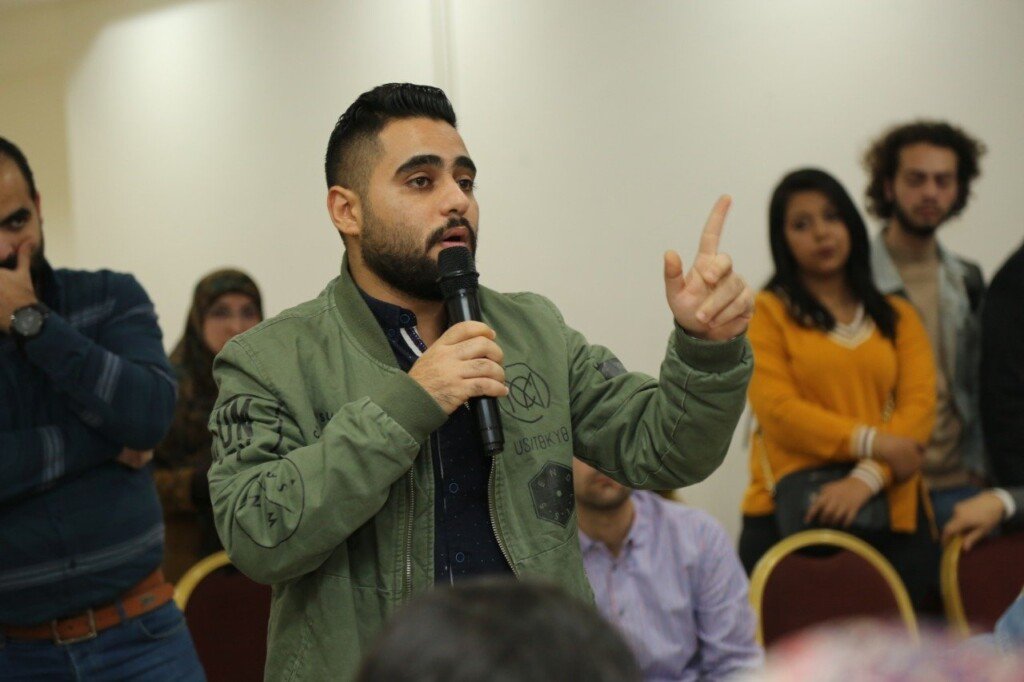
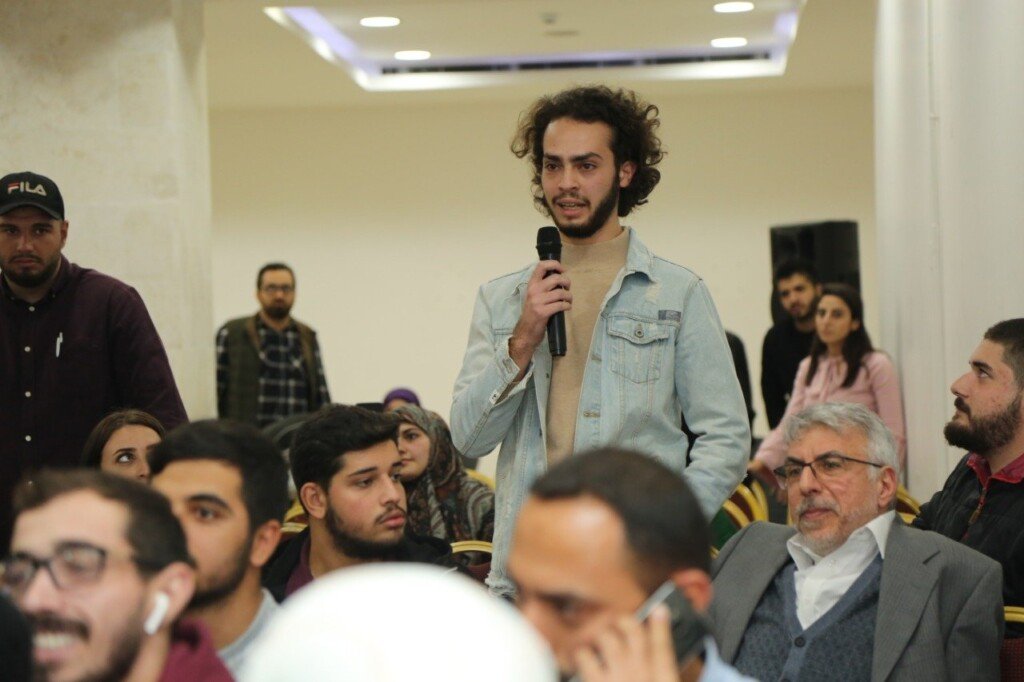
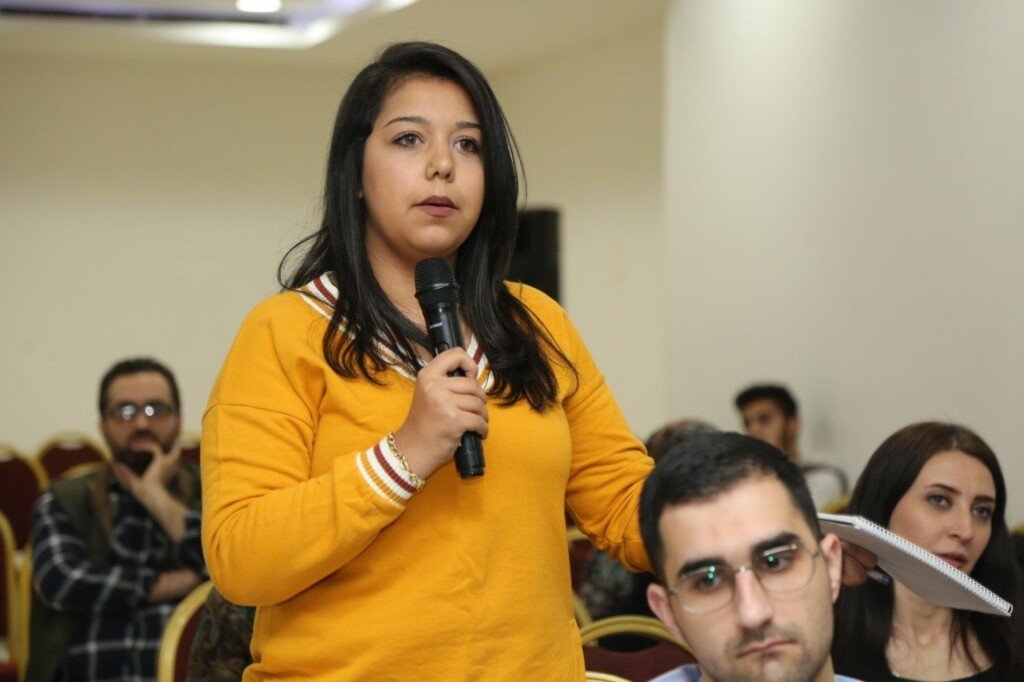
It is noted that the meeting was marked by an interactive atmosphere between the speakers and those present, who posed many questions focused on the students' anxieties regarding the present political, economic and social conditions, the future of the protest movement and the outlook for the coming stage.