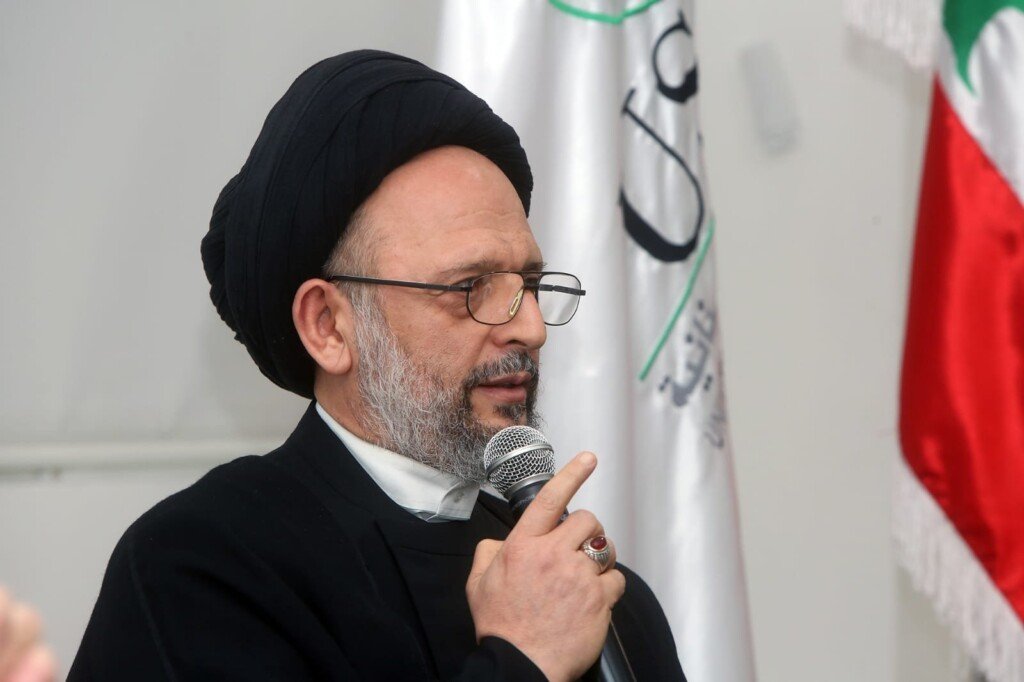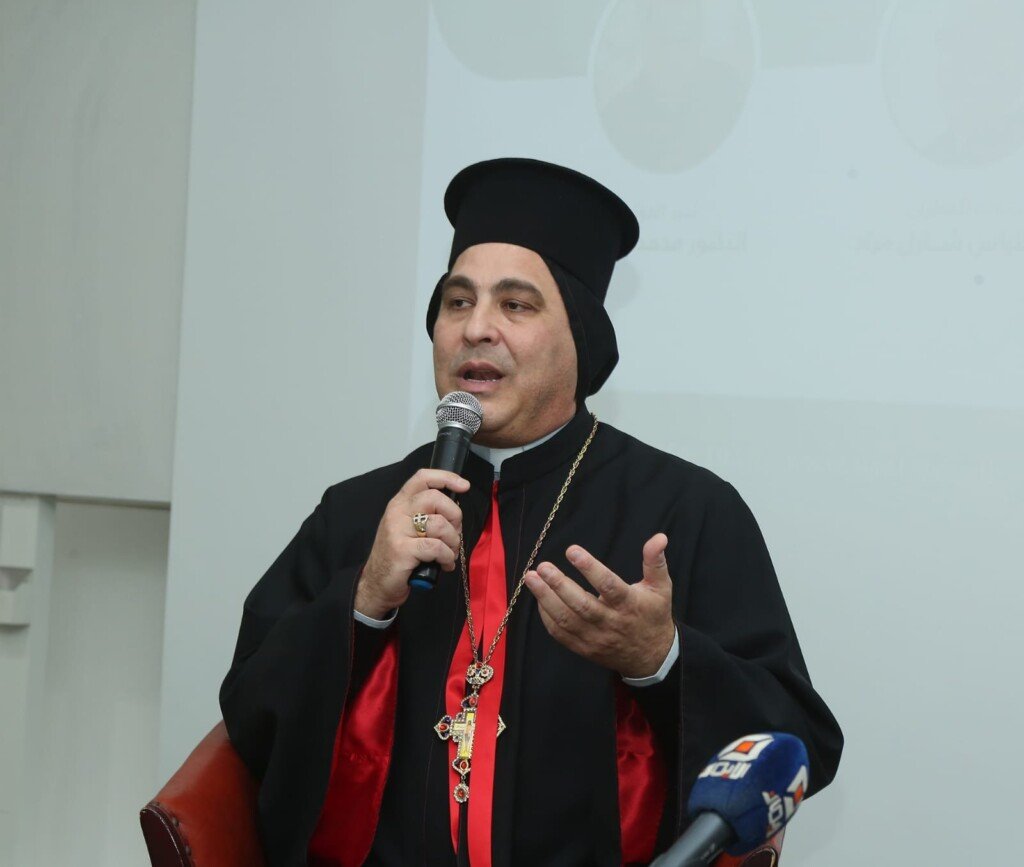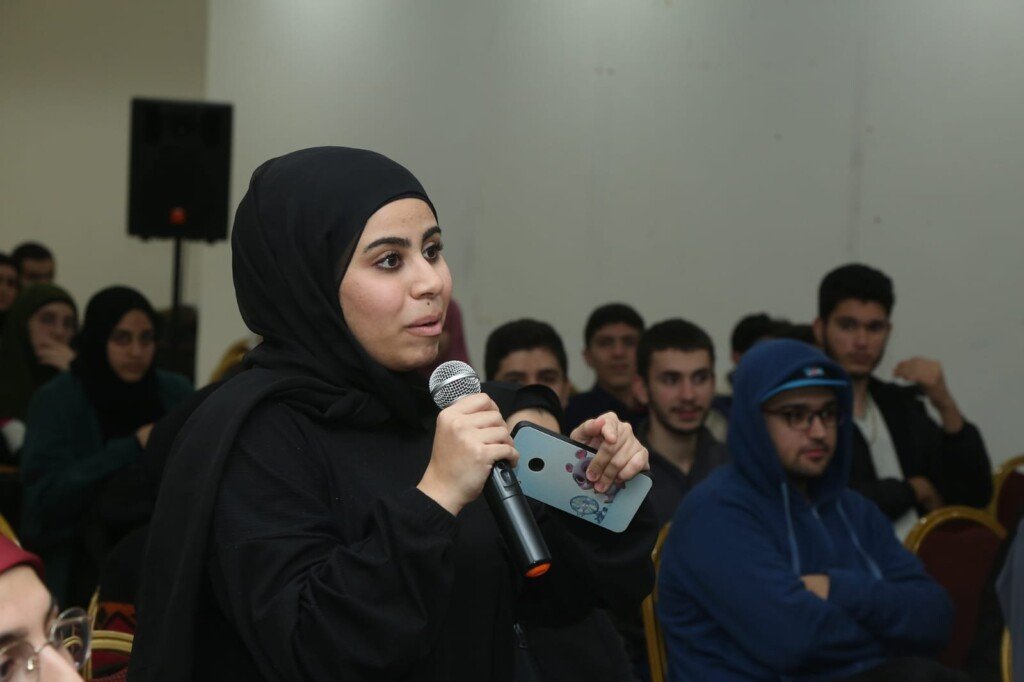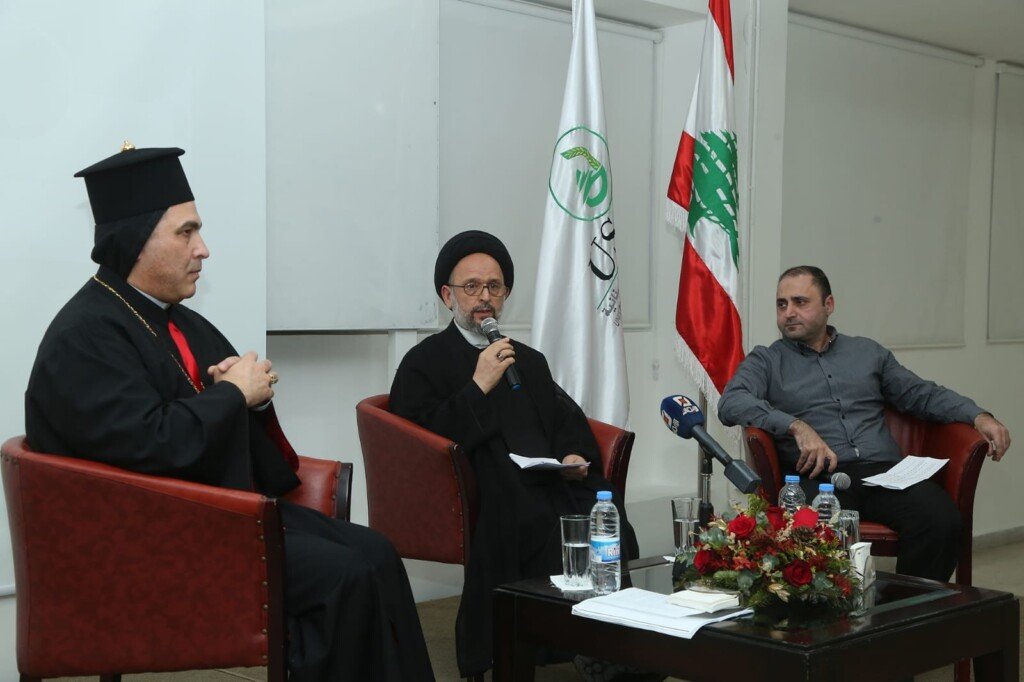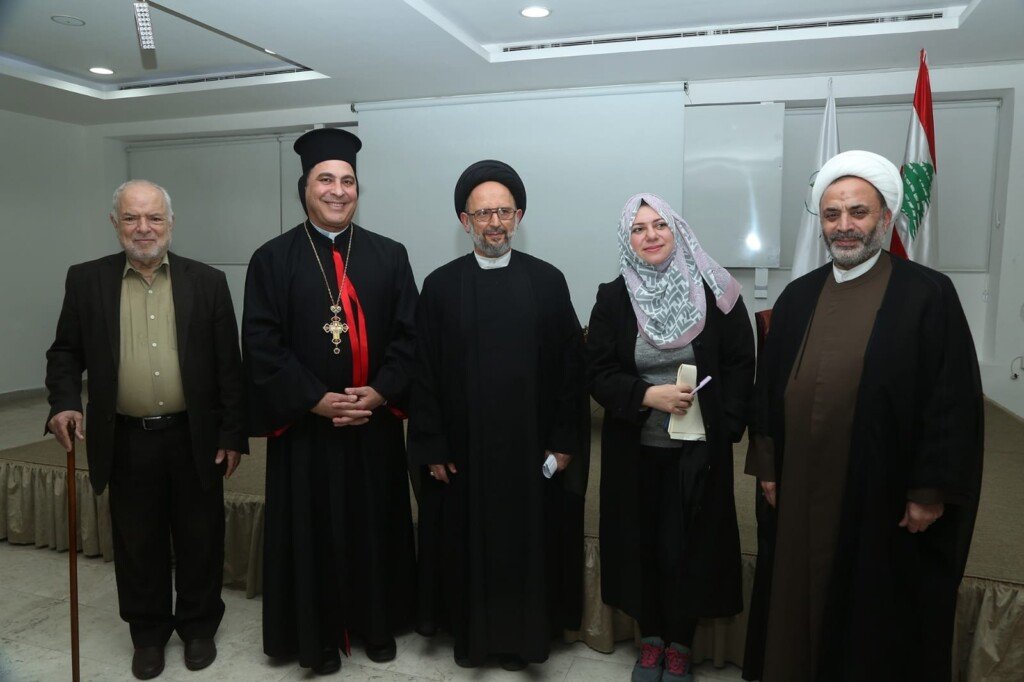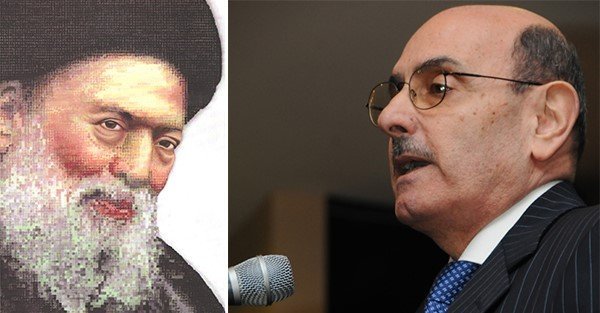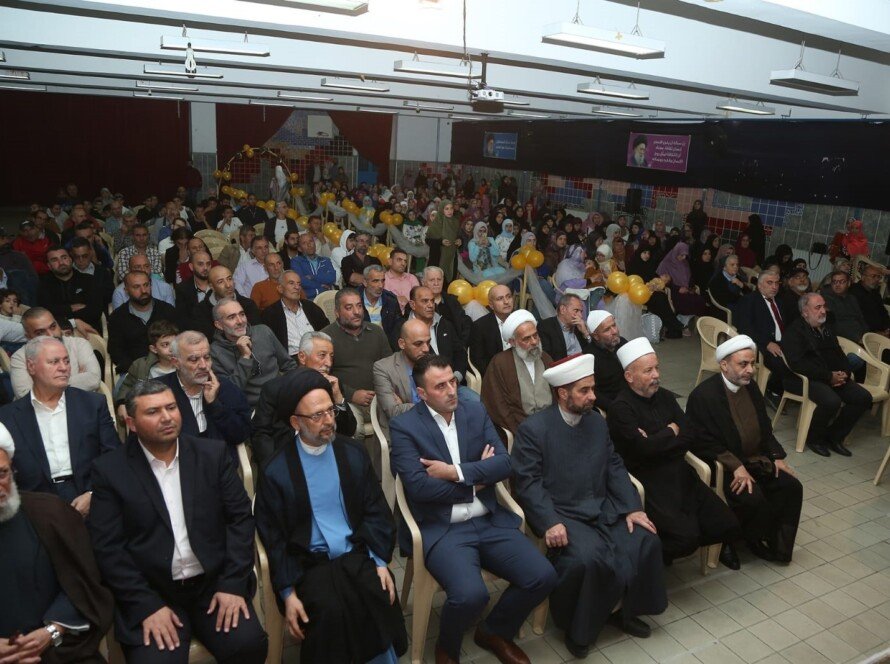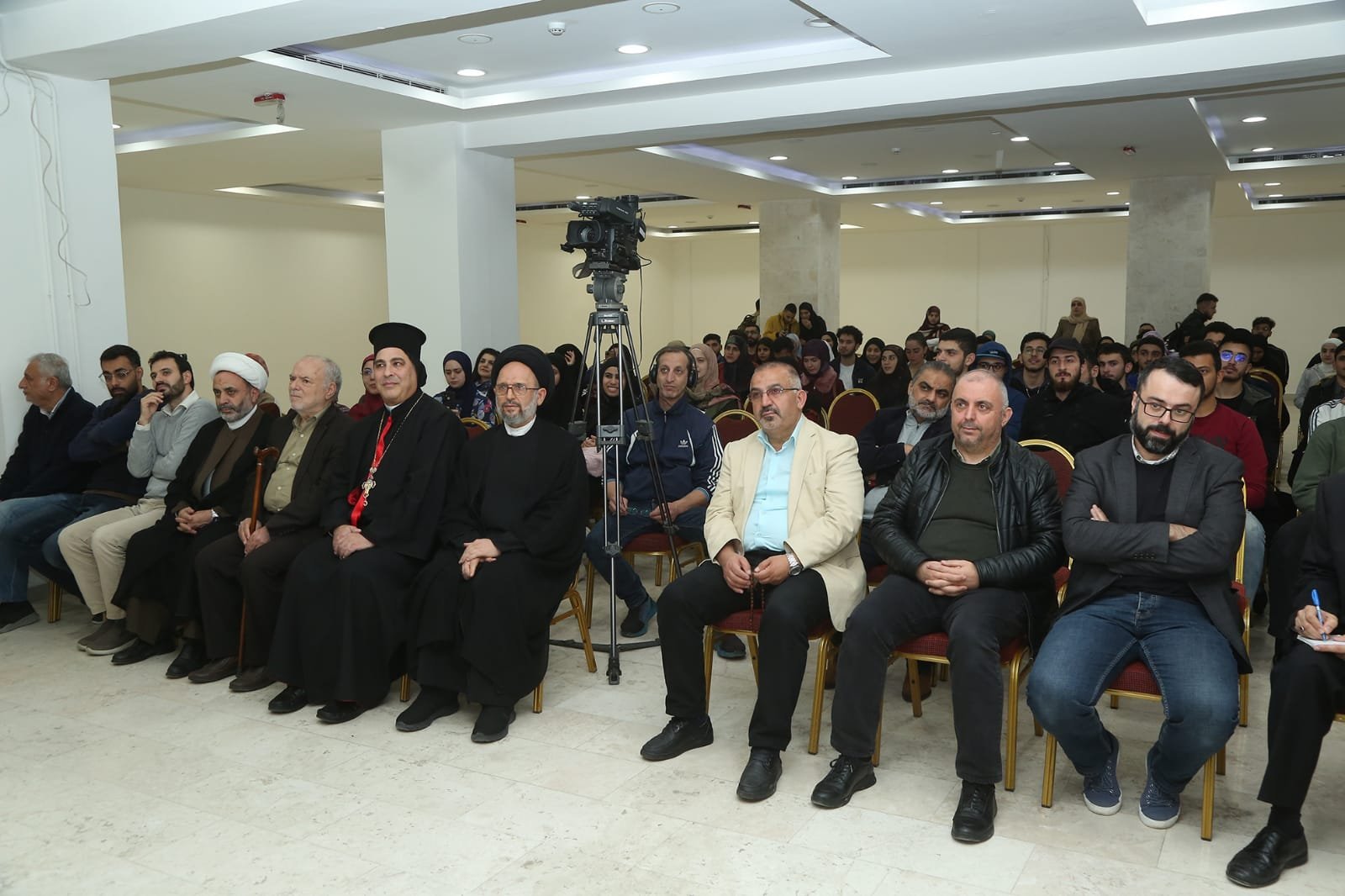
The University of Sciences and Arts in Lebanon (USAL) held a discussion panel entitled “Shared Values in Christianity and Islam and the Aspirations of Lebanese Young People”, in which both Allama Sayyed Ali Fadlallah and Bishop Mar Mitas Charles Mourad took part, introduced by Dr. Mohammad Tarraf, in the presence of the university's president Dr. Mohammad Reda Fadlallah, the academic and administrative bodies, and students.
Allama Fadlallah explained at the panel that “in the Christian conception God is love, and from Him the Christian values set out; and in the Islamic conception God is mercy, and from Him the Islamic values set out. Love and mercy are twins, which makes us affirm that we meet on a wide space of shared values”.
He held that “morals do not rest on submission but on religious evidence, rational proofs and real-world reasoning; it is enough for us to reflect on the consequences and results of lying, betrayal, licentiousness or injustice for human relations and the soundness of societies in order to know the rational necessity of morals”.
He pointed to “the existence of a danger to young people, represented in the propositions that call for frivolity and indifference, that there is no truth in this life, and that a person must search for what achieves their desires, their pleasures and their personal benefit - propositions that have begun to spread strongly in our society by way of the technological revolution in the field of communication. The source of the danger lies in driving young people to disown any moral, social, national or religious commitment”.
He added: “There is another danger represented by religious extremism, whose source is ideologies, groups or figures that work to exploit young people's longing to change reality and their readiness to sacrifice for what they believe in - especially the religious sensitivity our young people live, and the conditions of injustice, discrimination and tyranny that hang over more than one Arab country.”
He called on the religious institutions “to bridge the gap between themselves and young people, for there is no future for religion without young people; to listen to them, to hold dialogue with them, to live their concerns, to work to treat their problems and to offer realistic, logical answers to the questions and difficulties they have”.
He added: “It is the responsibility of the religious institutions to purify themselves of the impurities that have affected their human character - impurities they have carried through history and that have become attached to them - so that they do not live in ivory towers and do not remain imprisoned in the prisons of the past.”
He continued: “The religious institutions must understand the language of the age and the ideas of the age in order to present the optimal understanding of religion in the field of conceptions, creeds and ideas, one that responds to the present challenges; and to present the optimal model of religion in the field of behaviour and relationships.”
He said: “It is the responsibility of the religions to meet and work together to free themselves from the grip of corrupt political authorities, currents of extremism and fanaticism, the temptations of positions and prestige, and the sites of backwardness - that grip which has made the religions live in weakness in more than one place.”
For his part Bishop Mourad held “that moral values are the basic foundation for strengthening the common denominators among the religions, and that the religions meet on much of what the homeland and the world need in order to remove corruption and establish a system of justice”.
He stressed “that acts of worship and rituals are important to the extent that they proceed from a moral and value-based system that carries them, and that a life of love is capable of preserving pluralism in Lebanon”.
He pointed out that “the marketing of liberationist ideas in their form alien to our societies is what has come to scatter young people and to obscure values, and that young people's responsibility lies in returning to the authorities in their lives in order to determine the soundness of the information they receive”. Bishop Mourad affirmed “that the message of the religions is to establish love and humanity's safety, and that salvation comes only through openness to faith in its divine breadth”, noting “the necessity for a person to choose faith with a sound heart and to keep away from hatred and from casting doubt on another's faith, as well as the importance of thinking well of the divine mercy”.