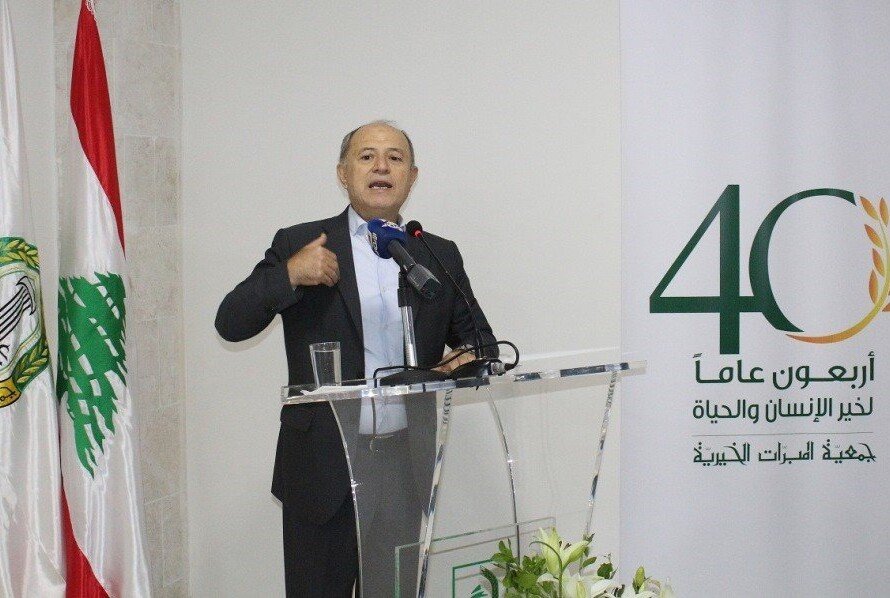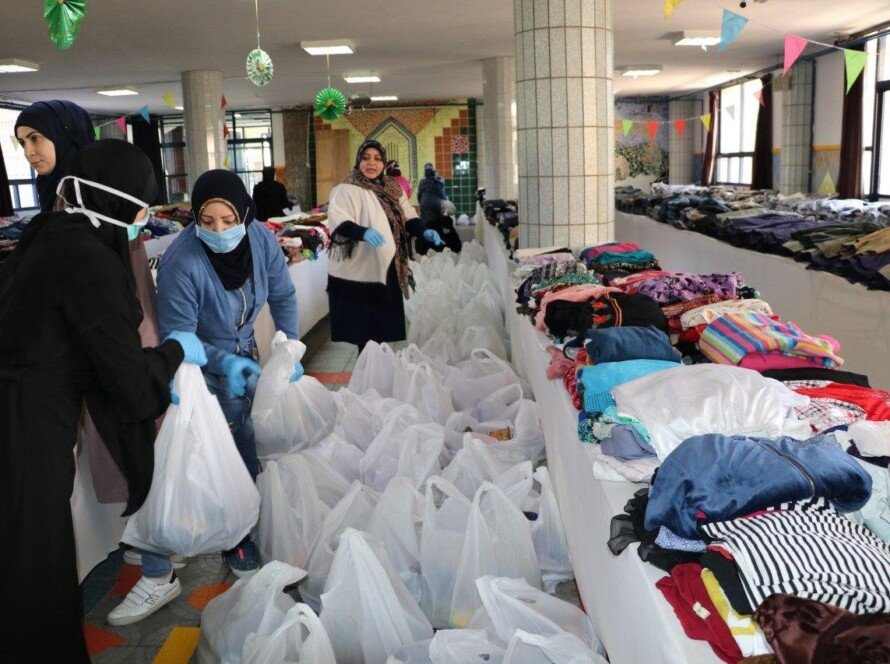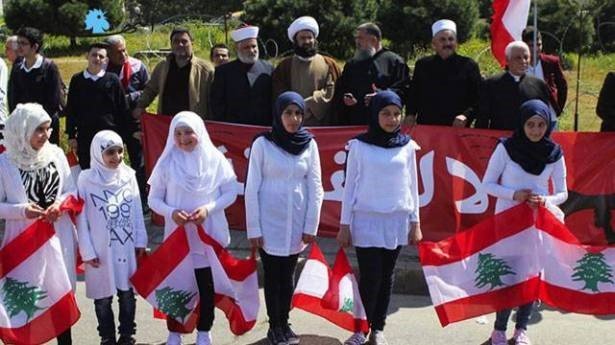
The “Joy of Giving” association has never hesitated to spread love and peace among the sons of the homeland, especially at this delicate stage Lebanon is living through. Yesterday the association, together with Sunni, Shia, Druze and Christian religious men and with the participation of pupils from 11 private schools of all the sects, sought to reject strife and to work at deterring it by forming a human chain “fragrant” with affection and brotherhood.
To the sound of the call to prayer and as the faithful headed for prayer in the Sunni and Shia mosques in the areas of Basta, Khandak Al-Ghamik, Ras Al-Nabaa and Chatila - which at various stages have known unprecedented tension between Shias and Sunnis - the human chain of examples of Lebanese young people, with the flag of Lebanon among them, was completed.
The call issued by the association's founder Melhem Khalaf via the “WhatsApp” service days ago aims, according to its text, through a human chain, to show Lebanon in “a splendid image, in the unity of its sons in the face of strife”. The association sought to spur young people to take part at the following points: first, the Imam Ali Bin Abi Talib mosque in Khandak Al-Ghamik and the Basta Al-Fawqa mosque; second, the Al-Safa Al-Amiliyya mosque and the Abdel Rahman Bin Awf mosque in Ras Al-Nabaa; and third, the Khashoggi mosque and the Imam Al-Sadek mosque - Chatila roundabout.
The gathering was near the Khashoggi mosque. Some of those enrolled in the ranks of the “Joy of Giving” association arrived with the aim of linking up in the human chain - people who work as youth groups for the sake of the other without plunging into the “trap” of sectarianism or regional fanaticism. The young people paid no heed to the burning sun that accompanied the march; rather they came with striking dynamism: a bus for the schools of the Irfan Tawhid Foundation, another for the pupils of Al-Hadi Institution for Hearing and Visual Impairment belonging to Al-Mabarrat Charitable Association, and a third for the Islamic Makassed Association, along with a group of pupils from the School of the Sisters of Charity - Clemenceau and others.
The young people flocked to the meeting point carrying banners denouncing strife or summing up, through the Lebanese flag, the rejection of sectarianism. Everyone met, and beside us were a number of worshippers in the mosque. Before beginning to organize the human chain, Mohammad Diab of the association spoke to the pupils about the importance of taking part in this national youth activity, holding that today's action imposes itself so as to oppose all violence among the Lebanese in general and among Muslims in the hot areas we shall pass through. He put before them a question that may occur to some about the usefulness of this chain, saying that we cannot stay silent in the face of what is happening, and that our action imposes itself because we as a young Lebanese generation must overcome the darkness and break its aura.
In the speeches there was a call by the “Joy of Giving” association for peace, cohesion and the transcending of sectarianism and fanaticism. At the three stations, the imams of the Shia and Sunni mosques called for casting aside violence, for love and for faith in Lebanon. As for the religious men, among them Christians of their various denominations and Sunnis, Shias and Druze, they accompanied the march of peace in Lebanon, the homeland of the message as Saint John Paul II described it when he visited Lebanon during his papacy.
Less than a month before the anniversary of 13 April, everyone fears a spark heralding the return of the “Ain Al-Remmaneh bus” in hot areas. We left these places, which yesterday bore witness to the meaning of peace and the necessity of consolidating it in the homeland, through a march varied in sect and denomination. And we have pledged to ourselves that we, as a war generation that lost its youth in the shelters, will not accept that the other half of our lives should be buried under the weight of anxiety and violence and the spectre of our children's emigration to another homeland… These are our highly idealistic hopes, so forgive us if we dream, because this is what is left to us in a wretched political time.